Labradoodle Dog Breed Guide: Temperament, Size, Grooming, Health and Care
 Written by Sofia Marin
 Fact checked by Dr. Tomas Ellery, DVM
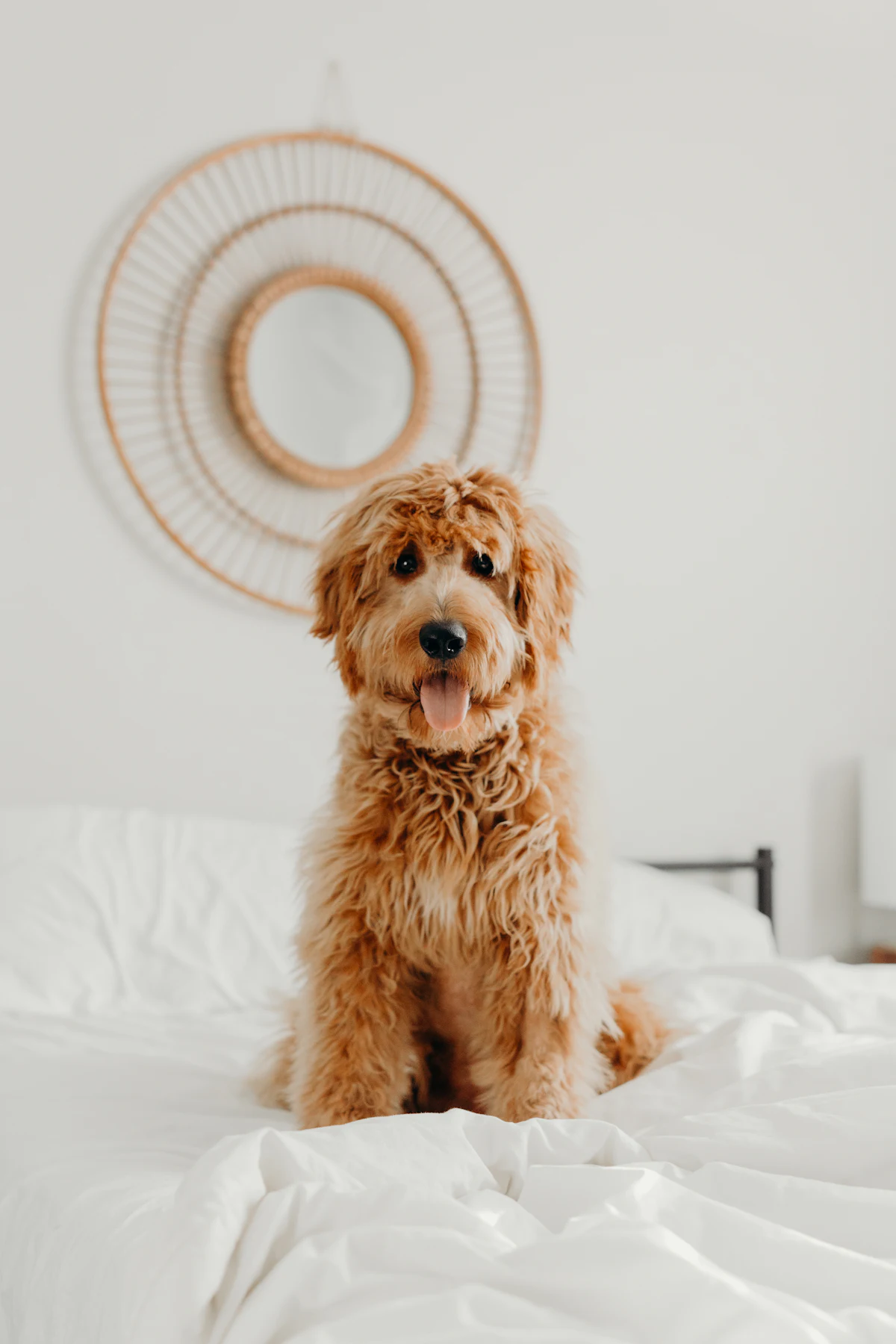
A Labradoodle is a Labrador Retriever crossed with a Poodle, first bred as a guide dog in Australia in 1989. Most are friendly, active and quick to train, but size (15 to 80 lb), coat, shedding and health vary by dog. A 2024 study found Labradoodles had lower odds of hip and elbow dysplasia than Labradors but higher odds of ear infections.
The information is current and up-to-date in accordance with the latest veterinary research. Learn more »
The Labradoodle is a Labrador Retriever and Poodle cross, and it is the dog that started the whole Doodle movement. It was first bred in 1989 by Wally Conron of the Royal Guide Dogs Association of Australia, who wanted a guide dog with a Labrador's working temperament and a coat that a visually impaired woman's allergic husband could live with.
More than thirty years later, Labradoodles are among the most popular family dogs in the United States, the United Kingdom and Australia. They are also widely misunderstood. Many are bought on the promise of a non-shedding, allergy-friendly, calm and easy dog, and some of those promises cannot be kept.
This guide explains what a Labradoodle really is, how an Australian Labradoodle differs, the sizes and coat types, how much they shed, their temperament and exercise needs, the grooming routine they genuinely require, what the latest health research shows, what to ask a breeder, what one costs, and whether a Labradoodle is the right dog for your household.
Key Takeaways
- A Labradoodle is a Labrador and Poodle cross, not a recognised breed; the Australian Labradoodle is a separate multigenerational line with its own clubs and standard.
- Sizes run from 15 lb minis to 80 lb standards; the parents' measured size predicts a puppy better than any label.
- Fleece and wool coats shed little but need brushing to the skin several times a week plus clipping every six to eight weeks; hair coats shed more.
- A 2024 study found Labradoodles about as healthy as their parents: lower hip and elbow dysplasia odds than Labradors, but higher odds of ear infections.
- Insist on hip, elbow, eye and EIC testing on the Labrador side and hip, eye and thyroid or sebaceous adenitis testing on the Poodle side.
1Labradoodle at a Glance
- Parent breeds: Labrador Retriever × Poodle (Standard, Miniature or, rarely, Toy)
- Origin: Australia, 1989, bred for guide-dog work
- Size: Mini (15 to 30 lb), Medium (30 to 50 lb) and Standard (50 to 80 lb)
- Height: 14 to 24 inches at the shoulder depending on size
- Coat: Hair, fleece or wool; straight, wavy or curly
- Common colours: Cream, apricot, gold, red, chocolate, cafe, black, silver and parti
- Shedding: Low to moderate; varies by coat type and individual
- Grooming: Moderate to high, with professional clipping every 6 to 8 weeks for most coats
- Exercise needs: High, typically 60 to 90 minutes a day for a standard adult
- Trainability: High; both parents are working breeds
- Lifespan: Usually 12 to 15 years; smaller dogs tend to live longer
- Recognition: Not recognised by the AKC or the Kennel Club; the Australian Labradoodle has its own breed clubs and standard
- Best for: Active households that can commit to daily exercise and regular grooming
2What Is a Labradoodle?
A Labradoodle is any dog with Labrador Retriever and Poodle ancestry. It is not a breed in the formal sense. No major kennel club recognises it, there is no single breed standard for the ordinary Labradoodle, and two Labradoodles can look and behave quite differently.
That matters because a Labradoodle inherits a mix of traits from two breeds that were developed for different jobs. The Labrador was bred to retrieve in cold water and to work alongside people all day. The Poodle was also a water retriever, with a dense, curly, low-shedding coat and a reputation for sharp intelligence. A puppy can lean towards either parent in size, coat, energy level and temperament.
If you are new to Poodle crosses, our Doodle Dog guide explains how these dogs differ from pure breeds and what "Doodle" actually covers. This article focuses on the Labradoodle specifically.
A short history
Wally Conron bred the first litter in 1989 for the Royal Guide Dogs Association of Australia. One puppy, Sultan, went on to work as a guide dog in Hawaii for ten years. The cross was publicised as "the Labradoodle" to encourage puppy-raisers to take the unfamiliar dogs, and the name stuck.
Conron has since said publicly that he regrets opening the door to a wave of unregulated breeding, because the results are far less predictable than people assume. That is worth remembering: the man who created the Labradoodle is its most outspoken critic, not because the dogs are bad, but because buyers expect a guarantee that genetics cannot give.
3Labradoodle vs Australian Labradoodle
This is the distinction most breed guides skip, and it changes what you are buying.
A Labradoodle (sometimes called an American Labradoodle or a British Labradoodle) is a straightforward Labrador and Poodle cross, in any generation.
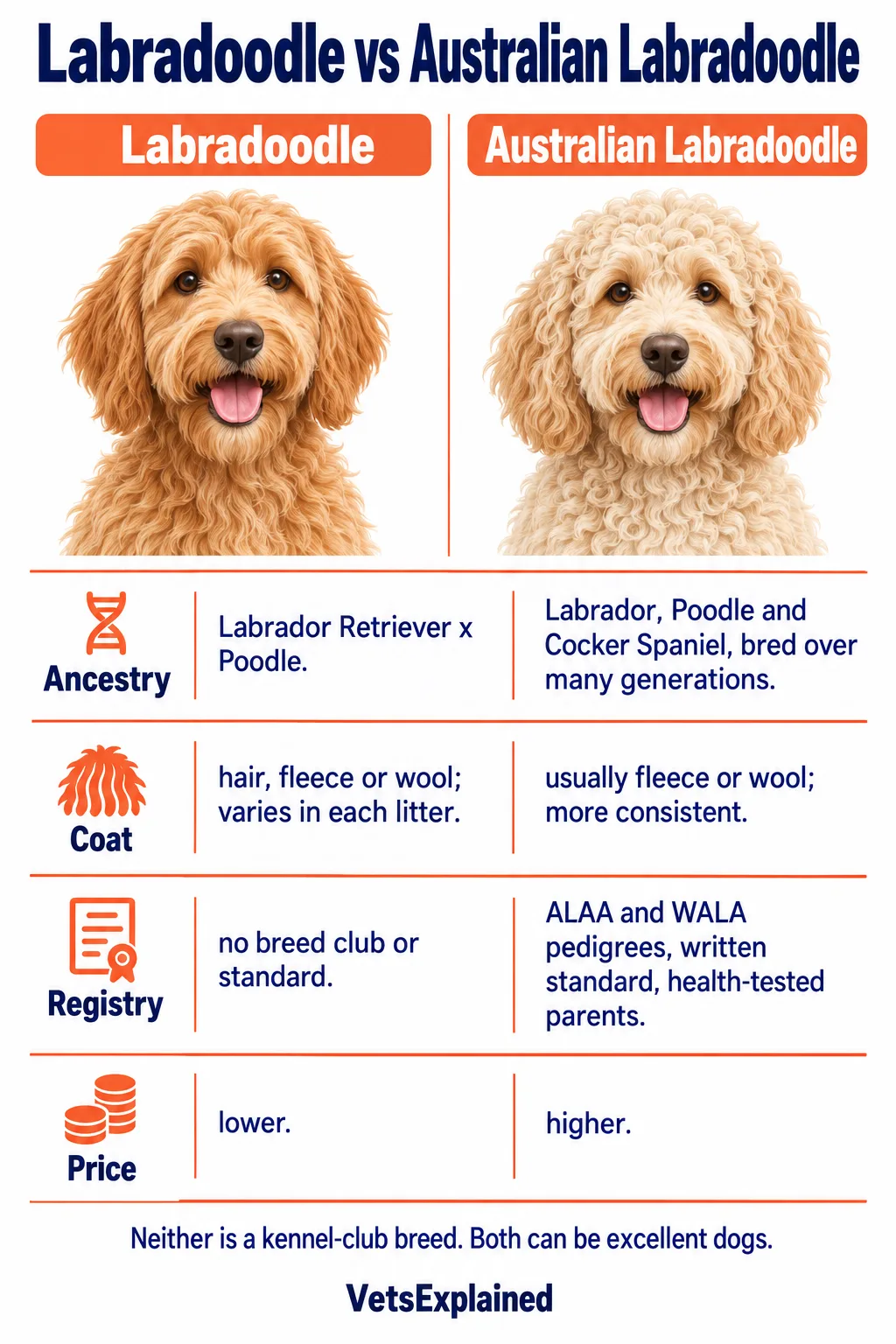
An Australian Labradoodle is a separate, multigenerational line that has been bred to a written standard since the 1990s. Its breed clubs, the Australian Labradoodle Association of America (ALAA) and the Worldwide Australian Labradoodle Association (WALA), require registered pedigrees and health testing of breeding dogs. In addition to the Labrador and Poodle, the Australian Labradoodle's foundation includes the Cocker Spaniel (English and American), and some lines added the Irish Water Spaniel and Curly Coated Retriever early on.
In practice this means:
- Australian Labradoodles are more consistent in coat (usually fleece or wool, wavy to curly) and in size within each category.
- They are more likely to be low-shedding, because the lines were selected for coat over many generations.
- They cost more, often considerably, and should come with documented pedigrees and parent health tests.
- They are still not a kennel-club breed. The ALAA describes it as a breed in development.
An ordinary first-generation Labradoodle can be an excellent dog. It is simply less predictable, and you should price and plan for it accordingly.
4Labradoodle Size
Size follows the Poodle parent more than anything else. The ranges below are the ones used by the Australian Labradoodle clubs and match what most Labradoodle breeders quote.
- Mini Labradoodle: 14 to 16 inches tall, roughly 15 to 30 lb. Usually a Miniature Poodle parent or a multigenerational mini line.
- Medium Labradoodle: 17 to 20 inches tall, roughly 30 to 50 lb.
- Standard Labradoodle: 21 to 24 inches tall, roughly 50 to 80 lb. A Labrador and Standard Poodle cross commonly lands here.
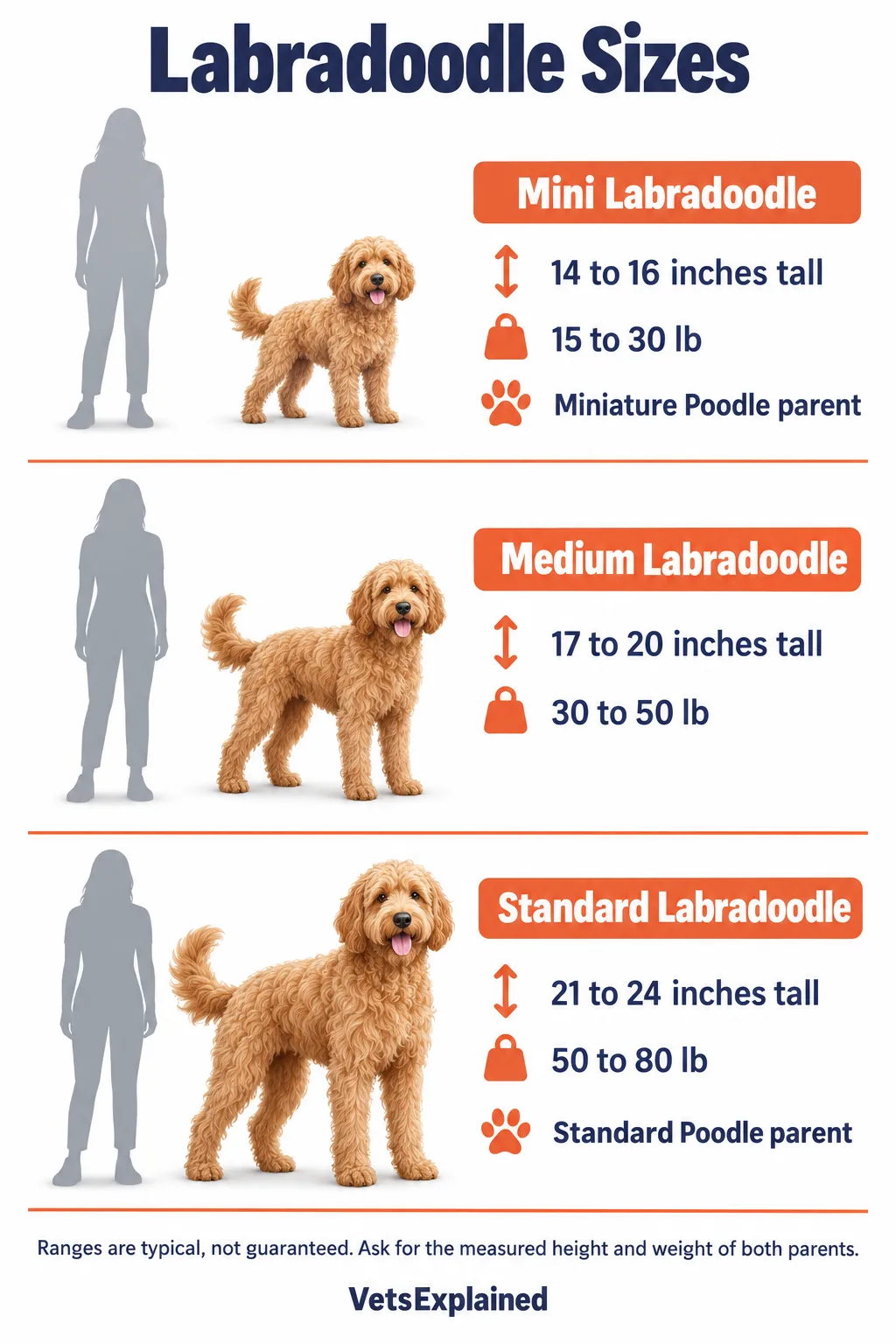
Two cautions. First, these are typical ranges, not guarantees; a first-generation cross between a 75 lb Labrador and a 45 lb Standard Poodle can produce puppies anywhere between. Second, labels such as "micro", "petite" and "teacup" have no agreed definition. Ask for the measured height and weight of both parents, which predicts adult size far better than a marketing word.
Mini Labradoodle
The Mini Labradoodle is produced either by using a Miniature Poodle parent (often by artificial insemination, because of the size difference with a Labrador) or by breeding multigenerational Labradoodles that carry smaller size. Minis are popular with apartment dwellers and older owners, but "mini" does not mean low energy or low maintenance. A 25 lb Labradoodle still carries the Labrador's drive to work and the Poodle's coat.
5What Does a Labradoodle Look Like?
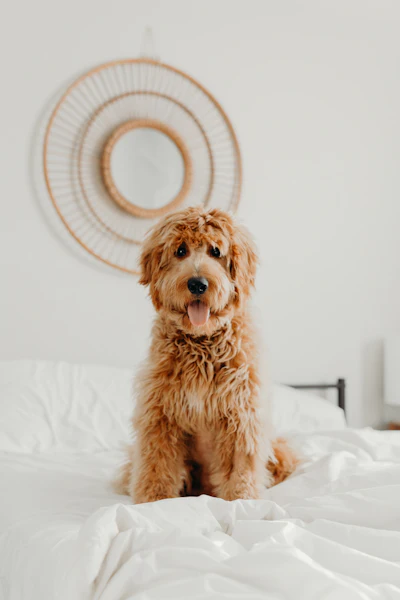
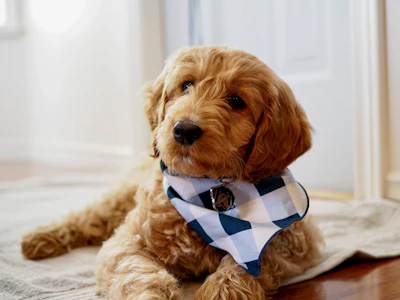
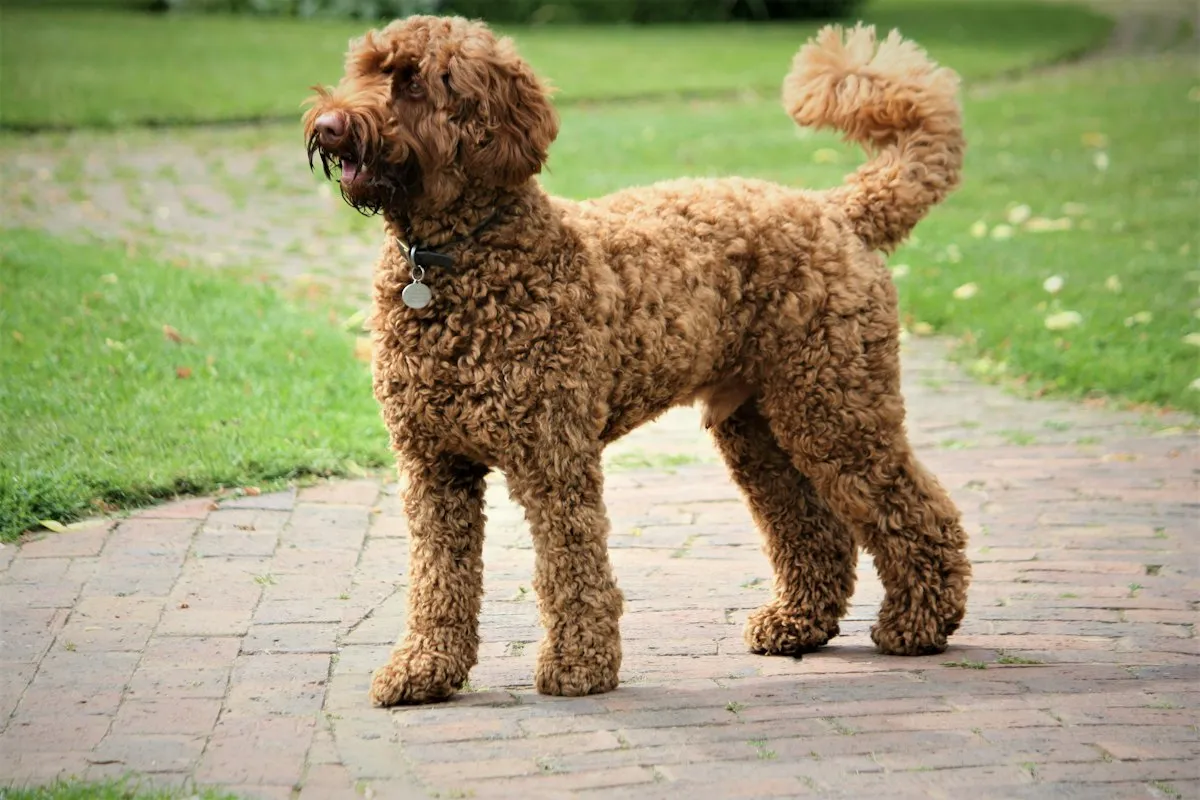
There is no single Labradoodle look. Some are leggy and square with a Poodle's face; others are broader and heavier like a Labrador with a wavy coat. Most have a medium-length muzzle, floppy ears set level with the eyes, and a tail that is carried low or slightly curved.
Colours come from both parents: cream, apricot, gold, red, chocolate, cafe (a faded chocolate), black, silver, blue, and parti (patched). Many Labradoodles lighten with age, so a deep red puppy may be apricot by three years old. Chocolate Labrador lines in particular tend to fade.
6Labradoodle Coat Types
Labradoodle coats are described in three groups. The group matters more than the colour, because it drives shedding, grooming time and cost.
Hair coat
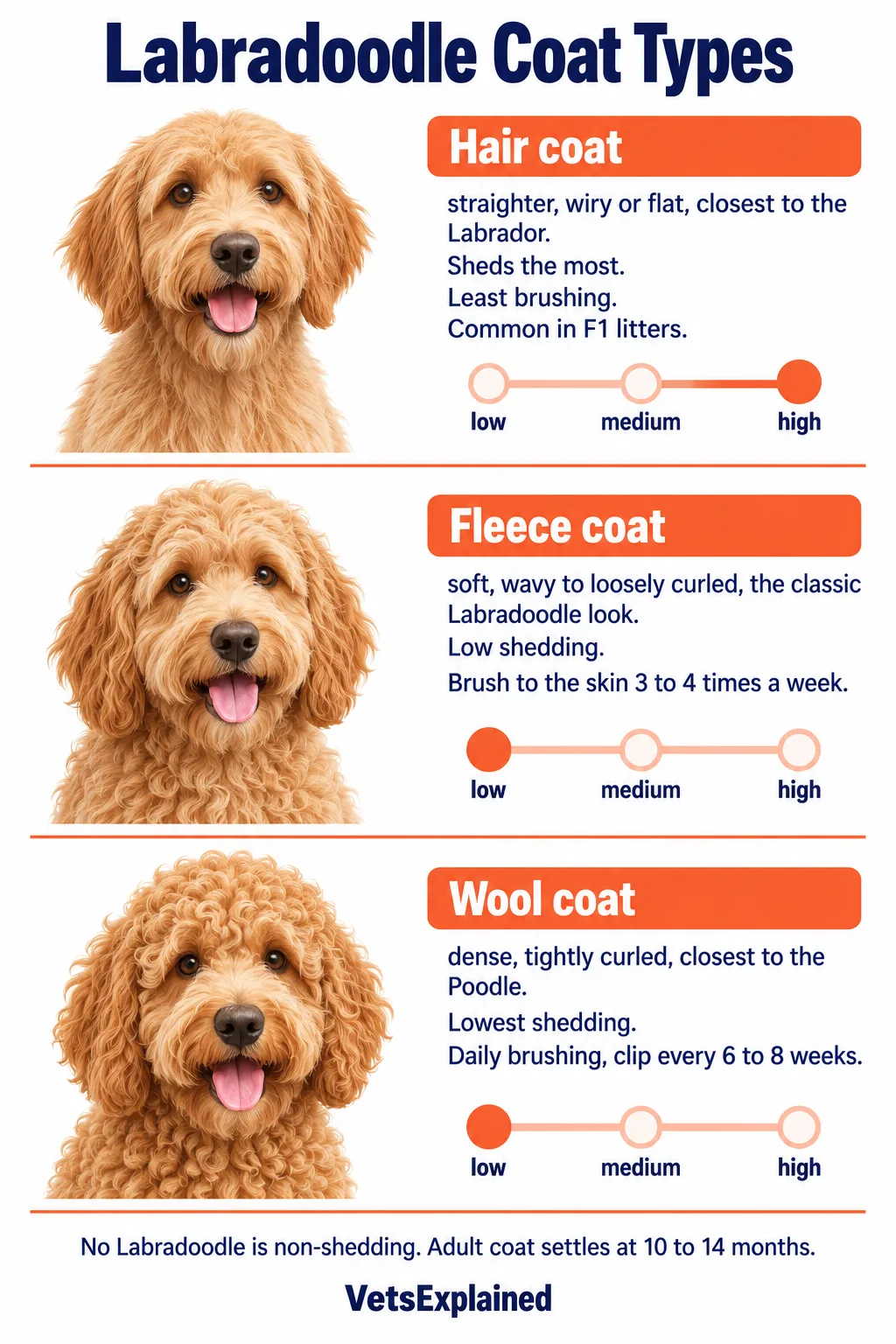
The hair coat is closest to the Labrador: straighter, often wiry or flat, with the most shedding of the three. It usually appears in first-generation (F1) dogs. It needs the least brushing but sheds the most, so it is not the coat to choose if hair in the house is your main concern.
Fleece coat
The fleece coat is soft, wavy to loosely curled, and is the coat most people picture when they think of a Labradoodle. It is typically low-shedding. It mats readily, especially behind the ears, under the collar and in the armpits, and needs brushing to the skin several times a week plus regular clipping.
Wool coat
The wool coat is dense and tightly curled, closest to the Poodle. It is the lowest-shedding of the three and the most demanding to maintain. Loose hair stays trapped in the curls instead of falling out, which is why these dogs appear not to shed and why they mat so quickly if brushing is skipped.
7Do Labradoodles Shed?
Yes, to varying degrees. Hair-coated Labradoodles can shed almost as much as a Labrador. Fleece- and wool-coated dogs shed little, but no Labradoodle is non-shedding.
In a first-generation litter, puppies can carry either coat type, and a breeder cannot promise which a puppy will have from its appearance at eight weeks. The adult coat often does not settle until the dog is 10 to 14 months old, which is when most owners discover how much grooming they have signed up for.
8Are Labradoodles Hypoallergenic?
No dog is truly hypoallergenic. People with dog allergies react to proteins in dander, saliva and urine, not to the hair itself, and every dog produces those proteins. A low-shedding coat spreads less dander around the home, which some allergic people find helps, while others react just as strongly.
If allergies are the reason you are considering a Labradoodle, spend time with the specific adult dog or puppy before committing, ideally more than once and in an enclosed space, and talk to your doctor. Be especially wary of any breeder who guarantees a puppy will be "100% hypoallergenic". That is not something anyone can promise.
9Labradoodle Temperament
Most Labradoodles are friendly, people-focused, playful and eager to learn. Those traits make sense: both parent breeds were developed to work closely with handlers, and guide-dog work was the whole reason the cross exists.
Common traits include:
- Strong attachment to family members and a dislike of being left alone for long
- High energy, especially from six months to three years
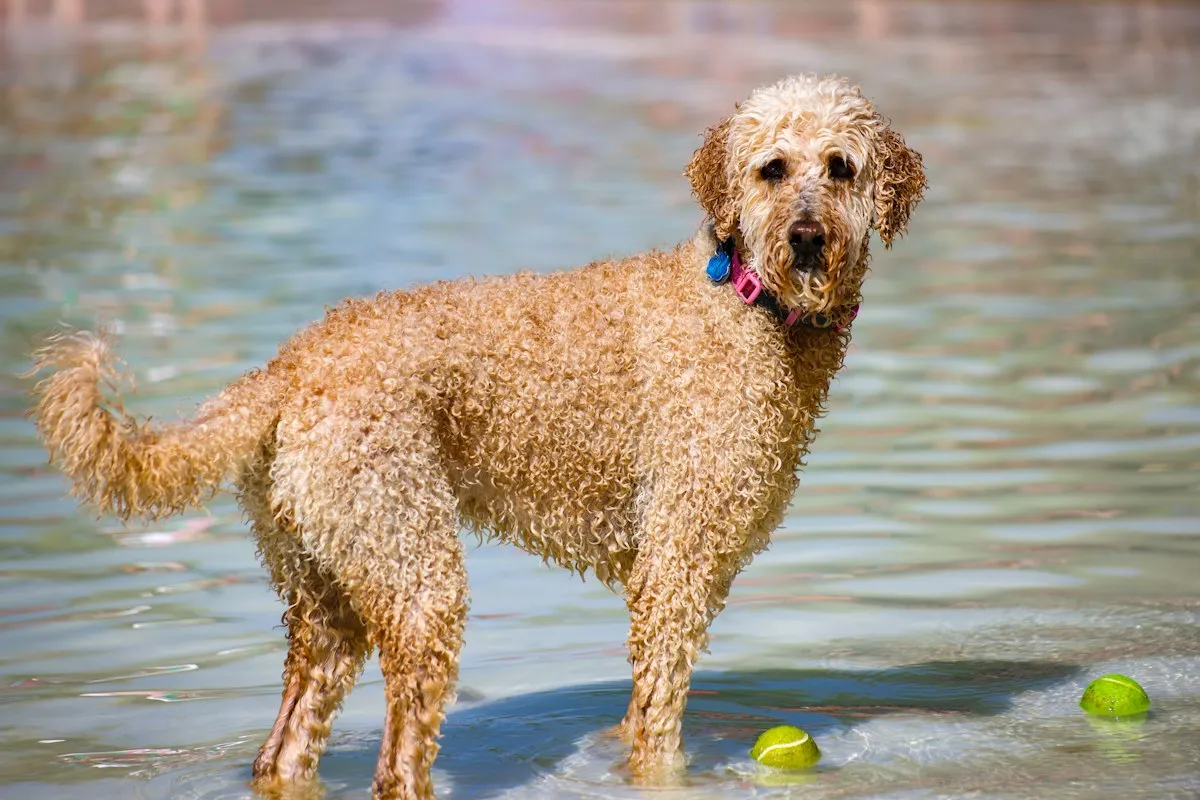
- A love of retrieving, water and games
- Quick learning and a desire to be included in whatever you are doing
- Sociability with strangers; Labradoodles rarely make good guard dogs
Temperament is not guaranteed. A 2024 Royal Veterinary College study of owner-reported behaviour found that Poodle crosses, including Labradoodles, were not consistently calmer or easier than their parent breeds, and in several comparisons showed more undesirable behaviours such as fear of strangers or noise sensitivity. The parents' temperaments, early socialisation and training have as much influence as the breed label.
Do Labradoodles bark a lot?
Labradoodles are not usually considered an excessively vocal cross, but many do bark to greet, to demand play, or when bored or anxious. A Labradoodle left alone for nine hours with nothing to do is likely to become a barker. Daily exercise, mental work and a gradual introduction to time alone prevent most problems. If barking starts suddenly in an adult dog, rule out pain or a change in routine before treating it as a training issue.
10Are Labradoodles Good Family Dogs?
Often, yes. Labradoodles tend to be affectionate, tolerant and enthusiastic about children, and their intelligence makes them straightforward to train around a busy household. Three things decide whether a particular dog fits a particular family.
Size and strength. A 70 lb adolescent Labradoodle greeting a toddler at full speed will knock the child over. Standard Labradoodles need early training in calm greetings, and young children should not walk them alone.
Energy. A young Labradoodle needs more exercise than many families expect. If walks are inconsistent, the dog's energy comes out as chewing, counter-surfing and mouthing.
Supervision. Any dog and any small child should be supervised together. Teach children not to climb on the dog, disturb it when sleeping or eating, or corner it.
A Labradoodle from health-tested parents, socialised well and given enough to do, is one of the better family dogs available. The same dog bought on impulse and under-exercised is a frequent sight in rescue centres at 12 to 18 months old.
11Are Labradoodles Good With Other Dogs?
Most are. Both parent breeds are typically sociable, and Labradoodles that meet a range of friendly dogs as puppies usually grow into confident, polite adults. The common problem is over-enthusiasm rather than aggression: a young Labradoodle may be too boisterous for small or elderly dogs. Teach a reliable recall and a calm greeting early.
12Are Labradoodles Easy to Train?
Labradoodles are generally easy to train, and they enjoy it. Reward-based training works well; harsh methods tend to produce a worried, shut-down dog rather than a compliant one.
Start with the behaviours that make everyday life easier:
- Name response, sit and settle on a mat
- Recall, practised daily and rewarded generously
- Loose-lead walking, before the dog weighs 50 lb
- "Drop" and "leave it", because Labradoodles retrieve everything, including socks
- Calm greetings without jumping
- Handling tolerance: paws, ears, mouth and being brushed, from the first week home
- Being alone for short, gradually lengthening periods
Socialisation between roughly 3 and 14 weeks of age shapes the adult dog. Introduce people of different ages, calm vaccinated dogs, traffic, car journeys, the vet's waiting room and grooming equipment, always keeping the experience positive. A puppy that is overwhelmed learns fear, not confidence.
13How Much Exercise Does a Labradoodle Need?
A standard adult Labradoodle needs around 60 to 90 minutes of activity a day, and some need more. Minis and mediums need somewhat less, but still a proper daily outing rather than a trip around the block.
Vary the activity. Good options:
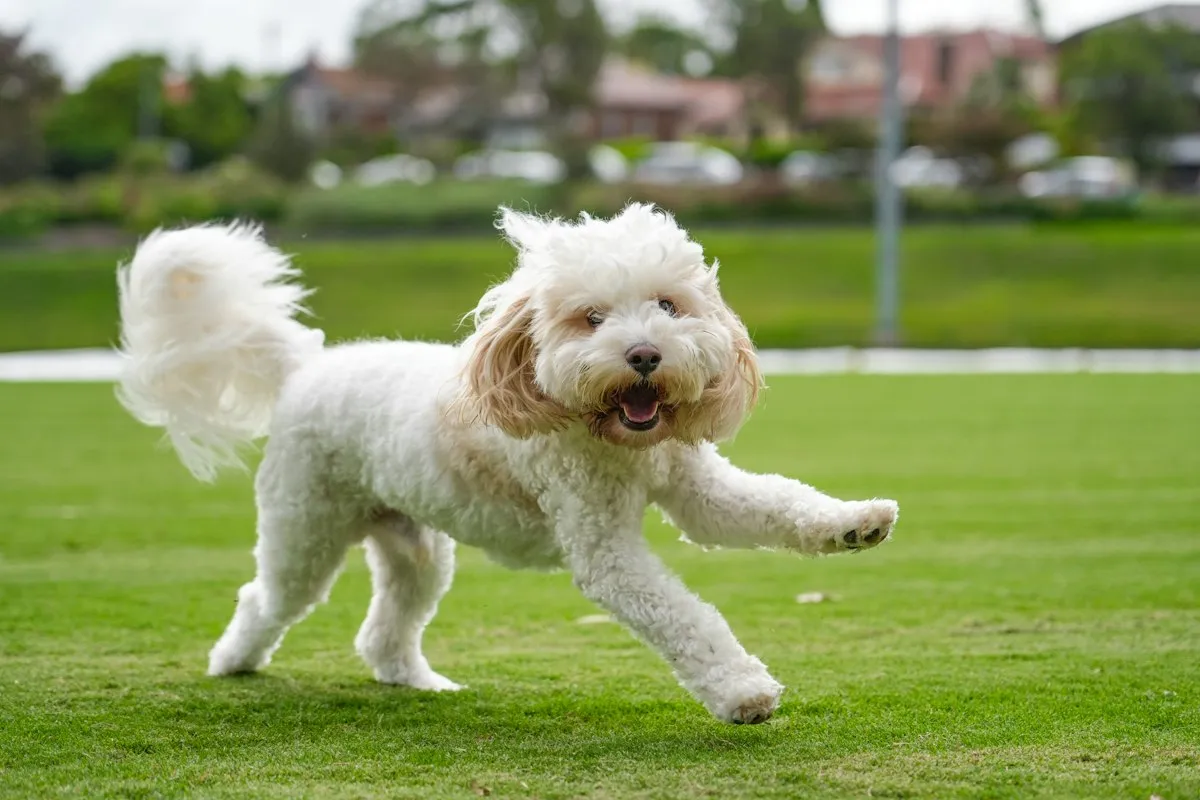
- Off-lead running in a safe area, once recall is reliable
- Retrieving games and swimming, which both parents were bred for
- Sniffing walks, scent games and puzzle feeders for mental work
- Short training sessions through the day
- Hiking, canicross or agility for adults, once joints are mature
Mental work tires a Labradoodle at least as effectively as mileage. A dog that has had 20 minutes of training and scent games plus a walk will usually settle better than one that has run beside a bike for an hour.
Puppy exercise
Puppies should not be exercised like adults. Growth plates in a standard Labradoodle do not close until roughly 12 to 18 months, and repetitive high-impact activity before then is linked to joint problems. Keep walks short, let the puppy choose the pace, avoid stairs and jumping from height, and skip running or long hikes until your vet confirms the dog is mature. Short training, play and exploration give a puppy everything it needs.
14Labradoodle Grooming Requirements
Grooming is the part of Labradoodle ownership that most people underestimate, and the most common reason owners end up having the coat shaved off entirely.
A fleece or wool coat needs:
- Brushing to the skin three or four times a week, every day for a wool coat or during the coat change at around a year old
- Combing after brushing to find mats the brush slides over
- Professional clipping every six to eight weeks for most owners
- Bathing every four to eight weeks, always followed by thorough drying and brushing
- Nail trims every three to four weeks
- Ear checks weekly, and after swimming
- Tooth brushing daily if you can, several times a week at minimum
A hair-coated Labradoodle needs less brushing, but sheds more and still needs ears, nails and teeth attended to.
How to brush a Labradoodle properly
Surface brushing is why Labradoodles arrive at the groomer "brushed every day" and matted to the skin. Work in small sections. Part the coat with one hand, brush from the skin outwards with a slicker brush, then run a metal comb through the same section. If the comb catches, there is a tangle to work out with a detangling spray and patience. Pay particular attention to behind the ears, the neck under the collar, armpits, inner thighs, the base of the tail and between the toes.
If you find mats tight against the skin, stop and book a groomer. Cutting them out at home with scissors is a common cause of skin injuries, and de-matting a heavily felted coat is painful for the dog; a short clip and a fresh start is kinder.
15Labradoodle Ear Care
Ear care deserves its own section, because Labradoodles have a documented problem with ear infections. A 2021 Royal Veterinary College study of more than 22,000 dogs in the UK found Labradoodles among the breeds most prone to otitis externa, with roughly three times the odds of a crossbred dog. The 2024 study of Poodle crosses also found Labradoodles had higher odds of ear infections than Labradors.
The reasons are structural: floppy ears, hair growing inside the ear canal from the Poodle side, and a love of swimming. Check ears weekly for redness, odour, discharge, head shaking or scratching. Dry the ears after swimming or bathing. Ask your groomer or vet whether the hair inside the canal should be plucked or trimmed for your dog; opinion differs, and it depends on the individual ear. A smelly, painful ear needs a vet, not repeated home cleaning, because the right treatment depends on what is growing in it.
16Labradoodle Health: What the Evidence Shows
For years, buyers were told that crossbreeding gives Doodles "hybrid vigour" and better health than pure breeds. The evidence for that claim is thin, and the best study to date does not support it.
In 2024, researchers at the Royal Veterinary College published a study in PLoS One comparing owner-reported health in 583 Labradoodles with 2,099 Labrador Retrievers and 927 Poodles, across 57 common disorders. The findings for Labradoodles were:
- No difference from Labradors for 52 of the 57 disorders, and no difference from Poodles for 50 of 57.
- Lower odds than Labradors of hip or elbow dysplasia and of lameness.
- Higher odds than Labradors of ear infections.
- Higher odds than Poodles of vomiting, diarrhoea, eating things they should not, and wounds, and lower odds of patellar luxation.
In plain terms, a Labradoodle is, on average, about as healthy as its parent breeds: not healthier, not worse. Which problems it is prone to depends on which parent it takes after.
Conditions to know about
- Hip and elbow dysplasia: inherited from either side, worsened by rapid growth and over-exercise in puppies. Diagnosed by X-ray; managed with weight control, controlled exercise, pain relief and, in severe cases, surgery. See our guide to hip dysplasia in dogs.
- Ear infections: see above.
- Eye disease: progressive retinal atrophy (PRA), which leads to blindness, and cataracts occur in both parent breeds. A DNA test exists for the common form of PRA (prcd-PRA) and breeding dogs should have annual eye examinations.
- Addison's disease (hypoadrenocorticism): the adrenal glands stop producing enough hormones. Standard Poodles are strongly predisposed; in one UK survey around 8 to 9 per cent were affected. Signs are vague and come and go: lethargy, poor appetite, vomiting, weakness, and in a crisis, collapse. It is diagnosed with a blood test (ACTH stimulation) and treated for life with hormone replacement, usually very successfully. Any Labradoodle with repeated unexplained "off" days should be tested.
- Exercise-induced collapse (EIC): a genetic condition from the Labrador side in which an affected dog's hind legs become weak and wobbly after five to twenty minutes of intense excitement or exercise, sometimes progressing to collapse. It is caused by a mutation in the DNM1 gene, identified by the University of Minnesota, and is recessive, so both parents must carry it. A DNA test identifies carriers and affected dogs, and responsible breeders test for it.
- Sebaceous adenitis: an inflammatory skin disease seen in Standard Poodles, causing scaling and hair loss. Diagnosis is by skin biopsy.
- Hypothyroidism, allergies and skin problems: common in both parent breeds.
- Bloat (GDV): a risk in deep-chested standard-sized dogs. Know the signs: a swollen abdomen, unproductive retching and restlessness are an emergency.
How long do Labradoodles live?
Most Labradoodles live 12 to 15 years. Minis tend to live longer than standards, as smaller dogs generally do. Keeping the dog lean is the single most effective thing an owner can do to extend a Labradoodle's healthy years; see the body-condition section below.
17Health Testing Before Buying a Labradoodle Puppy
Because Labradoodles can inherit problems from either side, both parents should be tested for the conditions relevant to their breed. "Vet-checked" is not health testing. Ask to see the certificates, and check them against the registries (OFA or PennHIP in the US, BVA/KC schemes in the UK, ALAA or WALA records for Australian Labradoodles).
For the Labrador side, the Labrador Retriever Club's recommended minimum is hip evaluation, elbow evaluation, an eye examination by a veterinary ophthalmologist, and the EIC DNA test. Many breeders add prcd-PRA and centronuclear myopathy DNA tests.
For the Poodle side, the United Poodle Association's minimum for a Standard Poodle is hips (OFA after 24 months, or PennHIP), an eye examination, and at least one of thyroid, sebaceous adenitis or cardiac evaluation. For Miniature Poodles, patellar luxation and PRA testing are standard.
For a multigenerational or Australian Labradoodle, the breeder should show the same tests on both Labradoodle parents, plus pedigree registration with ALAA or WALA.
Questions to ask a breeder
- Which health tests have been done on the mother and on the father, and can I see the results?
- How tall and heavy is each parent?
- What coat type does each parent have, and what coats have previous litters produced?
- Can I meet the mother, and see where the puppies are being raised?
- How are the puppies being socialised before eight weeks?
- What generation is this litter (F1, F1B, multigen)?
- What happens if I can no longer keep the dog?
A good breeder will ask you as many questions as you ask them. One who has puppies "available now" in every colour and size, all year round, is almost certainly not one.
18F1, F1B and Multigenerational Labradoodles
- F1: Labrador × Poodle. The most variable generation for coat: hair, fleece and wool coats can all appear in one litter.
- F1B: F1 Labradoodle × Poodle. Three-quarters Poodle, so more likely to have a fleece or wool coat and to be low-shedding. Also more Poodle in temperament and health risks.
- F2: F1 × F1. Can produce the widest range of all, from Labrador-like to Poodle-like puppies.
- Multigenerational: Labradoodle × Labradoodle over several generations. This is how Australian Labradoodles are bred, and it is where coat and size become reasonably predictable.
Generation labels describe ancestry, not outcomes. An F1B is more likely to shed little, but it is not guaranteed, and no generation is guaranteed to be allergy-friendly.
19What Should a Labradoodle Eat?
A Labradoodle needs a complete and balanced diet appropriate for its life stage and expected adult size. The WSAVA Global Nutrition Guidelines recommend choosing a food from a manufacturer that employs qualified nutritionists, conducts feeding trials and can answer questions about its products; the brand name matters less than those basics.
Two points are specific to Labradoodles:
- Standard puppies should eat a large-breed puppy food. These are formulated to slow growth slightly and control calcium, which lowers the risk of joint disease in dogs expected to exceed about 50 lb. Minis and most mediums do fine on a regular puppy food.
- Labradors are famous for overeating, and many Labradoodles inherit the appetite. The 2024 study's finding that Labradoodles had double the odds of "dietary indiscretion" compared with Poodles fits every owner's experience. Measure food, count treats within the daily total, and keep bins and counters out of reach.
Our feeding guide by life stage explains how much to feed as your dog grows, and our guide to reading a dog food label shows how to judge a food.
20Labradoodle Weight Management
Extra weight shortens lives and worsens joint disease, and Labradoodles gain it easily. Judge your dog by body condition, not by the number on the scale:
- You should feel the ribs easily under a thin layer of fat, without pressing hard
- There should be a visible waist behind the ribs when viewed from above
- The belly should tuck up towards the hind legs when viewed from the side
On a fluffy dog you need your hands, not your eyes. Ask your vet to show you the body-condition score at your next visit, and adjust food by about 10 per cent at a time if your dog is drifting the wrong way.
21Can Labradoodles Be Left Alone?
Labradoodles are companion dogs by design, and many struggle with long periods alone. An adult that has been taught gradually can usually manage four to six hours. A puppy cannot, and a dog that has never practised being alone will not suddenly cope with a full working day.
Build it up from the first week: short absences while the dog is tired and settled, a safe resting space, something to chew, calm departures and returns, and a predictable routine. If an adult dog panics when left, howls continuously, injures itself or destroys doors and windows, that is separation-related distress and needs a vet or qualified behaviourist, not more time to "get used to it".
22How Much Does a Labradoodle Cost?
Prices vary widely by country, region, breeder and generation, so treat any figure as a rough guide.
- Puppy from a breeder: in the US, typically 1,500 to 4,000 dollars for a first-generation or F1B Labradoodle in 2026, with Australian and multigenerational lines from reputable programmes often above that. UK and Australian prices follow a similar pattern in local currency.
- Rescue: usually a few hundred dollars in adoption fees. Labradoodles between one and two years old are common in rescue, often surrendered for exactly the energy and grooming reasons this guide describes.
- Ongoing: professional grooming is the cost that surprises owners, at roughly 80 to 150 dollars every six to eight weeks for a standard. Add food, insurance, routine vet care and training.
A very cheap Labradoodle puppy is a warning sign. Health testing, proper rearing and socialisation cost money, and a breeder who has skipped them has passed the risk to you.
23Labradoodle vs Goldendoodle vs Poodle
Labradoodle vs Goldendoodle. These are the two most popular Doodles and are often confused. The Golden Retriever parent tends to give Goldendoodles a softer, longer, lighter coat and a gentler, slightly less driven temperament. Labradoodles are often a little more athletic, more water-obsessed and more prone to the hair coat type. Health risks overlap heavily; Goldendoodles carry the Golden Retriever's higher cancer risk, Labradoodles the Labrador's EIC and appetite. Our Goldendoodle breed guide covers the other side of that comparison in full.
Labradoodle vs Poodle. A Standard Poodle gives you the predictable, genuinely low-shedding wool coat, a recognised breed with a written standard, and a long track record of health testing. It still needs the same grooming. What you lose is the Labrador's robust, easygoing, retriever temperament, and what you gain is a sharper, sometimes more sensitive dog. People who want the Doodle coat without the coat lottery are often better served by a well-bred Poodle.
24Is the Labradoodle the Healthiest Doodle?
People search this question constantly, and the honest answer is that no Doodle has been shown to be healthier than its parent breeds. The 2024 Royal Veterinary College study compared Labradoodles, Cockapoos and Cavapoos with their parents and found no significant difference for the large majority of disorders. Each Doodle inherits its parents' problems: Labradoodles carry Labrador and Poodle risks, Goldendoodles carry Golden Retriever and Poodle risks, and so on.
The health of an individual dog depends far more on whether its parents were tested, how it was raised and whether it is kept lean than on which cross it is. If health is your priority, choose the breeder, not the Doodle.
25What Are the Disadvantages of a Labradoodle?
Being fair about the downsides is the best way to avoid a dog ending up in rescue.
- Grooming is demanding and expensive for life, and the coat cannot be predicted at purchase.
- Shedding and allergy outcomes are not guaranteed.
- Young Labradoodles are very energetic and can be destructive if under-exercised.
- Adult size can vary from the breeder's estimate.
- They dislike being left alone and can develop separation problems.
- Ear infections are common.
- The lack of a recognised standard means quality varies enormously between breeders, and the popularity of the cross attracts puppy farms.
26Labradoodle Pros and Cons
Potential advantages
- Friendly, affectionate and people-focused
- Intelligent and usually easy to train
- Active, athletic and a good companion for outdoor families
- Three size options
- Low-shedding in fleece and wool coats
- Lower odds of hip and elbow dysplasia than Labradors, according to the 2024 study
- Usually good with children and other dogs when well socialised
Potential challenges
- High grooming needs and professional grooming costs
- Coat type and shedding are unpredictable in early generations
- Needs 60 to 90 minutes of daily exercise as an adult
- Prone to ear infections
- Can struggle when left alone
- Inherits health risks from both parents; health testing is essential
- Not a recognised breed, so buyer research matters more
27Is a Labradoodle Right for You?
A Labradoodle suits you if you want an energetic, sociable dog that joins in with family life, you can give it a good hour of exercise a day, you are prepared to brush it several times a week and pay a groomer every couple of months, and you will not leave it alone for most of the day.
It is probably not the right dog if you want something low-maintenance, calm from puppyhood, guaranteed not to shed, or reliably safe for someone with a serious dog allergy.
Before you buy, ask yourself:
- Can I manage and afford the coat for 12 to 15 years?
- Do I have time for daily exercise and training, especially in the first two years?
- Can I cope if the puppy grows larger, or sheds more, than expected?
- Have I seen health test results for both parents, not just been told about them?
- Am I choosing this dog for its temperament and health, or for how it looks online?
If the answers are yes, a Labradoodle can be a wonderful dog, and one of the most rewarding to live with.
28Final Thoughts
The Labradoodle began as a thoughtful attempt to breed a guide dog for an allergic household, and the best examples still show why the idea caught on: a bright, kind, athletic dog with a coat that many people find easier to live with.
What the Labradoodle is not is a guarantee. Coat, shedding, size, temperament and health all vary, and the research now confirms that a Doodle is about as healthy as its parents, not healthier. Choose a breeder who tests both parents, meet the mother, plan for the grooming and the exercise, and judge the puppy in front of you rather than the name.
For the wider picture on Poodle crosses, including Goldendoodles, Cockapoos and Bernedoodles, read our complete Doodle Dog guide.
Sources
- Bryson GT, O'Neill DG, Brand CL, Belshaw Z, Packer RMA. The doodle dilemma: how the physical health of "designer-crossbreed" Cockapoo, Labradoodle and Cavapoo dogs compares to their purebred progenitor breeds. PLoS One. 2024;19(8):e0306350. pmc.ncbi.nlm.nih.gov
- Royal Veterinary College, VetCompass. Now listen ear: new RVC research reveals the dog breeds most affected by ear infections. 2021. rvc.ac.uk
- University of Minnesota Canine Genetics Laboratory. Dynamin-1 associated exercise-induced collapse. canine-genetics.umn.edu
- Universities Federation for Animal Welfare. Genetic welfare problems of companion animals: Standard Poodle, hypoadrenocorticism. ufaw.org.uk
- Merck Veterinary Manual. Disorders of the adrenal glands in dogs. merckvetmanual.com
- United Poodle Association. Health testing for puppy buyers. 2024. unitedpoodleassociation.org
- The Labrador Retriever Club. Health issues and recommended health clearances. thelabradorclub.com
- Australian Labradoodle Association of America. Breed standard and health testing requirements. alaa-labradoodles.com
- WSAVA Global Nutrition Committee. Global nutrition guidelines. wsava.org
Frequently Asked Questions
?What breeds make a Labradoodle?
A Labradoodle is a Labrador Retriever crossed with a Poodle. The Poodle may be Standard, Miniature or occasionally Toy, which is what produces the different Labradoodle sizes. Australian Labradoodles also carry Cocker Spaniel in their foundation lines.
?How big does a Labradoodle get?
Minis are around 14 to 16 inches and 15 to 30 lb, mediums 17 to 20 inches and 30 to 50 lb, and standards 21 to 24 inches and 50 to 80 lb. The measured size of both parents is the best predictor for an individual puppy.
?Do Labradoodles shed?
Yes, to varying degrees. Hair-coated Labradoodles shed much like a Labrador. Fleece and wool coats shed very little, but no Labradoodle is non-shedding, and the adult coat type often is not clear until the dog is around a year old.
?Are Labradoodles hypoallergenic?
No dog is truly hypoallergenic. Low-shedding coats spread less dander, which helps some allergic people and not others. Spend time with the individual dog before committing and never rely on a breeder's guarantee.
?Is a Labradoodle a high maintenance dog?
In grooming and exercise, yes. A fleece or wool coat needs brushing several times a week and professional clipping every six to eight weeks, and an adult needs 60 to 90 minutes of activity a day. In temperament, most are easy to live with if those needs are met.
?What is the difference between a Poodle and a Labradoodle?
A Poodle is a recognised breed with a predictable, low-shedding wool coat and a written standard. A Labradoodle is a Poodle crossed with a Labrador, so it is less predictable in coat and size but usually carries more of the Labrador's easygoing retriever temperament.
?Do Labradoodles bark a lot?
Not usually more than other family breeds, but bored, under-exercised or anxious Labradoodles can become persistent barkers. Daily exercise, mental work and training in calm greetings prevent most barking problems.
?What is the healthiest Doodle breed?
No Doodle has been shown to be healthier than its parent breeds. A 2024 Royal Veterinary College study found Labradoodles, Cockapoos and Cavapoos had no significant difference from their parents for most disorders. The breeder's health testing matters more than which cross you choose.
?How long do Labradoodles live?
Most live 12 to 15 years. Smaller Labradoodles tend to live longer than standards, and keeping the dog lean makes the biggest difference an owner can control.
?What is the difference between a Labradoodle and an Australian Labradoodle?
A Labradoodle is a simple Labrador and Poodle cross. An Australian Labradoodle is a multigenerational line bred to a written standard, with Cocker Spaniel in its foundation and registered pedigrees through ALAA or WALA. Australian Labradoodles are more consistent in coat and size and usually cost more.
?Are Mini Labradoodles easier to care for?
Not really. They need less space and are easier to handle physically, but they have the same coat, the same intelligence and much of the same energy. Grooming and training needs are similar to a standard.
?Are Labradoodles good apartment dogs?
Minis and mediums can live well in apartments if they get a proper daily outing and mental work. A standard Labradoodle can also adapt, but a bored one in a small space will be destructive. The exercise commitment matters more than the floor area.
Help us do better!
Was this article helpful and relevant?
Thanks for your feedback!
About Sofia Marin
Sofia Marin is VetsExplained's senior editor. She has edited pet and consumer titles for fifteen years and is responsible for the site's editorial standards and breed coverage.
View all posts by Sofia Marin →