Doodle Grooming Guide: Brushing, Matting, Clipping and How Often
 Written by Sofia Marin
 Fact checked by Dr. Tomas Ellery, DVM
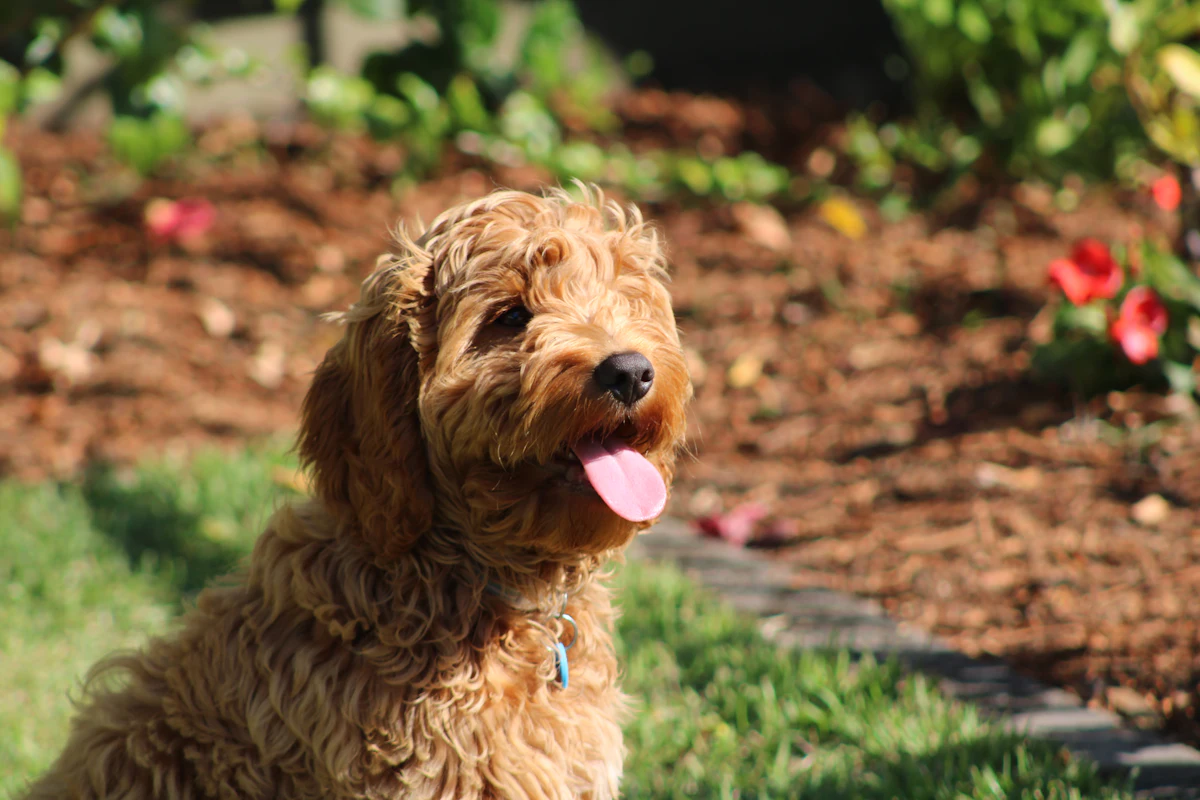
Most wavy and curly Doodles need line brushing to the skin three to seven times a week, a bath every four to eight weeks and a professional clip every six to eight weeks. The puppy-to-adult coat change at 6 to 12 months is when most Doodles mat badly enough to be shaved.
The information is current and up-to-date in accordance with the latest veterinary research. Learn more »
Doodle grooming is the part of Doodle ownership that catches most people out. The low-shedding coat that makes a Poodle cross so appealing is the same coat that traps loose hair, tangles from the skin outwards and turns to felt if it is only brushed on the surface. Groomers see the result every week: a well-loved Doodle dog shaved to the skin because the mats could not be brushed out without hurting it.
None of this is hard once you understand how the coat behaves, and this guide covers everything from tools and technique to clips, cost and a realistic schedule.
Key Takeaways
- Doodles mat because the coat holds shed hair; only line brushing to the skin, checked with a comb, prevents it.
- Mats start behind the ears, under the collar, in the armpits, groin, tail base and feet; check those daily.
- The puppy-to-adult coat change at 6 to 12 months is when most Doodles get shaved; brush daily and book a shorter trim at the start of it.
- Bathe every four to eight weeks after a full brush-out and blow-dry; see a groomer every six to eight weeks and ask for lengths in inches.
- Matting causes pain and skin disease, which is why groomers shave a pelted coat; budget 450 to 1,200 dollars a year for professional grooming.
1Why Do Doodles Mat So Easily?
Doodles mat because a Poodle-type coat holds on to shed hair instead of dropping it, and that trapped hair winds around the living hair until it felts. In a Labrador the dead hair falls on your floor; in a wavy or curly Doodle it stays in the coat, which is why the dog looks like it does not shed. Friction and moisture then felt it close to the skin, where it is hard to see.
Straight coats mat least, curly coats most, and the wavy coat most owners end up with mats more than it looks; our guide to Doodle coat types explains how to tell which you have, and the F1, F1B and F2 labels are only a loose guide.
2What Grooming Tools Do You Need for a Doodle?
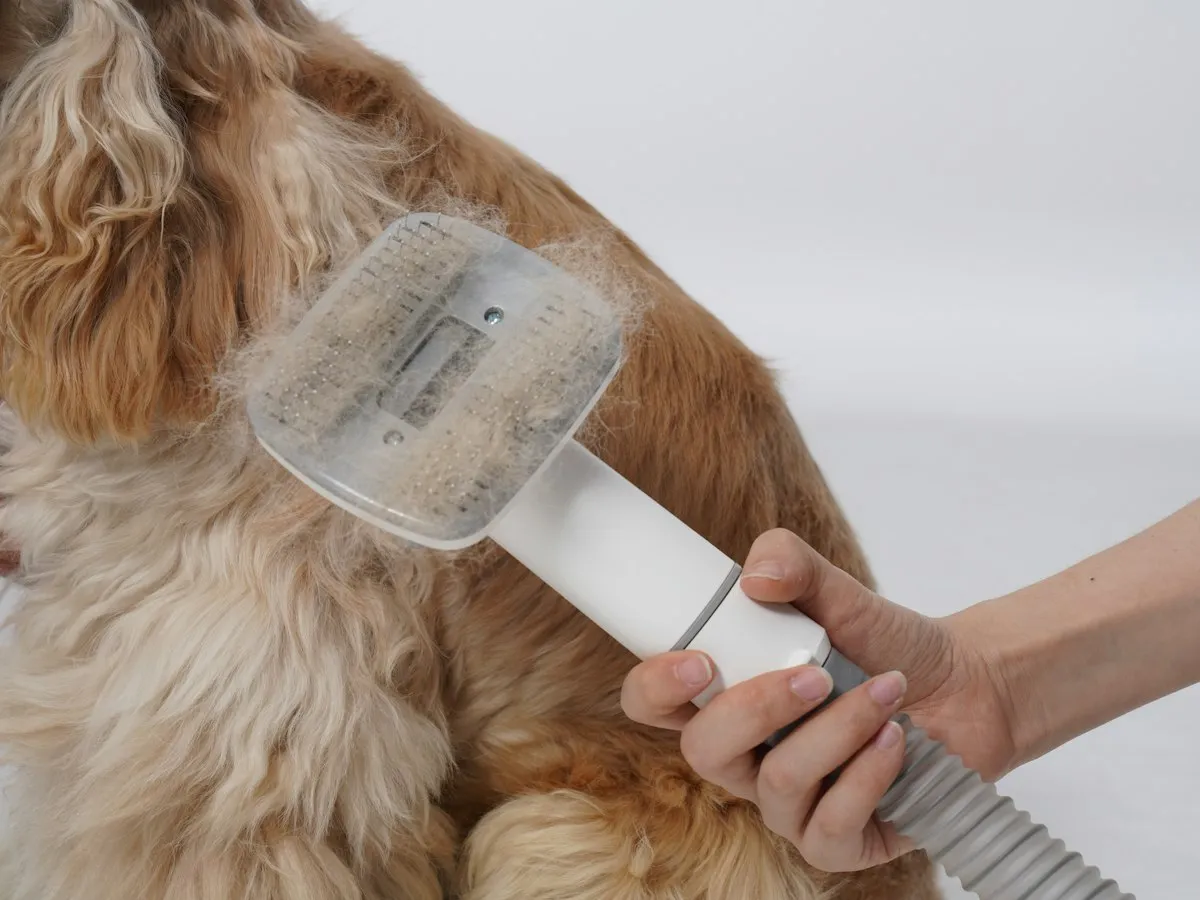
You need four tools to keep a Doodle coat healthy at home: a slicker brush, a metal greyhound comb, a dematting tool for the occasional tangle and, if you want to tidy between salon visits, pet clippers.
- Slicker brush: A pad of fine bent wire pins that does the bulk of the work. Choose a soft, long-pin slicker that reaches the skin; a stiff one scratches.
- Greyhound comb: Metal, coarse teeth at one end, fine at the other. This is the test: if it will not pass from skin to tip, that area is not finished.
- Dematting tool: Serrated blades that split a single tangle. Use it rarely, along the hair, never on a mat tight to the skin.
- Clippers: A two-speed pet clipper with a number 10 blade and comb guards for feet, belly and the sanitary area.
- Also: Blunt-tipped scissors, detangling spray, ear cleaner, nail clippers or a grinder, styptic powder and a dog toothbrush. A starter set costs 60 to 120 dollars or 50 to 100 pounds, varying by region.
3How Do You Line Brush a Doodle? Step by Step
Line brushing means brushing the coat in thin layers from the skin outwards rather than sweeping a brush across the top. Surface brushing makes a dog look tidy while felt forms underneath.
1. Settle the dog on a stable surface with treats to hand. 2. Mist the coat with detangling spray. 3. Start at a back foot and lift the hair above it with your free hand to expose a horizontal line of skin. 4. Brush the layer below the line with the slicker, from the skin outwards, in the direction of growth, using the weight of the brush rather than pressure. 5. Drop a new line a finger-width higher and repeat, up the leg, along the body, then neck, chest and head. Brush the friction zones below in two directions. 6. Follow with the greyhound comb from skin to tip. Any snag is a tangle you missed: hold the hair between knot and skin so you are not pulling on the dog, and tease it out from the outer edge inwards. 7. End with a treat. A full line brush takes 20 to 40 minutes on a Standard and 10 to 15 on a mini.
4Where Do Doodles Mat First?
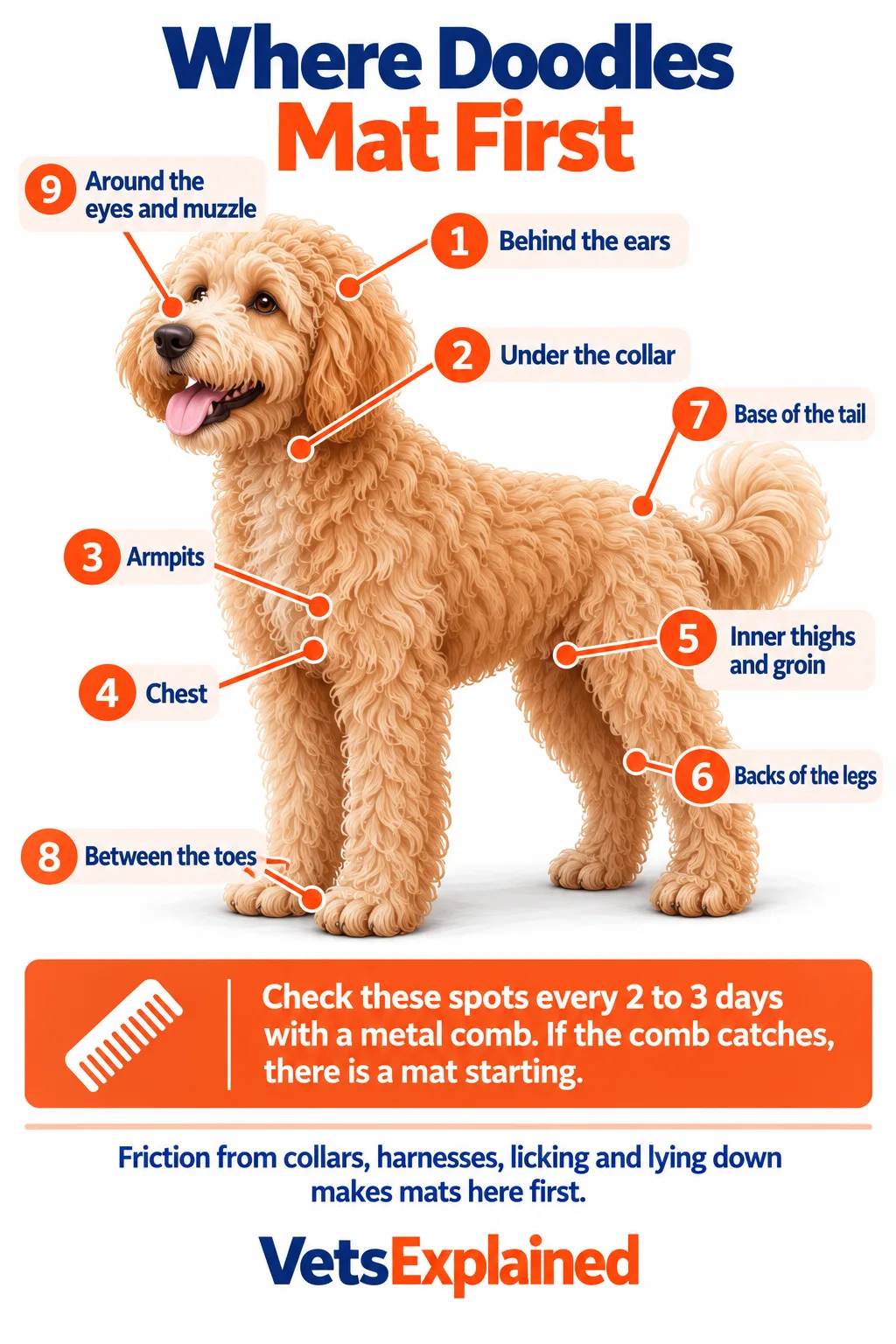
Doodles mat first wherever there is rubbing, moisture or long fine hair. The USDA animal care guidance on coat care notes that mats are most often found under the collar, behind the ears and in the armpits, and that feet and ears trap moisture that can lead to skin infection. Check these daily:
- Behind and under the ears: Fine hair, warm, often damp; the number one spot
- Under the collar or harness: Constant friction; remove the collar at home
- Armpits, groin and inner thighs: Rubbing with every step
- Backs of the hind legs and tail base: Debris and sitting friction
- Between the toes, and around the eyes and muzzle: Mud, food and tear staining
5What Happens During the Doodle Coat Change at 6 to 12 Months?
Between roughly 6 and 12 months a Doodle puppy loses its soft puppy coat and grows a thicker, often curlier adult coat, and the shed puppy hair gets trapped in the new growth. This is when most Doodles are shaved for the first time, because a coat can go from fine to felted in a fortnight. Timing varies: many Goldendoodles change at 7 to 10 months, some Bernedoodles closer to a year.
- Brush daily, to the skin, with the comb check, for the whole transition.
- Book a groom at the start of the change, not the end. A trim to half an inch or an inch makes the next three months manageable.
- Do not let the coat grow long "to see what it will look like"; that ends in a shave.
6How Often Should You Bathe a Doodle, and How Do You Dry It?
Most Doodles need a bath every four to eight weeks, and never before the coat has been fully brushed out, because water tightens tangles into mats. VCA's grooming and coat care guidance puts non-shedding breeds at a bath roughly every six to eight weeks and warns that tangles can become impossible to remove after a bath; the Merck Veterinary Manual suggests about once a month.
- Brush and comb first, every area to the skin.
- Squeeze diluted dog shampoo through the coat in the direction of growth rather than scrubbing in circles, then rinse until the water runs clear, and rinse again.
- Squeeze, do not rub, with a towel. Rubbing felts hair.
- Blow-dry fully on low heat, brushing as the air hits the coat, then comb through. A Doodle left to air-dry curls up tight and tangles as it dries, which is why groomers insist on a full blow-dry. Rinse and dry the dog after swimming too.
7How Often Does a Doodle Need Professional Grooming?
Most Doodles need a full professional groom every six to eight weeks, and curly coats kept longer than an inch do better at four to six. A first short visit at 12 to 16 weeks, after vaccinations, teaches the puppy the table, dryer and clippers while there is nothing to fight about.
- A length in inches or millimetres, not a style name. "Teddy bear" means different things in different salons; "half an inch on the body, an inch on the legs, round face" cannot be misread.
- Whether the dog was mat-free on arrival. An honest groomer will tell you where they found tangles, which is where your brushing is missing.
- What is included (ears, nails, pads, sanitary trim) and what interval they recommend.
8Why Do Groomers Shave Matted Doodles?
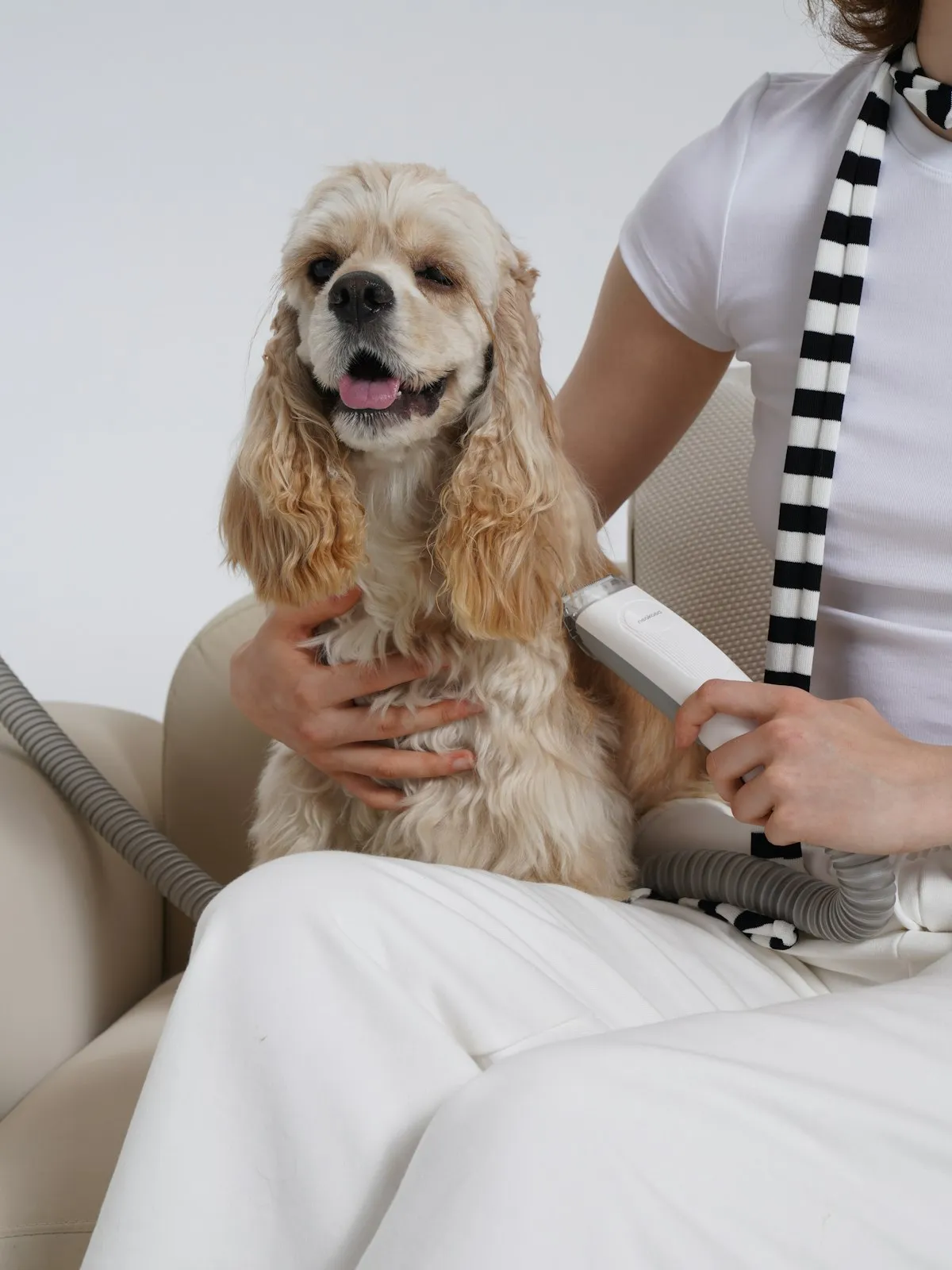
Groomers shave matted Doodles because a mat felted to the skin cannot be brushed out without pain, and the skin under it is often already damaged. The USDA animal care aid on matting lists pain, skin irritation, hidden injuries, trapped urine and faeces and poor temperature regulation among its effects, and the AVMA's guidance on recognising suspected animal cruelty includes severe matting among the physical signs of neglect veterinarians are asked to look for.
VCA's page on hot spots explains that matted fur stops air reaching the skin and holds water after rain or a swim, creating the warm, wet conditions acute moist dermatitis needs; dogs then chew at the tangles and open the skin. The Merck Veterinary Manual on pyoderma describes the same mechanism for bacterial infection, naming armpits, feet and neck folds as high-risk sites, exactly where Doodles mat; clipping is part of the treatment for both.
Dematting a pelted coat takes hours and hurts the dog; a short blade under the mats is quicker and kinder, though nicks are more likely because mats pull the skin into folds. Expect a matting fee, and hair back at roughly half an inch a month.
9What Are the Most Popular Doodle Clips?
The most popular Doodle clips are the teddy bear, the puppy cut, the kennel cut and the lamb trim, and they differ mainly in body length. Because the names are not standardised, always describe lengths.
- Teddy bear cut: Body at 1 to 2 inches, legs slightly longer and shaped into columns, face scissored round. Needs brushing at least every other day.
- Puppy cut: One even length all over, usually half an inch to an inch, with a round face. The best choice through the coat change.
- Kennel or summer cut: Body at a quarter to half an inch, head and tail a little fuller. Practical for swimmers and hot climates.
- Lamb or Poodle-style trim: Short body, fuller legs, often a shaved face and feet. Shows off the curl on Poodle-heavy Goldendoodles and keeps the mat-prone face and feet clean.
A short clip does not change how much a Doodle sheds or how allergy-friendly it is; our article on whether Doodles shed explains why.
10How Do You Care for a Doodle's Ears, Nails, Teeth and Eyes?
Ears need the most attention, because a Doodle combines a Poodle's hairy ear canal with a retriever's or spaniel's heavy, floppy flap.
Ears
The Royal Veterinary College's VetCompass study of ear infections in UK dogs found Poodle crosses, including the Labradoodle, at higher risk, and VCA's page on otitis externa notes that allergies are involved in a large share of cases, so repeated infections need a vet rather than more cleaning.
- Look and smell weekly. Redness, dark wax, a yeasty smell or head shaking mean a vet visit.
- Clean only when there is visible wax, with a vet-recommended cleaner: fill the canal, massage the base for 20 to 30 seconds, let the dog shake, wipe the flap.
- Dry the ears after swimming, and ask your vet whether canal hair should be trimmed or plucked; many now prefer trimming.
Nails
Trim every three to four weeks, in small slices or with a grinder, stopping before the pink quick, and trim the hair between the pads at the same time.
Teeth
Daily brushing with a dog toothpaste is the gold standard; the AAHA dental care guidelines treat home care as the foundation of dental health alongside professional cleaning under anaesthesia when needed. Smaller Doodles such as the Cavapoo and Maltipoo crowd their teeth and build tartar fastest.
Eyes
Keep the hair around the eyes trimmed back so the dog can see, wipe the corners daily, and see a vet for squinting or coloured discharge.
11How Much Does Doodle Grooming Cost?
A full professional groom for a Doodle typically costs 60 to 150 US dollars or 45 to 90 pounds, and prices vary widely by region, size, coat condition and whether the groomer is mobile. Matted coats attract an extra fee, often 10 to 50 dollars or pounds.
Over a year, 450 to 1,200 dollars or 350 to 700 pounds in professional grooming is realistic. Budget for it alongside food and insurance; our checklist of questions to answer before bringing home a dog puts it with the other running costs.
12A Sample Doodle Grooming Schedule
The routine below suits a wavy or curly adult Doodle on a one to two inch coat; shorten the intervals during the coat change and in wet weather.
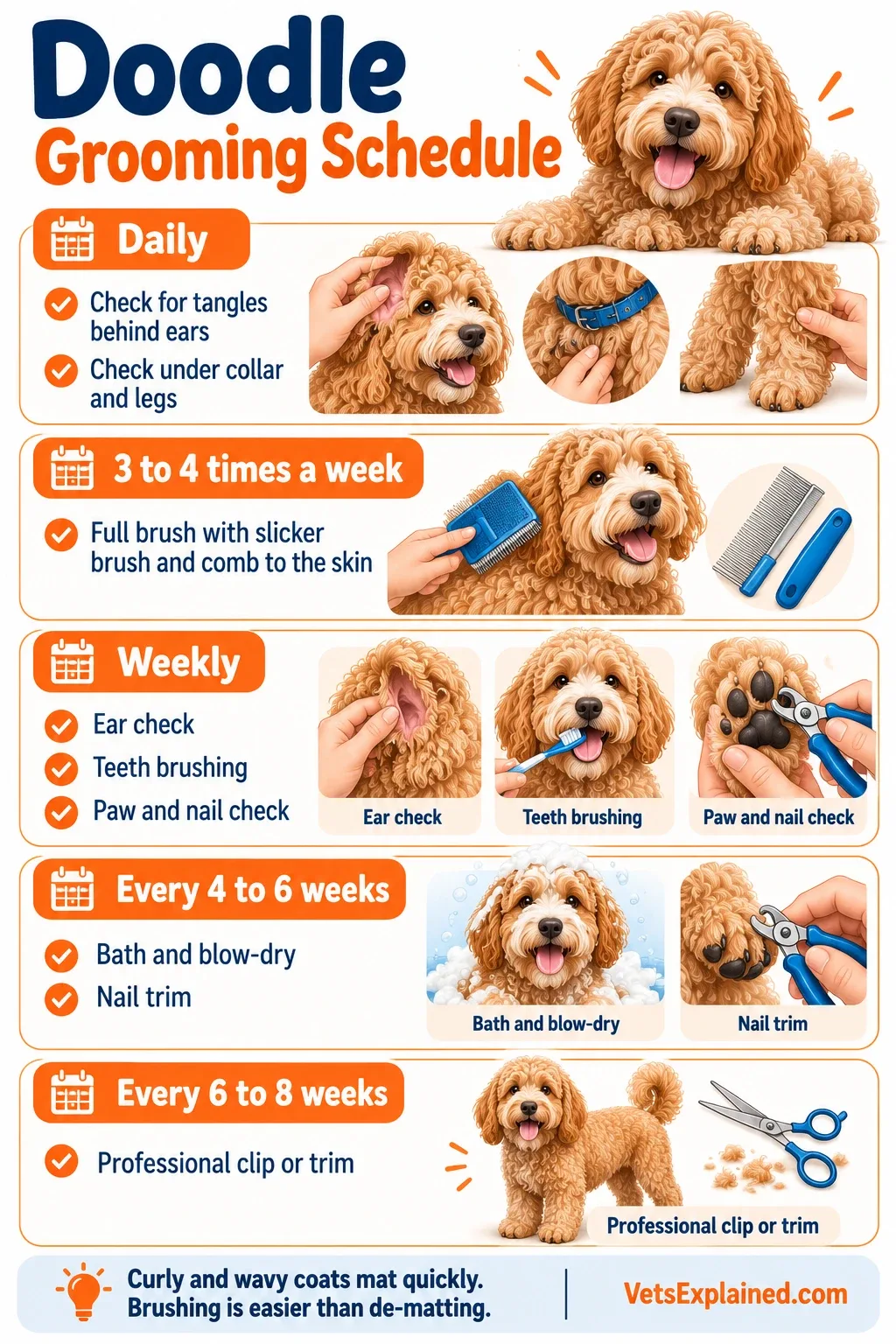
Daily
- Hand check of the hot-spots: behind the ears, collar area, armpits, groin, feet
- Wipe the eyes and beard after meals; brush teeth
- Dry the dog properly if it got wet
Every two to three days (daily for curly coats and during the coat change)
- Full line brush with the slicker, then the greyhound comb test everywhere
Weekly
- Look in and smell both ears; clean if waxy
- Comb face, ears and feet; check nails and pads
Every four to eight weeks
- Bath, condition, full blow-dry with brushing
- Nail trim; tidy pads and eyes
Every six to eight weeks
- Professional groom at the agreed length, with ears, nails, pads and sanitary trim
- Ask where any tangles were found and adjust your home routine
13Is a Doodle's Grooming Load Right for You?
A Doodle suits a household that can spend two to four hours a week on coat care.
Potential advantages
- Little loose hair on floors and furniture compared with a retriever
- A coat that can be clipped to any length, from a quarter inch to a full teddy bear
- Regular hands-on checks catch lumps, ticks and ear infections early
- Home grooming is a learnable skill that cuts costs
Potential challenges
- Mats form fast, close to the skin, and the coat change at 6 to 12 months catches many owners out
- Brushing must reach the skin several times a week for life; surface brushing does not count
- Professional grooming every six to eight weeks is a permanent running cost
- Ear infections and hot spots are more likely in a neglected coat
If that is too much, see our list of gentle breeds for first-time owners.
14Final Thoughts
A coat brushed to the skin three to seven times a week, blow-dried after every bath and clipped every six to eight weeks stays comfortable; a coat brushed on the surface ends up shaved. The difference is technique and consistency, not talent.
Start on day one with short, treat-heavy sessions and find a groomer who will tell you the truth about tangles. For the full picture on these crosses, read our complete Doodle dog guide.
Sources
- United States Department of Agriculture, Animal and Plant Health Inspection Service. Animal Care Aid: Coat care, preventing matted hair. 2018, reviewed 2024. aphis.usda.gov
- American Veterinary Medical Association. Recognizing and reporting suspected animal cruelty, abuse and neglect. 2023. avma.org
- VCA Animal Hospitals. Grooming and coat care for your dog. vcahospitals.com
- VCA Animal Hospitals. Hot spots in dogs (acute moist dermatitis). vcahospitals.com
- Merck Veterinary Manual. Pyoderma in dogs. merckvetmanual.com
- Merck Veterinary Manual. Routine health care of dogs. merckvetmanual.com
- Royal Veterinary College, VetCompass. Now listen ear: new RVC research reveals the dog breeds most affected by ear infections. 2021. rvc.ac.uk
- VCA Animal Hospitals. Ear infections in dogs (otitis externa). vcahospitals.com
- American Animal Hospital Association. AAHA dental care guidelines for dogs and cats. 2019. aaha.org
Frequently Asked Questions
?How often should a Doodle be brushed?
Three to seven times a week, to the skin, with a slicker followed by a metal comb. Curly coats and any Doodle in the 6 to 12 month coat change need daily brushing; a short kennel cut can manage with a comb-through every few days.
?How often should a Doodle go to the groomer?
Every six to eight weeks for most wavy coats kept at one to two inches, and every four to six weeks for curly or longer coats. A short first visit at 12 to 16 weeks makes later grooms easier.
?Why does my Doodle mat even though I brush every day?
Almost always because the brushing is on the surface. Mats start at the skin, so a brush that does not part the coat never touches them. Line brush in thin layers and finish with a greyhound comb; any snag is a spot you missed.
?Should you shave a Doodle in summer?
A clip of a quarter to half an inch is fine and makes summer easier, but shaving to the skin removes the coat's protection from sun and scratches. Keep a short coat and provide shade and water.
?Can I use human clippers or scissors on my Doodle?
Human clippers stall in a Doodle coat; buy a two-speed pet clipper with comb guards. Never cut a mat out with scissors, because the skin under a mat is pulled into folds and easily sliced; use blunt-tipped scissors only on the face and feet.
?What is the difference between a teddy bear cut and a puppy cut?
A puppy cut is one even length all over, usually half an inch to an inch, with a round face. A teddy bear cut leaves the body at one to two inches with longer, shaped legs and a fuller head. Give the groomer lengths in inches.
?Why did the groomer shave my Doodle when I only asked for a trim?
Because the coat was matted to the skin and could not be brushed out without pain. Mats trap moisture and cause hot spots and infection, so clipping underneath them is the safe option. Ask where the mats were.
?Does a shorter cut stop a Doodle shedding?
No. Shedding is set by coat type and genetics, not length; a short coat simply drops shorter hairs. A clip also does not make a Doodle hypoallergenic, since allergens come from dander and saliva rather than hair.
Help us do better!
Was this article helpful and relevant?
Thanks for your feedback!
About Sofia Marin
Sofia Marin is VetsExplained's senior editor. She has edited pet and consumer titles for fifteen years and is responsible for the site's editorial standards and breed coverage.
View all posts by Sofia Marin →