My Dog Has Diarrhea but Is Acting Fine: What To Do and When To Worry
 Written by Dr. Tomas Ellery, DVM
 Fact checked by Dr. Hannah Reyes, BVSc MRCVS

If your dog has diarrhea but is acting fine, eating normally and not vomiting, you can usually monitor closely, provide water and call your vet for advice. Call promptly for blood, black stool, vomiting, lethargy or appetite loss. Puppies, especially those not fully vaccinated, should be assessed sooner because parvovirus can be deadly.
The information is current and up-to-date in accordance with the latest veterinary research. Learn more »
If your dog has diarrhea but is acting fine, the likely explanation may be something minor, such as a scavenged snack or a change in food. A bright, hungry dog with one loose stool is much less concerning than a dog that is weak or refusing to eat.
Acting normal is reassuring, but it does not settle the matter. Parasites can cause loose stool in a dog that seems fine, and a playful puppy can still become ill or dehydrated quickly.
This guide gives you a practical way to decide whether to monitor at home, call your vet today, or go straight to emergency care. It applies to adult dogs and puppies, with separate advice for puppies because their margin for safety is smaller.
Key Takeaways
- One loose stool in a bright adult dog can often be monitored. Keep water available and watch closely.
- Puppies need a lower threshold. Any diarrhea in a puppy that is not fully vaccinated deserves a call to the vet.
- Warning signs override normal behavior. These include blood, black stool, vomiting, lethargy, pale gums, pain and appetite loss.
- Do not give human medicine. VCA advises against giving human products to pets.
- Bring a fresh stool sample. VCA recommends a fecal test to check for worms and other parasites.
1Quick Decision Guide
Get Veterinary Care Now
Call your vet or an emergency clinic right away if your dog has any of these:
- Blood in the stool, or black, tarry stool
- Vomiting, especially repeated vomiting
- Lethargy, weakness or collapse
- Pale gums, fever, a painful belly or obvious discomfort
- Refusal to eat
- Possible exposure to a toxin or a swallowed object
- Watery diarrhea with signs of dehydration, such as dry gums or sunken eyes
Merck notes that acute hemorrhagic diarrhea syndrome can require prompt intravenous fluids, so sudden, large-volume bloody diarrhea is always urgent.
Call Your Vet Today
- Your dog is a puppy, a senior, or has a chronic illness
- Your puppy is not fully vaccinated
- The diarrhea is frequent or getting worse
- Your dog takes regular medication
- You are unsure how serious it is
Reasonable To Monitor Briefly
For an otherwise healthy adult dog, monitoring is reasonable when there was just one or two loose stools, and your dog is alert, eating, drinking and not vomiting. Call your vet if it is not clearly improving within a day or two, or at any point if new signs appear. This timeframe is a general guide, and your vet may advise a different one for your dog.
2Why Would a Dog Have Diarrhea but Act Normal?
Many causes do not make a dog feel unwell at first. Common ones include:
- Eating something unusual. Trash, table scraps, sticks and other animals' stool are classic examples.
- A sudden food or treat change. New foods can upset digestion, particularly when introduced quickly. Our life-stage feeding guide covers what to feed.
- Stress. Boarding, travel or household changes can be triggers.
- Parasites. Roundworms, hookworms, whipworms, coccidia and giardia are among those named by the American Kennel Club.
- Infections. Bacteria and viruses can cause diarrhea, and some of these infections can become serious fast.
- Underlying disease. Food sensitivities, pancreatitis and other intestinal or organ problems can begin with mild or intermittent signs.
Stool appearance can give your vet clues. According to Merck, mucus, fresh blood, straining and urgency, often with smaller amounts of stool, suggest large bowel disease. Large volumes, weight loss and dark tarry stool fit better with small bowel disease.
3My Dog Has Soft Stool but Is Acting Fine
Soft stool that still holds some shape is often less urgent than watery diarrhea. Look first at what changed in the past few days, including food, treats, chews and anything scavenged on walks.
Call your vet if soft stool keeps returning, lasts more than a few days, or comes with weight loss or a change in appetite. Merck uses 3 weeks or longer as the point at which ongoing signs fit a chronic gastrointestinal disorder, but you should not wait that long to call. If your dog is otherwise well, your vet can start with a fecal test and a review of the diet.
4What To Do at Home
If your dog has no warning signs, these steps are reasonable while you monitor:
- Offer fresh water at all times. Check that your dog is actually drinking. Our guide on how much water a dog should drink offers a useful baseline.
- Remove extras. Stop treats, table food and new chews until stools return to normal.
- Ask your vet about food. Do not assume the old advice still applies. VCA says chicken and rice is no longer recommended in most cases and that vets may suggest a short-term veterinary diet or probiotic instead. The American Kennel Club says a bland diet often helps mild cases, so ask which approach suits your dog.
- Ask before withholding food. Puppies, small dogs and dogs with medical conditions may not tolerate fasting well.
- Save a fresh sample. A stool sample makes it easier for your vet to check for parasites.
- Track what you see. Note the number of stools, consistency, color, blood, mucus, appetite and energy.
- Reintroduce normal food gradually. VCA suggests mixing regular food back in over a few days once stools are normal.
Keep other pets and people safe by cleaning up promptly and washing your hands, as some parasites and bacteria can spread.
Do not give anti-diarrhea tablets, pain relievers or other human products unless your vet tells you to. Some are unsafe for dogs, and all of them can complicate diagnosis. Grass-eating on its own does not tell you much, but mention it if it is new.
5Will My Dog Need Antibiotics?
Often not for simple, uncomplicated diarrhea. A randomized placebo-controlled trial of 60 dogs found no statistically significant difference in time to formed stool between metronidazole, a probiotic and placebo. Its authors concluded the results did not support metronidazole for simple acute diarrhea.
The trial was small, and it excluded dogs with severe illness. A dog with blood, dehydration, a fever or other signs of serious disease is a different situation, so your vet decides what is needed.
6Puppy Has Diarrhea: Why the Rules Are Stricter
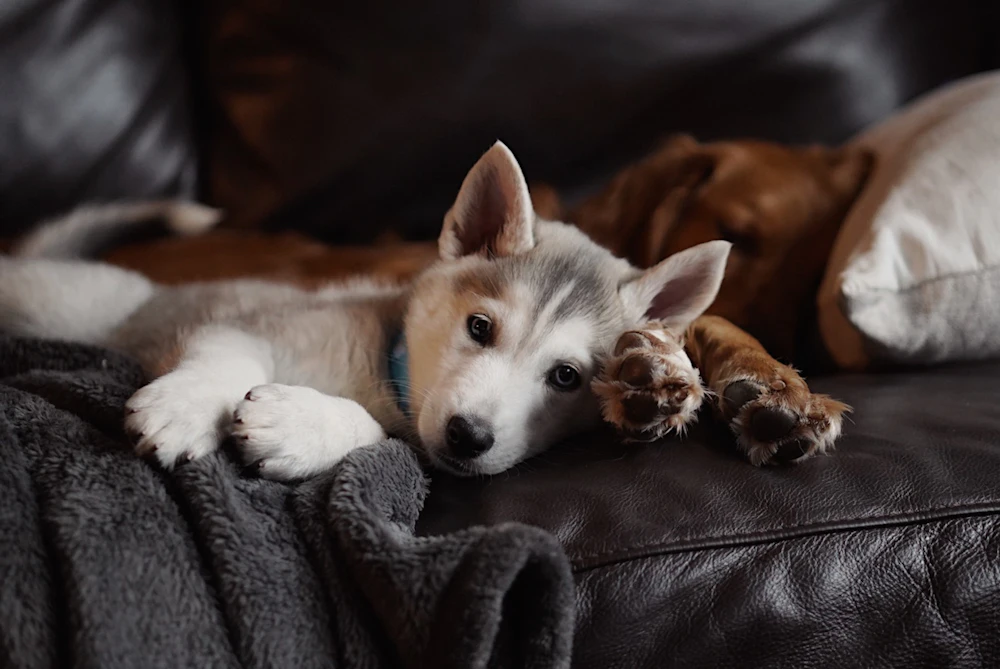
Diarrhea in puppies is common, but it deserves more caution. The American Kennel Club warns that even mild cases can cause dehydration. Common reasons a puppy has diarrhea include diet change, stress, parasites, scavenging and infection.
The most serious concern is canine parvovirus. Merck lists lethargy, loss of appetite, abdominal pain, fever or low body temperature, vomiting and severe, often bloody diarrhea among its signs. Puppies are especially vulnerable, and early signs may not look dramatic.
My Puppy Has Diarrhea but Is Acting Fine
If your puppy is still playful, eating and not vomiting, VCA recommends collecting a fresh stool sample for testing and talking to your vet. Contact your vet promptly if:
- Your puppy has not completed its vaccine series
- There is blood, vomiting, fever, pale gums or lethargy
- Your puppy will not eat
- The diarrhea lasts more than a day
VCA also says to recheck if diarrhea continues beyond 2 days or does not improve on prescribed treatment. The American Kennel Club advises a call for diarrhea that lasts more than a day, so we suggest using the shorter limit. Very young, very small or unvaccinated puppies should be seen sooner.
Keep an unvaccinated puppy away from public areas and unknown dogs until your vet advises otherwise, and tell the clinic about your concerns when you call. They may want to take precautions when you arrive.
Sources
- VCA Animal Hospitals, Puppy Has Diarrhea
- American Kennel Club, Puppy Diarrhea
- Merck Veterinary Manual, Colitis in Small Animals
- Merck Veterinary Manual, Chronic Enteropathies in Small Animals
- Merck Veterinary Manual, Acute Hemorrhagic Diarrhea Syndrome in Dogs
- Merck Veterinary Manual, Canine Parvovirus Infection
- Shmalberg J, et al. A Randomized Double Blinded Placebo-Controlled Clinical Trial of a Probiotic or Metronidazole for Acute Canine Diarrhea. Frontiers in Veterinary Science, 2019
Frequently Asked Questions
?Should I worry if my dog has diarrhea but is acting normal?
Mild diarrhea in an alert adult dog that is eating and drinking can often be monitored briefly. Worry more if it lasts, gets worse or comes with blood, vomiting, lethargy or appetite loss. Call your vet if you are unsure.
?How long is too long for diarrhea in a dog?
For a puppy, call within a day. For an otherwise healthy adult, call if there is no clear improvement in a day or two. Any warning sign means calling right away, whatever the duration.
?Why does my puppy have diarrhea but still seem playful?
Common causes include a food change, scavenging, stress and parasites. Being playful does not rule out infection or dehydration, so a stool test and a call to your vet are sensible. Puppies that are not fully vaccinated should be assessed promptly.
?Should I feed my dog if it has diarrhea?
Ask your vet. Do not fast a puppy, small dog or dog with a health condition unless advised. Many dogs do well with a short-term diet recommended by a vet, and VCA no longer advises chicken and rice in most cases.
?Can I give my dog Imodium or Pepto for diarrhea?
Do not give these without veterinary advice. VCA advises against giving human products to pets, and the right approach depends on the cause. Your vet can tell you what, if anything, is safe for your dog.
?What does yellow or mucus-covered diarrhea mean?
Color alone rarely identifies the cause. Mucus can suggest irritation in the large bowel. Mention both to your vet, particularly if your dog also has straining, urgency, blood or vomiting.
Help us do better!
Was this article helpful and relevant?
Thanks for your feedback!
About Dr. Tomas Ellery
Dr. Tomas Ellery is an emergency and general-practice veterinarian who has spent fifteen years treating dogs in busy city clinics. He writes the health and symptom guides on VetsExplained and is a firm believer that owners who know what normal looks like catch disease earlier.
View all posts by Dr. Tomas Ellery →More from Dog Health



You Might Like
 Dog BreedsLabradoodle Dog Breed Guide: Temperament, Size, Grooming, Health and Care
 Dog BehaviorWhy Does My Dog Eat Grass? A Vet Separates Myth From Evidence
 Dog BreedsBernedoodle Dog Breed Guide: Temperament, Size, Coat, Health and Cost
 Dog BreedsCavapoo Dog Breed Guide: Size, Temperament, Health, Grooming and Cost