Can Dogs Have Down Syndrome? What Those Signs Could Really Mean
 Written by Dr. Tomas Ellery, DVM
 Fact checked by Dr. Hannah Reyes, BVSc MRCVS
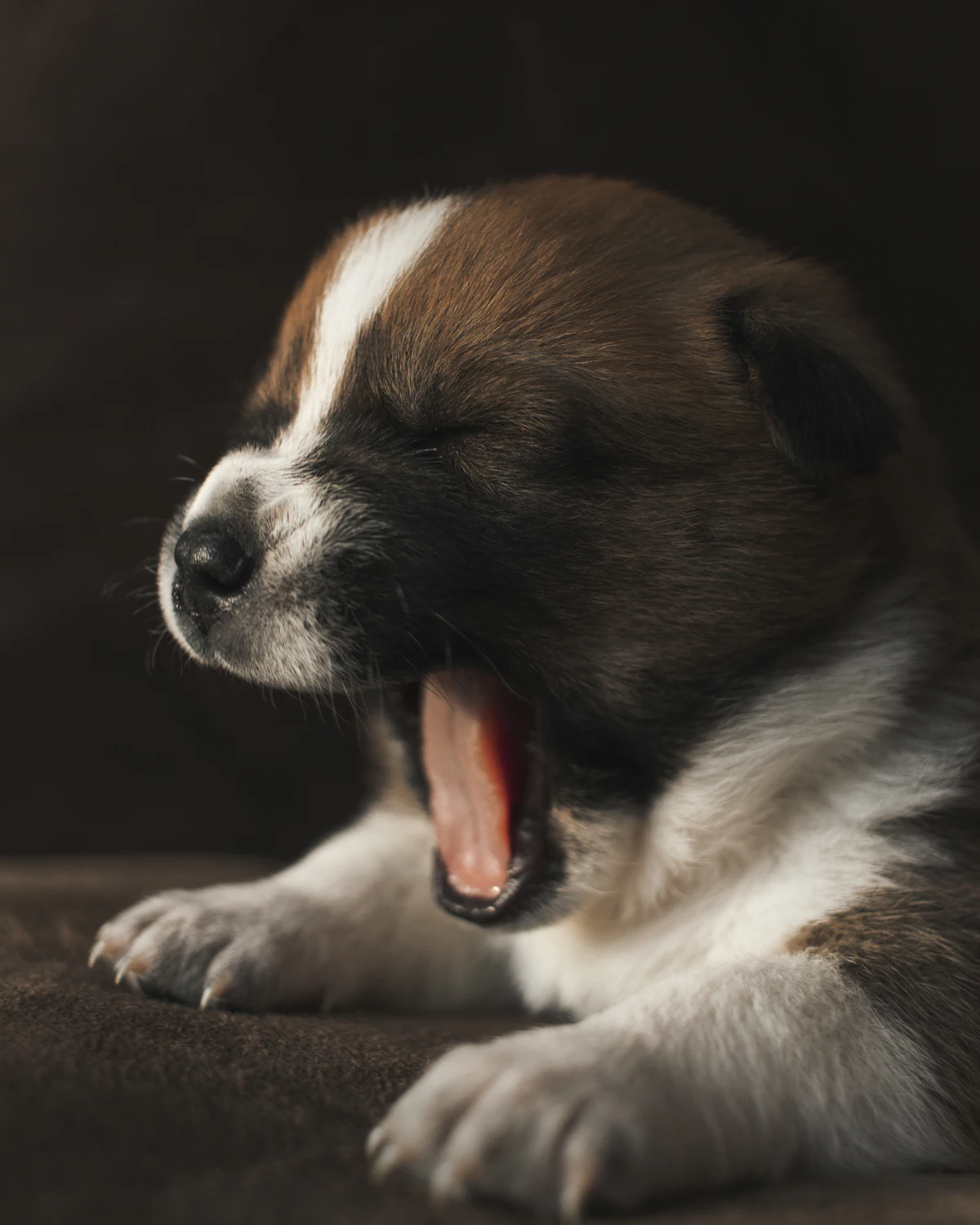
Dogs are not diagnosed with Down syndrome, which is a human condition caused by an extra copy of chromosome 21. When people describe a down syndrome dog, the signs usually have another possible explanation, such as congenital hypothyroidism, pituitary dwarfism, a liver shunt or hydrocephalus. Many of these conditions need prompt veterinary care.
The information is current and up-to-date in accordance with the latest veterinary research. Learn more »
If you have seen photos of a so-called down syndrome dog, or you are worried about your own puppy, the short answer is that Down syndrome is not a recognized diagnosis in dogs. It is a specific human chromosomal condition, and it does not map neatly onto canine genetics.
That does not mean the puppy's signs are unimportant. Unusual facial features, slow growth and delayed learning can point to real medical problems, and some improve far more when treated early.
It is one of many dog myths worth clearing up. So the useful question is not "does my dog have Down syndrome?" It is "what is causing these signs, and who should check them?" This guide explains the science and what to do next.
Key Takeaways
- Dogs are not diagnosed with Down syndrome. The term describes a human condition involving chromosome 21.
- Dog chromosomes are organized differently. Dogs have 78 chromosomes, compared with 46 in people.
- Lookalike conditions are real. Congenital hypothyroidism, pituitary dwarfism, portosystemic shunts and hydrocephalus are among them.
- Early diagnosis can matter. Treating congenital hypothyroidism early can prevent permanent developmental problems.
- Seizures, collapse or disorientation need urgent care. Do not wait to see if a young dog grows out of them.
1Can Dogs Get Down Syndrome?
No veterinary diagnosis of Down syndrome exists for dogs. According to the CDC, Down syndrome in people occurs when there is an extra copy of chromosome 21, and people usually have 23 pairs of chromosomes.
Dogs have a different karyotype. A 2021 review of canine clinical cytogenetics gives the dog's chromosome number as 78. Numbering therefore does not carry across species, and a dog's chromosome 21 is not the same as a person's.
Could a dog ever have an extra autosome, meaning a non-sex chromosome? That is harder to answer with certainty. The same review notes that many dog chromosomes are small and hard to tell apart, so abnormalities can be difficult to detect. The autosomal trisomies it describes were in tumor cells, not in the whole body of a living dog. Even if a similar defect were found, it would not automatically be the same condition as human Down syndrome.
2Why Do People Say a Dog Has Down Syndrome?
The label usually comes from appearance or behavior. People may notice a broad face, unusual eye position, a small body, a protruding tongue or slow learning. These traits have many possible causes, including breed type, injury, genetic conditions and illness.
Viral images add to the confusion. You may see posts about a pitbull, pug or chihuahua with down syndrome, or about other down syndrome animals, even pigs. A picture and a caption are not a diagnosis. Only a proper examination and testing can identify what is going on.
3Conditions That Can Look Like Down Syndrome in Dogs
Congenital Hypothyroidism
This is a thyroid hormone problem that is present from birth. A review in the New Zealand Veterinary Journal describes mental impairment and disproportionate dwarfism as its hallmark signs. Some dogs also have a goiter, and some are not diagnosed until adulthood.
Merck notes a congenital secondary form associated with disproportionate dwarfism, lethargy, gait abnormalities and constipation, reported in breeds including Giant Schnauzers, Toy Fox Terriers and Scottish Deerhounds.
Treatment involves thyroid hormone replacement. The review reports success in most cases, particularly when it starts early, because that can prevent permanent developmental changes.
Pituitary Dwarfism
This rare inherited hormone deficiency is seen most often in German Shepherd Dogs, according to Merck. Puppies may look normal until about 2 months old and then fall behind their littermates. Other possible signs include:
- A retained puppy coat, followed by symmetrical hair loss
- Delayed or absent permanent teeth
- A shrill bark
- Small testes in males, or absent or irregular heat cycles in females
Merck lists hormone testing and an available LHX3 genetic test among the diagnostic tools. Treatment is supportive rather than curative, and affected dogs tend to have shortened lifespans.
Portosystemic Shunt
A shunt is an abnormal blood vessel that lets blood bypass the liver, so toxins that the liver would normally handle can reach the brain. Merck says this is the most common congenital liver anomaly and that signs are usually neurological and evident in young animals.
Extrahepatic shunts are more common in toy breeds, including Yorkshire Terriers, Maltese and Pugs. Large breeds more often have intrahepatic shunts. Owners may see a puppy that seems dull, confused or unwell, and this can be mistaken for a learning problem.
Hydrocephalus
Hydrocephalus means an increased volume of cerebrospinal fluid in the brain. Merck says it is most common in toy and brachycephalic (flat-faced) breeds. Signs can include:
- A dome-shaped head and open fontanelles
- Reduced appetite and lethargy
- Seizures or altered mental state
- Eyes that point down and outward, sometimes called "setting sun" eyes
Signs often worsen over time, though some dogs show few problems. This is one reason a chihuahua or pug with an unusual head shape deserves an exam if it also acts abnormally.
Other Causes
Normal breed features can also be misread, and some breeds and mixes carry their own inherited health problems. A flat face, undershot jaw or wide-set eyes may simply reflect breed type or individual variation. Past head trauma, infection and other genetic conditions can also affect how a dog looks or behaves, which is why testing matters more than a label.
4When To See a Vet
Book an appointment soon if your puppy:
- Is growing much more slowly than its littermates
- Has a disproportionately short body or legs
- Has trouble walking or is unusually weak
- Has hair loss, or keeps its puppy coat for much longer than expected
- Seems unusually slow to learn or dull compared with other puppies
- Has a dome-shaped head or unusual eye position
Seek urgent care the same day if your dog has a seizure, collapses, walks in circles, presses its head against objects, seems disoriented, or cannot stand.
5How Vets Work Out What Is Wrong
There is no canine Down syndrome test to ask for. Your vet will instead look for specific conditions, starting with:
- A full history, including littermates, growth, diet and when signs began
- A physical and neurological exam
- Routine blood and urine tests
- Thyroid and other hormone testing, where signs suggest them
- Imaging such as X-rays, ultrasound or brain imaging, when needed
- Genetic testing for a specific known condition, when available
Bring your puppy's breeder paperwork if you have it, along with dated photos and videos of any odd behavior. If you have a littermate's growth records, those can help too.
6Caring for a Dog With Special Needs
Whatever the diagnosis turns out to be, many dogs with developmental differences can have a good quality of life with the right support. Practical steps may include:
- Following the treatment and monitoring plan closely
- Using short, simple, reward-based training sessions
- Keeping the environment and routine predictable
- Blocking stairs or other hazards if your dog is unsteady
- Asking your vet for an honest discussion of prognosis and comfort
If you are considering adopting a dog described as having Down syndrome, work through the usual questions to answer before bringing a dog home, then ask the shelter or rescue for medical records and have your own vet review them. If you own a breeding dog with an inherited condition, ask your vet about testing relatives and whether breeding is appropriate.
Sources
- US Centers for Disease Control and Prevention, Down Syndrome
- Szczerbal I, Switonski M. Clinical Cytogenetics of the Dog: A Review. Animals, 2021
- Bojanic K, Acke E, Jones BR. Congenital hypothyroidism of dogs and cats: a review. New Zealand Veterinary Journal, 2011
- Merck Veterinary Manual, Hypothyroidism in Animals
- Merck Veterinary Manual, Juvenile-Onset Panhypopituitarism in Dogs
- Merck Veterinary Manual, Congenital and Inherited Anomalies of the Liver in Animals
- Merck Veterinary Manual, Congenital and Inherited Cerebral Disorders in Small Animals
Frequently Asked Questions
?Can a dog have Down syndrome?
No veterinary diagnosis of Down syndrome exists in dogs. Down syndrome is defined by an extra copy of human chromosome 21. A dog with similar-looking signs needs testing for other conditions.
?Do animals have Down syndrome?
Photos of down syndrome animals circulate widely, but a photo cannot establish a diagnosis. Chromosomal abnormalities can occur in other species, yet Down syndrome is specifically a human diagnosis. Unusual features in animals often have other explanations.
?What does a dog with "Down syndrome" look like?
No single canine look exists, because the diagnosis does not apply. Dogs described this way may have a small body, a broad face or unusual eyes. The possible causes differ, so your vet should assess the whole dog.
?How many chromosomes do dogs have?
Dogs have 78 chromosomes, arranged in 39 pairs. People usually have 46 chromosomes in 23 pairs. Dog and human chromosomes are numbered separately, so the numbers do not correspond.
?Can a pitbull, pug or chihuahua have Down syndrome?
Breed does not change the answer. However, toy and flat-faced breeds are more prone to hydrocephalus, and toy breeds are more likely to have certain liver shunts. Any concerning signs deserve a checkup, whatever the breed.
?Is there a test for Down syndrome in dogs?
Not as a routine veterinary diagnosis. Vets test for the specific conditions that may be causing the signs, such as thyroid or liver problems. Genetic testing is available for some inherited diseases, including the LHX3 mutation linked to pituitary dwarfism.
Help us do better!
Was this article helpful and relevant?
Thanks for your feedback!
About Dr. Tomas Ellery
Dr. Tomas Ellery is an emergency and general-practice veterinarian who has spent fifteen years treating dogs in busy city clinics. He writes the health and symptom guides on VetsExplained and is a firm believer that owners who know what normal looks like catch disease earlier.
View all posts by Dr. Tomas Ellery →More from Dog Diseases And Medical Conditions



You Might Like
 Dog BreedsLabradoodle Dog Breed Guide: Temperament, Size, Grooming, Health and Care
 Dog BehaviorWhy Does My Dog Eat Grass? A Vet Separates Myth From Evidence
 Dog BreedsBernedoodle Dog Breed Guide: Temperament, Size, Coat, Health and Cost
 Dog BreedsCavapoo Dog Breed Guide: Size, Temperament, Health, Grooming and Cost