Dew Claw in Dogs: What It Does, Injuries and Removal
 Written by Dr. Tomas Ellery, DVM
 Fact checked by Dr. Hannah Reyes, BVSc MRCVS
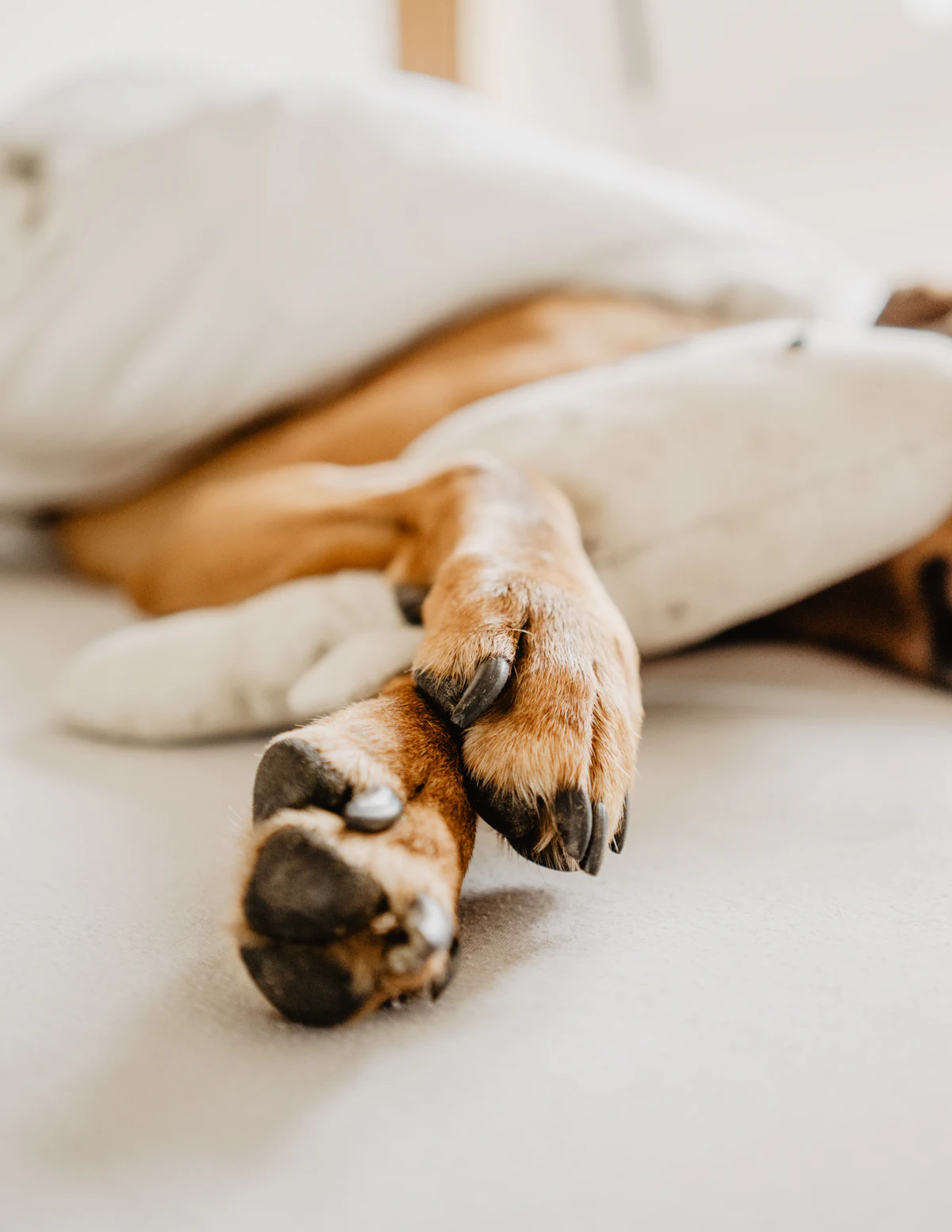
A dew claw is the small extra digit on the inner side of a dog's leg, above the paw. Most dogs have them on the front legs, and some also have them on the rear. They can aid grip and stability, need regular trimming, and should only be removed for a good medical reason.
The information is current and up-to-date in accordance with the latest veterinary research. Learn more »
A dew claw is the small extra digit on the inside of a dog's leg, set a little above the paw. Many owners only notice it when it snags on a blanket, grows too long or starts to bleed.
Dew claws are easy to dismiss as useless leftovers, and removal has long been routine in some breeds and kennels. The picture is more nuanced. Front dewclaws seem to have real uses, while loosely attached rear ones are more likely to cause trouble.
This guide explains what dewclaws do, how to care for them, how to handle an injury, and how to think through the removal question with your vet.
Key Takeaways
- Dewclaws are digits, not just stray nails. Front ones are usually more firmly attached than loose rear ones.
- They do not wear down much. They do not touch the ground, so they often need more frequent trimming.
- Keeping healthy front dewclaws is a reasonable default. Removal is best considered for a medical reason.
- A torn dew claw needs a vet. It is painful, and the nail bed connects to bone, so infection is a concern.
- Check under the fur. Long coats can hide an overgrown claw until it curls into the skin.
1What Are Dew Claws?
Dew claws, also written dewclaws, are the dog's first digit, roughly comparable in position to a thumb or big toe. They sit on the inner side of the leg, higher than the other toes, and generally do not touch the ground when a dog stands.
They vary in structure. Some are firmly attached and move like a small toe. Others, especially on the rear legs, may be loosely connected and can flop around. That difference is one of the most important factors when weighing up injury risk.
2Do All Dogs Have Dewclaws?
Most dogs are born with front dewclaws, but not every dog has them. If you cannot find them on your dog, they may have been removed in puppyhood, or your dog may simply not have developed them.
Rear dewclaws are less common and vary by breed and bloodline. According to the American Kennel Club, the Great Pyrenees, Briard, Beauceron and Icelandic Sheepdog are known for double rear dewclaws, which are part of the standard in some breeds. If you show or plan to breed one of these dogs, check the current breed standard before making any decisions.
3What Do Dewclaws Do?
The evidence is limited, but the AKC describes several likely uses for dewclaws on dogs:
- Holding things: gripping a bone or toy between the front legs
- Traction: extra purchase on slippery surfaces or when climbing out of water
- Stability: helping steady the wrist joint during fast turns
- Scrambling: getting over rocks and steep ground
Rear dewclaws are less clearly useful in most dogs, though the AKC notes that Great Pyrenees may use theirs like a brake when running downhill.
What the research suggests
One useful data point comes from a 2018 JAVMA survey of 1,081 agility dogs. Dogs without front dewclaws had higher odds of digit injury (odds ratio 1.9), as did dogs with long nails (odds ratio 2.4).
This does not prove that removal causes injuries. It was an owner survey of a very athletic group, with no review of medical records, and the authors urge caution. It is a reason not to assume front dewclaws are useless, particularly in sporting dogs.
4How to Trim a Dew Claw
Dewclaws do not get worn down by walking, and the AKC notes that they can seem to grow faster than the other nails. Check them each time you trim the others, and more often in a dog with a thick coat. Our doodle grooming guide shows why routine checks matter for dogs with heavy coats.
- Step 1: Find the claw. Part the fur and run a finger along the inside of the leg. If the nail catches on your finger, it probably needs a trim.
- Step 2: Support the digit. Hold it steady so that it does not twist, particularly if it is loose.
- Step 3: Take off small amounts. Clip only the tip, and avoid the quick, the living tissue inside the nail. It is often visible as pink in light nails, but hard to see in dark ones.
- Step 4: Check the result. Your finger should now slide over the nail rather than catching on it.
- Step 5: Reward your dog. Keep sessions short, and do one claw at a time if needed.
If you nick the quick, press a styptic powder or pencil to the tip. Your vet or groomer can trim the claws for you if your dog resists or the nail has already curved toward the skin.
An ingrown nail needs a vet. Do not try to pull it out at home, as the area is usually sore and may be infected.
5Dog Dew Claw Injury: Signs and What to Do
Dewclaws can snag, tear or break, particularly when long or loosely attached, and active outdoor dogs such as the Redbone Coonhound deserve regular checks. Signs of a dog dew claw injury include:
- Sudden yelping during play or a walk
- Licking or chewing at the inside of the leg
- Blood on the fur, bedding or floor
- A claw that hangs at an odd angle or is cracked
- Swelling, redness, discharge or a bad smell
- Limping, or not wanting the leg touched
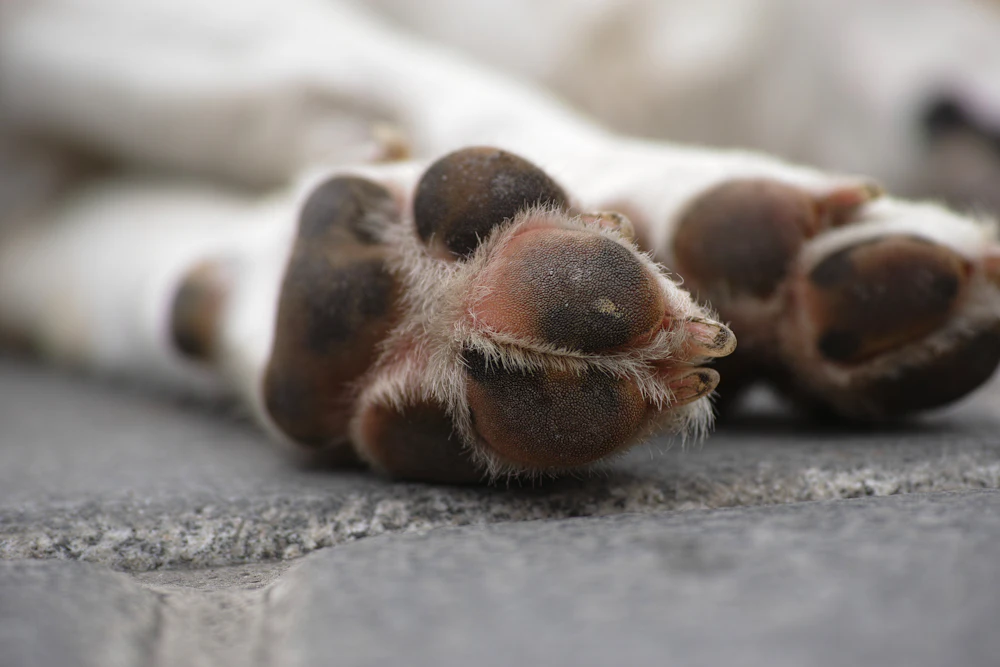
First aid at home
VCA Animal Hospitals advises treating a broken nail promptly. These steps are based on its guidance:
- Keep everyone safe. Even a friendly dog may bite when in pain, so have someone hold your dog gently, and use a muzzle if necessary.
- Stop the bleeding. Wrap the foot or leg in gauze or a clean towel and press firmly for 5 to 10 minutes.
- Use a styptic if needed. If bleeding continues, use a styptic pencil, silver nitrate stick or cautery powder. Baking powder or flour can stand in.
- Leave most of the repair to your vet. A small loose sliver can be clipped, but do not pull on an attached claw.
- Keep it covered on the way. Wrap it loosely enough not to restrict circulation, and go to the clinic.
What your vet may do
The vet usually trims the nail above the break, and sedation or a nerve block may be needed. Treatment can also include a bandage, antibiotics and a few days of pain medication. Because the nail bed connects to bone, keeping infection away matters. A follow-up visit is usually arranged to check healing.
Go to an emergency clinic if bleeding will not stop with pressure and a styptic, or if the digit looks badly damaged. See a vet the same day for pus, swelling or an obvious fracture. If your dog keeps injuring the same claw, ask whether removal should be considered.
6Dew Claw Removal: Should It Be Done?
Dew claw removal is the surgical removal of the digit, not just the nail. In some breeds it is traditionally done within the first days of life, often by the breeder or their vet. In adults it is a veterinary surgery under anesthesia, sometimes done at the same time as a spay or neuter.
When removal makes sense
Your vet may recommend dewclaw removal for:
- A loosely attached dewclaw that keeps snagging or tearing, as the AKC notes
- A severely damaged digit that will not heal well
- Recurrent infection or a chronic nail problem
- A tumor or other disease in the digit
When it probably does not
- Cosmetic reasons: appearance alone is not a medical reason.
- Healthy, firmly attached front dewclaws: the AKC says removal should be approached with caution, since they may help stabilize the limb.
- Just-in-case removal in a pet dog: the risk from surgery must be weighed against the chance of a future injury, and trimming lowers that chance.
Questions to ask your vet
- Is this dewclaw loosely or firmly attached?
- What is the injury risk given my dog's lifestyle?
- Would a trim schedule solve the problem instead?
- What do surgery, anesthesia and aftercare involve at my dog's age?
- If my dog is having another procedure, is it sensible to combine them?
Aftercare
Expect a bandage or dressing, restricted activity and something to prevent licking, such as a recovery collar. Your vet will explain how often to change the bandage and when any stitches come out. Call them about bleeding, swelling, a bad smell, discharge or a dog that seems more painful.
7Can You Declaw a Dog?
Not as a routine elective procedure. Removing all of a dog's claws would mean amputating part of each toe, and dogs depend on their claws for walking, traction and digging. Vets reserve removal of a claw for specific medical problems, such as a severe injury or a tumor.
Dewclaw removal is sometimes loosely called declawing, but it involves only those digits, and it is a different decision. If scratching or damage to floors is the concern, regular nail trims and training are the appropriate solutions.
Sources
- Sellon DC, Martucci K, Wenz JR, Marcellin-Little DJ, Powers M, Cullen KL. A survey of risk factors for digit injuries among dogs training and competing in agility events. Journal of the American Veterinary Medical Association. 2018;252(1):75-83. pubmed.ncbi.nlm.nih.gov
- American Kennel Club. What Are Dog Dewclaws?
- VCA Animal Hospitals. First Aid for Broken Nails in Dogs.
Frequently Asked Questions
?What are dew claws for?
They appear to help some dogs grip toys and bones, gain traction, climb out of water and stabilize the wrist during fast turns. Rear dewclaws have less clearly defined uses in most dogs. Research on their function remains limited.
?Should dew claws be removed?
Usually not without a reason. Healthy, firmly attached front dewclaws can generally stay and just need trimming. Your vet may recommend removal when a dewclaw is loose, repeatedly injured, badly damaged or diseased.
?Can a dew claw fall off?
A dew claw nail can tear or break off after being snagged, and this can be painful and bloody. Control the bleeding with pressure and call your vet, even if your dog seems to settle quickly, since the exposed area can become infected.
?Is a torn dew claw an emergency?
It needs prompt veterinary attention, usually the same day. Go immediately to an emergency clinic if bleeding does not stop with pressure and a styptic product, or if your dog is in severe pain or the digit looks badly damaged.
?How often should I trim my dog's dew claws?
There is no universal schedule, because growth varies. Check them whenever you trim your dog's other nails, and trim when the nail catches on your finger or begins to curve. Long-coated dogs need a closer look, as the fur can hide overgrowth.
?How much does dew claw removal cost?
The cost varies with your dog's age, your location, anesthesia needs and whether it is combined with another procedure. Ask your vet for a written estimate that includes pain relief, bandage changes and rechecks.
?Do dew claws grow back?
Once a vet removes the entire digit, including the bone that the nail grows from, it should not regrow. Incomplete removal can occasionally leave nail tissue that grows a small claw, so have your vet check any regrowth.
?Do dew claws hurt dogs?
Healthy dew claws do not typically cause pain. An overgrown, ingrown, snagged or infected one can be quite painful. Licking at the inner leg is often the first clue, so take a closer look. Our list of dog myths covers other commonly misread signs.
Help us do better!
Was this article helpful and relevant?
Thanks for your feedback!
About Dr. Tomas Ellery
Dr. Tomas Ellery is an emergency and general-practice veterinarian who has spent fifteen years treating dogs in busy city clinics. He writes the health and symptom guides on VetsExplained and is a firm believer that owners who know what normal looks like catch disease earlier.
View all posts by Dr. Tomas Ellery →More from Dog Basics



You Might Like
 Dog BreedsLabradoodle Dog Breed Guide: Temperament, Size, Grooming, Health and Care
 Dog BehaviorWhy Does My Dog Eat Grass? A Vet Separates Myth From Evidence
 Dog BreedsBernedoodle Dog Breed Guide: Temperament, Size, Coat, Health and Cost
 Dog BreedsCavapoo Dog Breed Guide: Size, Temperament, Health, Grooming and Cost