Dobermann Guide: Lifespan, Weight, Health and Family Life
 Written by Dr. Hannah Reyes, BVSc MRCVS
 Fact checked by Dr. Priya Natarajan, DVM, DACVN

The Dobermann, called the Doberman Pinscher in the US, is a large, athletic working dog usually weighing 60 to 100 pounds. Typical lifespan estimates are about 10 to 12 years, though some surveys report less. It can be a devoted family dog with training and exercise, but inherited heart disease is a major concern.
The information is current and up-to-date in accordance with the latest veterinary research. Learn more »
Sleek, watchful and famously loyal, the Dobermann has a reputation that often arrives before the dog does. Many people picture a fierce guard. Those who live with one are more likely to describe a large shadow who follows them to the bathroom and leans on the sofa.
It is a demanding breed, though. A Dobermann needs real training, daily exercise and company, and buyers should understand one uncomfortable fact early: this breed has a very high rate of inherited heart disease.
This guide covers what you need to decide whether the breed fits your life, including the lifespan numbers, healthy weight, health testing and how Dobermans do with families.
Key Takeaways
- Dobermann and Doberman Pinscher are the same breed. The spelling and name differ by region.
- Size: 24 to 28 inches at the shoulder, with weights usually listed from 60 to 100 pounds.
- Lifespan: VCA lists 10 to 12 years, while breed club and survey figures run lower.
- Biggest health risk: dilated cardiomyopathy (DCM), which often has no early outward signs.
- Screening matters: annual heart checks are widely recommended, including a 24-hour Holter monitor and an echocardiogram.
- Family life: it can be excellent with committed owners, but this is not a low-effort dog.
1Dobermann at a Glance
- Origin: Apolda, Germany, about 1890
- Breed group: Working
- Height: dogs 26 to 28 inches, bitches 24 to 26 inches (AKC standard)
- Weight: about 60 to 100 pounds (American Kennel Club chart)
- Coat: short, smooth and close
- Colors: black, red, blue and fawn, with rust markings
- Exercise: high, every day
- Grooming: low effort, weekly brushing
2Dobermann Origins and Name
The breed traces back to Karl Friedrich Louis Dobermann of Apolda, in the German state of Thuringia. According to the Doberman Pinscher Club of America, he mixed several breeds around 1890 to develop the type. The AKC first registered a Doberman in 1908.
Europe generally kept the double-n spelling and dropped "Pinscher." In America, the AKC name remains Doberman Pinscher.
Doberman Pinscher vs Doberman: Is There a Difference?
Not as a breed. The terms all describe the same dog. You will still hear people talk about "American" and "European" lines. American-bred show dogs are often described as more elegant, while European lines may be built heavier, but this is a generalization and individual dogs vary.
3How Long Do Dobermans Live?
The answer depends on who was counted, so it helps to see the range:
- VCA Animal Hospitals: 10 to 12 years
- Doberman Pinscher Club of America: about 9.6 years on average
- UK Kennel Club owner survey: a median age at death of 7 years 8 months
That last figure, from a 2014 survey of Kennel Club registered dogs, was the shortest of the 25 best-represented breeds in the study. It is based on 99 reported deaths and on owner responses, so it is not a precise forecast for every dog. It still underlines that the Doberman life expectancy tends to fall short of many other popular breeds.
So when people ask about Doberman lifespan, the honest answer is about 10 years as a reasonable working expectation, with some dogs living to their teens and others lost much younger. Heart disease is a big reason for the gap.
4Doberman Weight and Body Condition
Figures for Doberman weight vary. The AKC chart gives 60 to 100 pounds, while one breed club page puts males at about 75 to 90 pounds and females at about 55 to 70. The AKC breed standard sets height, not weight, so build and condition are better guides than a single number.
Is My Doberman Fat?
A fit Dobermann should look athletic. From above, there should be a visible waist behind the ribs. From the side, the belly should tuck up. You should be able to feel the ribs under a thin covering without pressing hard.
A fat Doberman has lost that outline, with ribs that are hard to feel or a rounded belly. Extra weight adds load on the joints, including those affected by hip dysplasia, and it makes exercise harder. Ask your vet to score your dog's condition and check for hypothyroidism if the weight gain seems out of proportion to food. A very thin Dobermann deserves a check as well.
5Doberman Health Issues
VCA and the breed club highlight the following conditions.
Dilated Cardiomyopathy
DCM weakens and enlarges the heart muscle or disrupts its rhythm. Some dogs show no warning at all before heart failure or sudden death. Others may develop coughing, fast breathing, fainting, reduced stamina or a swollen belly.
The numbers are sobering. A 2010 study of European Dobermans reported a cumulative prevalence of 58.2%. The rates rose with age, from 3.3% in dogs aged 1 to under 2 years to about 44% in dogs aged 6 and older. The disease is considered inherited in this breed.
Good screening does not cure DCM, but it can buy time. VCA recommends regular checks using an echocardiogram and an ambulatory ECG, such as a 24-hour Holter monitor, and the breed club advises annual testing. Treatment during the silent stage is possible, and in the PROTECT trial, pimobendan delayed the onset of heart failure or sudden death in Dobermans with preclinical DCM. Your vet or a veterinary cardiologist can advise you on timing.
Ask for yearly heart checks from young adulthood, starting at the age your cardiologist recommends. DNA tests exist for some gene variants, but no single result can guarantee that a dog will stay free of DCM.
Von Willebrand Disease
This inherited bleeding disorder reduces clotting ability. Many Dobermans are carriers, and affected dogs may bleed heavily after injury or surgery. A DNA test can identify clear, carrier and affected dogs. Tell your vet the result before any operation.
Wobbler Syndrome
Instability or narrowing in the neck vertebrae compresses the spinal cord. Watch for a wobbly back-end gait, neck pain or scuffed nails. Severe cases can cause paralysis, so have changes checked promptly.
Other Conditions
- Hypothyroidism: treatable with daily medication
- Hip dysplasia: joint malformation, screened by OFA or PennHIP
- Gastric dilatation-volvulus (bloat): a sudden, life-threatening emergency seen with retching, a swollen belly and restlessness
- Inherited eye disease, kidney disease and skin disorders
Questions to Ask a Breeder
A club health summary, the CHIC program, lists hip evaluation, advanced cardiac examination and DNA-based von Willebrand testing for this breed. Ask to see results on both parents, and ask how old the older relatives lived to and what they died from. Note that CHIC only requires testing and publication, so read the actual results.
6Are Dobermans Good Family Dogs?
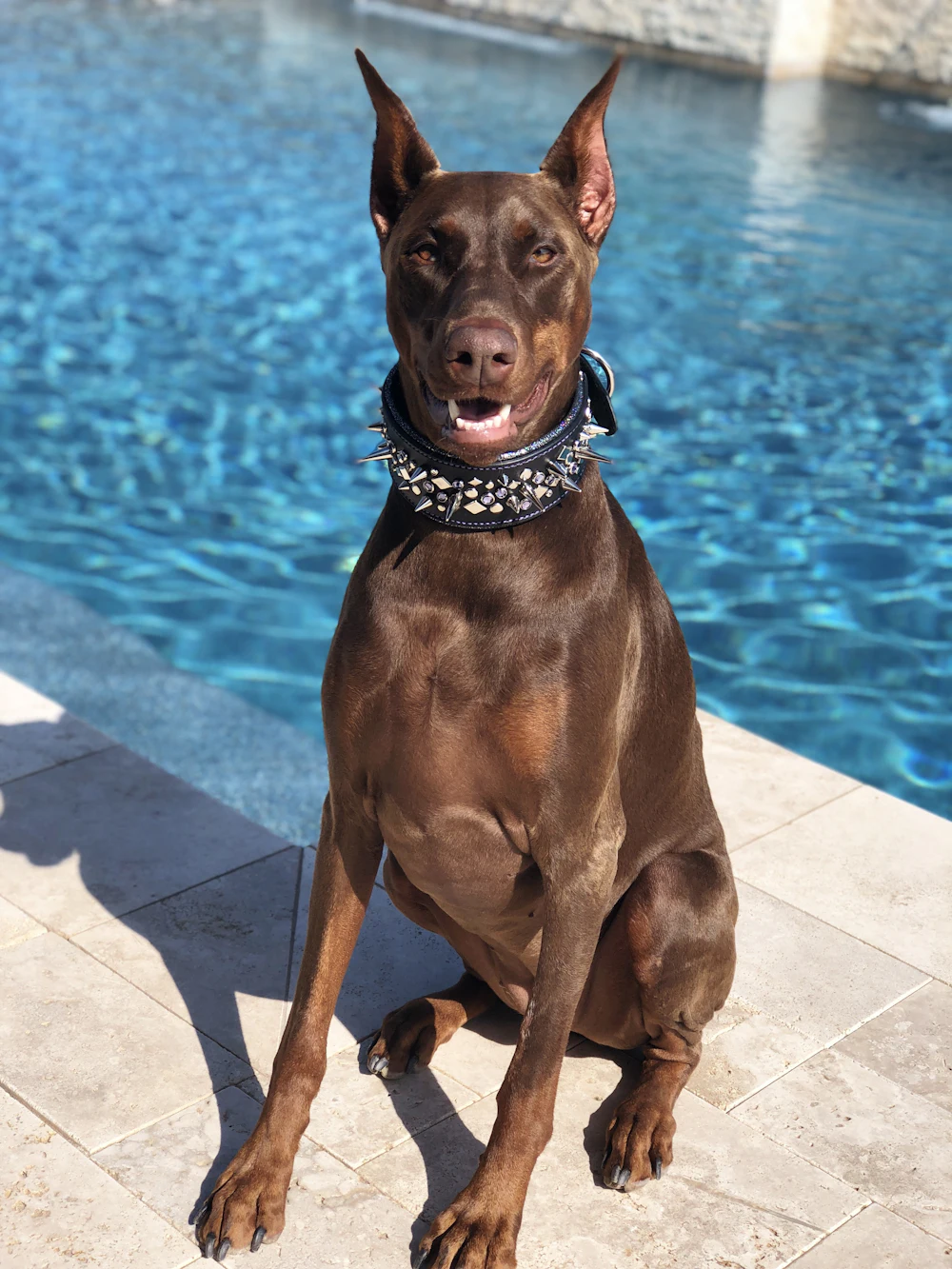
They can be, in the right home. VCA describes the breed as intelligent, strongly bonded to its people and generally good with children when properly trained. The DPCA also notes the breed's protective instincts, and it stresses that training should set limits on this behavior.
A Dobermann is likely to thrive if your household offers:
- Time together. Long periods alone can lead to anxiety or destruction.
- Early and thoughtful socialization, so that visitors and busy streets feel ordinary.
- Consistent, reward-based training. These dogs learn fast, including things you did not intend.
- An adult in charge of children's interactions. Young Dobermans are strong and clumsy, so supervise with toddlers and small kids.
- Willingness to manage guarding instincts, rather than encouraging them.
If this is your first dog and you want something easier, look at our list of gentle breeds for first-time owners. Before committing, it also helps to work through the questions to answer before bringing home a dog.
7Exercise, Training and Grooming
Plan on substantial exercise every day, combining walks or running with training games and scent work. A bored Dobermann tends to make its own entertainment. Protect growing joints by building up intensity gradually, and ask your vet when your puppy can begin longer runs.
Grooming is simple: a weekly brush, occasional baths, regular nail trims, ear checks and tooth care. The thin coat offers limited protection, and the DPCA notes that the breed tends not to enjoy cold or wet weather. A coat may help in winter, and hot weather still calls for care with exercise.
Feed a complete diet suited to a large breed. Portion control and regular body condition checks matter more than any marketing claim.
8German Pinscher vs Doberman
These breeds are related in type, and share a name and German roots, but they are separate breeds that differ mostly in scale.
- Height: German Pinscher 17 to 20 inches (AKC standard), Doberman 24 to 28 inches
- Weight: German Pinscher roughly 25 to 45 pounds, depending on the guide, Doberman about 60 to 100 pounds
- Living space: the German Pinscher takes less room but still needs lots of activity
- Temperament: both are alert, energetic and intelligent, and both benefit from an experienced hand
Size is often the deciding factor, as a German Pinscher is around half the weight of a Dobermann or less. Do not assume a smaller dog needs less training.
Sources
- American Kennel Club. Official Standard of the Doberman Pinscher.
- American Kennel Club. Breed Weight Chart.
- American Kennel Club. Official Standard of the German Pinscher.
- Doberman Pinscher Club of America. Breed History; The Doberman; Health; What It's Like Living With A Doberman.
- VCA Animal Hospitals. Doberman Pinscher.
- Lewis TW, Wiles BM, Llewellyn-Zaidi AM, Evans KM, O'Neill DG. Longevity and mortality in Kennel Club registered dog breeds in the UK in 2014. Canine Genetics and Epidemiology. 2018;5:10. pmc.ncbi.nlm.nih.gov
- Wess G, et al. Prevalence of dilated cardiomyopathy in Doberman Pinschers in various age groups. Journal of Veterinary Internal Medicine. 2010. pubmed.ncbi.nlm.nih.gov
- Efficacy of Pimobendan in the Prevention of Congestive Heart Failure or Sudden Death in Doberman Pinschers with Preclinical Dilated Cardiomyopathy (The PROTECT Study).
Frequently Asked Questions
?How long do Dobermans live?
VCA lists 10 to 12 years. The breed club reports about 9.6 years on average, and a UK owner survey found a median of 7 years 8 months. Individuals vary, and heart disease is a major factor.
?What is the average Doberman weight?
Most references give about 60 to 100 pounds, with males usually heavier than females. A lean build and body condition are better measures of health than one target number.
?Are Dobermans good family dogs?
They can be affectionate and protective with their families, and generally do well with children if trained and socialized. They need supervision around small kids and an owner who can invest in exercise and training.
?What are the most common Doberman health issues?
Dilated cardiomyopathy is the most serious. The breed is also linked with von Willebrand disease, wobbler syndrome, hypothyroidism, hip dysplasia and bloat. Annual heart screening is widely recommended.
?Are Dobermans aggressive?
A well-bred, socialized Dobermann is not naturally aggressive, but it is protective and powerful. Poor socialization can result in over-guarding or reactivity, so ask for help from a qualified trainer early if you notice problems.
?What is the difference between a Dobermann and a Doberman Pinscher?
The name only. Dobermann is the usual European term, and Doberman Pinscher is the AKC name. Differences in build reflect bloodlines and breeding goals, not separate breeds.
?Do Dobermans shed a lot?
Their short coats shed moderately to heavily according to VCA, but they are easy to maintain. A weekly brush removes loose hair and gives you a chance to check the skin.
Help us do better!
Was this article helpful and relevant?
Thanks for your feedback!
About Dr. Hannah Reyes
Dr. Hannah Reyes is a small-animal veterinarian with twelve years in general practice and a special interest in canine behavior and preventive care. She reviews behavior and health articles on VetsExplained for clinical accuracy and shares her home with a retired greyhound and an opinionated terrier mix.
View all posts by Dr. Hannah Reyes →More from Dog Breeds



You Might Like
 Dog BreedsLabradoodle Dog Breed Guide: Temperament, Size, Grooming, Health and Care
 Dog BehaviorWhy Does My Dog Eat Grass? A Vet Separates Myth From Evidence
 Dog BreedsBernedoodle Dog Breed Guide: Temperament, Size, Coat, Health and Cost
 Dog BreedsCavapoo Dog Breed Guide: Size, Temperament, Health, Grooming and Cost