Dog Smiling: Can Dogs Really Smile, and What Does It Mean?
 Written by Lena Fischer, CPDT-KA
 Fact checked by Dr. Tomas Ellery, DVM
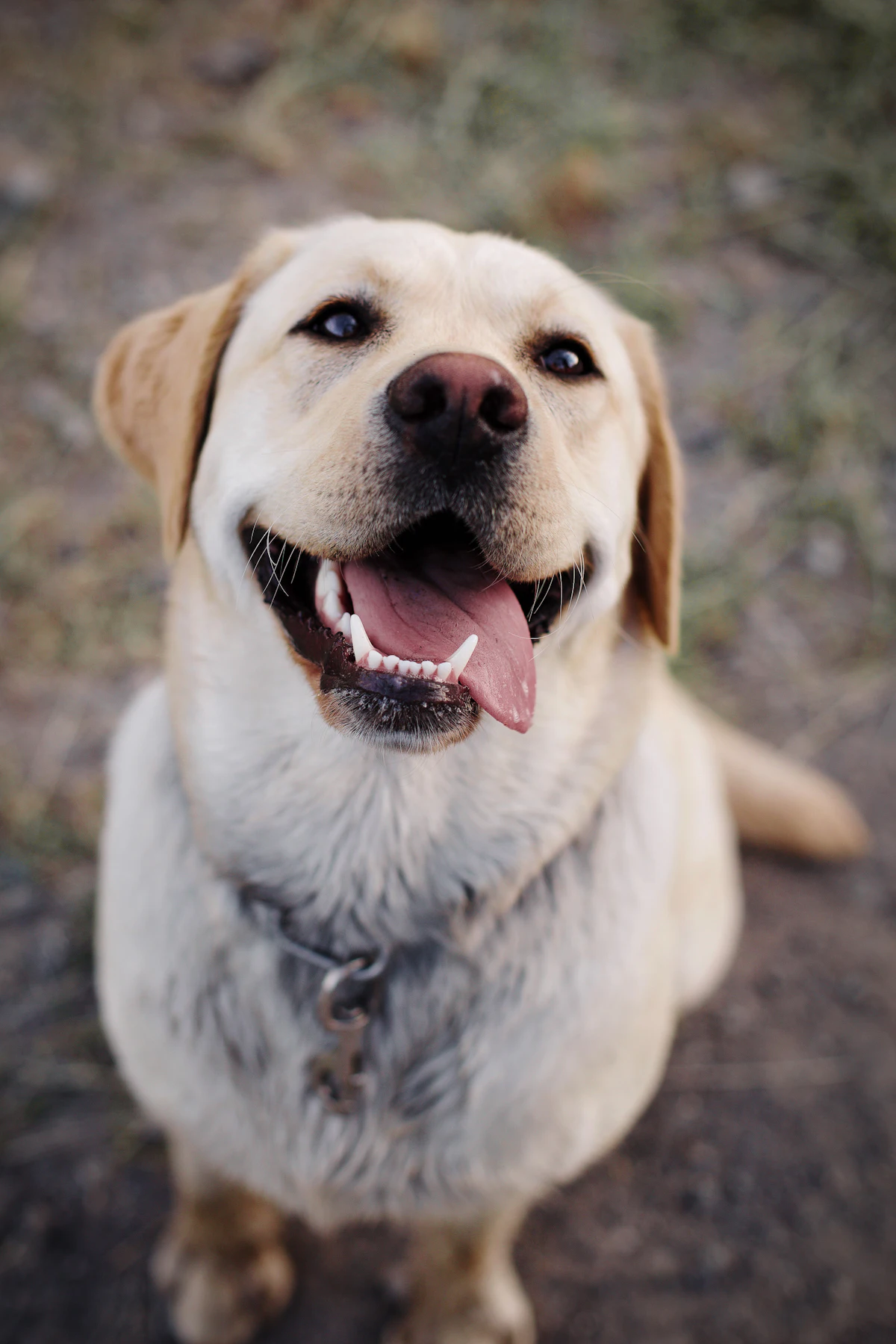
Dogs can make a smile-like face, but it does not map neatly onto a human smile. A dog smiling with a loose body, soft eyes and relaxed open mouth is usually comfortable. Bared teeth with a tense body, stiffness or a lowered posture may signal stress, appeasement, a warning or a medical problem.
The information is current and up-to-date in accordance with the latest veterinary research. Learn more »
Few things lift a bad day like a dog smiling up at you, tongue out and eyes bright. It is natural to read that face as joy, and sometimes that reading is close enough.
Dogs do not use their faces quite the way we do, though. The same pulled-back lips can appear on a dog enjoying a game, a dog trying to calm a tense moment, and a dog in real physical trouble. Telling these apart is a practical skill, and it can prevent a bite or a missed illness.
Here is what science can and cannot say about canine smiles, along with a body language check you can use the next time you spot that grin.
Key Takeaways
- Dogs make smile-like expressions, but we cannot assume they feel what a smiling person feels.
- Context beats the mouth. Read the eyes, ears, tail, posture and situation together.
- Relaxed smile: loose body, soft eyes, open mouth, often a wiggly approach.
- Submissive grin: teeth showing with a low, loose body and appeasing behavior.
- Warning snarl: teeth showing with a stiff body, hard stare or growl. Give space.
- A fixed grin with rigid muscles is an emergency, as it can be a sign of tetanus.
1Can Dogs Smile?
Dogs can pull their lips back and open their mouths in a way people recognize as a smile. Whether they are "actually smiling" depends on what you mean.
If you mean a facial shape, then yes. If you mean a learned, deliberate human social smile, there is no strong evidence that this is the same thing. Researchers can measure movements of a dog's face, but they cannot ask a dog how it feels.
What the research does show is that a dog's face is not simply a passive readout of emotion. It responds to us.
2Why Do Dogs Smile? What the Science Says
A 2017 study in Scientific Reports by a University of Portsmouth team filmed 24 dogs with a person who either faced them or turned away, sometimes holding food. Dogs made significantly more facial movements when the person was paying attention. Seeing food made no significant difference. The authors suggested that these faces may be partly communicative, rather than only a reflection of inner state.
That fits something many owners suspect. If your dog gets attention, laughter and cuddles for a goofy expression, it may show that expression more often. This is plausible learning, though the study did not test smiling specifically, and nobody has shown that dogs intend it as a smile.
Another study of 29 Labrador Retrievers, published in Scientific Reports in 2019, compared dogs anticipating a food reward with dogs frustrated at being denied it. Ears moving toward the midline of the head were more common in anticipation. Parted lips, a dropped jaw, blinking, flattened ears and nose licking were more common in frustration.
The takeaway is useful. An open mouth alone does not prove happiness. In that experiment, it was linked to the less pleasant state. The researchers also cautioned that the results may not apply to all breeds and situations.
3Do Dogs Smile When Happy?
Often a relaxed, open-mouthed face does go along with comfort, and it is reasonable to enjoy it. It commonly appears during play, greetings, belly rubs or a rest after a good walk.
Look for this cluster:
- Soft, squinty or normal-shaped eyes
- Ears in their natural resting position
- Loose mouth, often with a relaxed tongue
- Even weight and a loose, wiggly body
- A tail wagging at mid-height or in a broad sweep
- Your dog choosing to stay near you
Remember that panting can create the same expression. After a run or in warm weather, your "smiling" dog may simply be cooling down. Heavy panting in a cool room, or at rest, deserves a closer look. So does a dog that also looks sad or withdrawn at other times.
4Dog Smiling With Teeth: Three Very Different Meanings
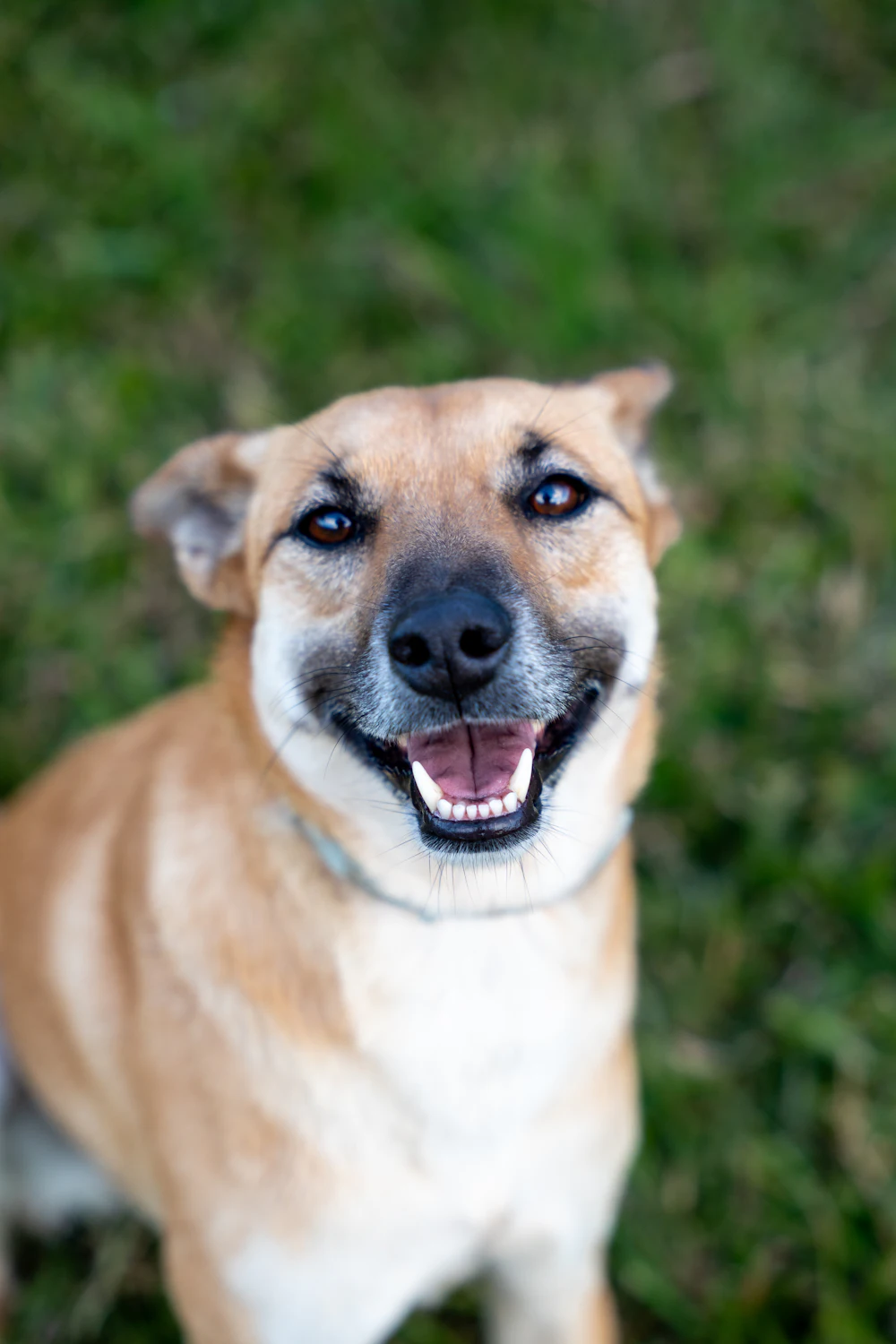
A dog smiling with teeth showing is the expression most worth checking carefully.
The Submissive Grin
Some dogs lift their front lips and show their incisors during greetings or when someone sounds displeased. Trainers usually call this a submissive or appeasement grin. It tends to come with a lowered head, squinting eyes, a low wag, a curved body and sometimes sneezing or wriggling.
It looks alarming but is generally meant to keep the peace. Stay calm, avoid scolding and turn slightly to the side. Punishing it may increase your dog's worry.
The Warning Snarl
This is a threat display, not a smile. Warning signs include:
- A wrinkled muzzle and lips lifted vertically
- A stiff body and closed mouth behind the teeth
- A hard stare or visible whites of the eye
- A growl, freeze or lean forward
- Guarding of food, toys, a person or a resting spot
Stop what you are doing and give your dog space without yelling. If this happens around valuables, our article on resource guarding explains the next steps. A veterinary exam and a qualified behavior professional are good investments for repeated episodes, since pain can lower a dog's tolerance.
The Stress Grin
A tight mouth with pulled-back corners can accompany fear or discomfort. Look for panting without heat or exercise, lip licking, yawning, a tucked tail, trembling, flattened ears, or attempts to move away.
If the situation is the trigger, such as a crowd, the vet's office, or a child leaning in for a hug, help your dog out of it. Close contact is not always welcome. See how dogs actually like to be shown affection for options that usually work better.
5Quick Check: Is That Smile Friendly?
Run through these questions in a few seconds:
- Body: loose and wiggly, or stiff and still?
- Eyes: soft and blinking, or hard and staring?
- Lips: relaxed at the corners, or wrinkled up over the front teeth?
- Sound: silent or panting, or growling?
- Movement: coming toward you, or freezing or backing away?
- Situation: play, or a resource, a stranger, or being handled?
If the signals conflict or you are not sure, assume caution and give the dog room. This matters especially around children, who are more likely to read every toothy face as friendly.
6Smirking Dogs and Funny Faces
A smirking dog with one lip caught on a tooth is usually just a charming quirk of the moment. Mouth shape, loose flews, an underbite or a missing tooth can all give some dogs a permanent "funny face." Flat-faced breeds can also be harder to read, since their features leave less room for subtle movements.
A new expression is different from a familiar one, though. If one side of the face suddenly droops, your dog cannot blink an eye, or the lip lift is new and persistent, have your vet take a look. Facial nerve problems, mouth pain and other conditions can change how a dog's face looks.
7When a Smile Means See a Vet
The Merck Veterinary Manual describes severe tetanus in dogs as including a rigid posture, erect ears, a stiff tail and a partly open mouth with lips pulled back. Veterinary literature calls this fixed grin risus sardonicus. It is rare but serious.
Seek emergency care for a grin-like face with:
- Muscle stiffness, spasms or difficulty walking
- Trouble opening the mouth, eating or swallowing
- Wrinkled forehead, stiff ears or a raised third eyelid
- A recent wound together with these signs
- Severe panting, collapse, or breathing difficulty
Also see your vet for drooling, bad breath, bleeding gums, pawing at the mouth or reluctance to chew. These suggest mouth pain, which no amount of smiling should hide.
8Should You Encourage Your Dog to Smile?
It is fine to reward a relaxed, happy expression with a treat, a marker word and praise. Some dogs learn a cute "smile" cue this way.
Do not create it through pressure, teasing or by manipulating the lips. And do not encourage the expression if it is a stress or appeasement signal, because you want your dog to feel better, not just look better. A dog's trust shows up in many other ways, as covered in these signs your dog is bonded to you.
Sources
- Kaminski J, Hynds J, Morris P, Waller BM. Human attention affects facial expressions in domestic dogs. Scientific Reports. 2017;7:12914. pubmed.ncbi.nlm.nih.gov
- Differences in facial expressions during positive anticipation and frustration in dogs awaiting a reward. Scientific Reports. 2019. pmc.ncbi.nlm.nih.gov
- Merck Veterinary Manual, Pet Owner Version. Tetanus in Dogs.
- ASPCA. Canine body language materials.
Frequently Asked Questions
?Do dogs actually smile?
They make smile-like faces, and these can go along with relaxation. It is not proven that they mean the same thing as a human smile. Research does suggest that dogs change their expressions depending on whether people are paying attention.
?Why does my dog smile at me?
It may be relaxed, excited, or looking for attention, especially if smiling has earned affection before. It could also be an appeasement signal. Check body language and whether this happens when you greet your dog or sound upset.
?Is a dog smiling with teeth aggressive?
Not always. A loose body and low wag suggest a submissive grin. A stiff body, hard stare, wrinkled muzzle or growl suggests a warning. Treat the second case seriously and give your dog space.
?Do dogs smile when happy?
Often their mouth relaxes and opens when they feel comfortable, so a happy dog can look like it is smiling. But panting and frustration can also open the mouth, so the rest of the body matters.
?Can dogs understand when we smile?
Some research suggests that dogs can learn to distinguish human facial expressions, and they respond to our attention. Your tone, movement and routine probably matter as much as your smile.
?Why is my dog's lip stuck on its tooth?
This can happen to any dog, especially those with loose lips or dental changes. It usually corrects itself. Have your vet check if it keeps happening, seems sore, or comes with drooling or a swollen mouth.
Help us do better!
Was this article helpful and relevant?
Thanks for your feedback!
About Lena Fischer
Lena Fischer is a certified professional dog trainer and behavior consultant who has worked with family dogs, shelter dogs and working dogs for over a decade. She uses reward-based methods only and writes the training and behavior guides on VetsExplained.
View all posts by Lena Fischer →More from Dog Behavior



You Might Like
 Dog BreedsLabradoodle Dog Breed Guide: Temperament, Size, Grooming, Health and Care
 Dog BehaviorWhy Does My Dog Eat Grass? A Vet Separates Myth From Evidence
 Dog BreedsBernedoodle Dog Breed Guide: Temperament, Size, Coat, Health and Cost
 Dog BreedsCavapoo Dog Breed Guide: Size, Temperament, Health, Grooming and Cost