High Calorie Dog Food: How to Choose Dog Food for Weight Gain
 Written by Dr. Priya Natarajan, DVM, DACVN
 Fact checked by Dr. Hannah Reyes, BVSc MRCVS
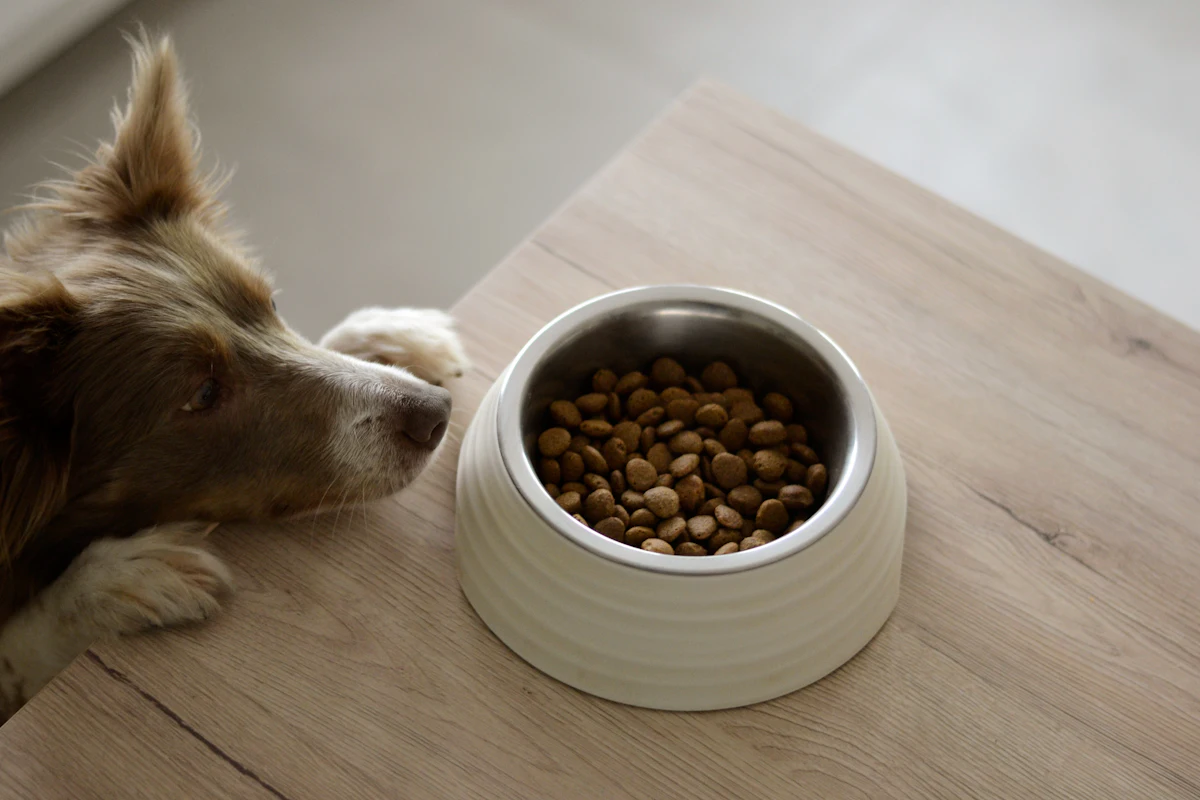
High calorie dog food packs more energy into each cup, usually through higher fat, so a thin dog can take in more without huge meals. Choose a complete and balanced food, compare kcal per cup on the label, and see your vet first, because weight loss often has a medical cause that food cannot fix.
The information is current and up-to-date in accordance with the latest veterinary research. Learn more »
Most dog food advice is about taking weight off, so owners of a skinny dog can struggle to find sound help. High calorie dog food can be the right tool, but only once you know why the weight is low in the first place.
This is a research-based buying guide. We did no hands-on product testing or feeding trials, and we do not give ratings. Instead, you will learn how to compare foods yourself, which types of dog food for weight gain exist, and when to skip the shopping and call a vet.
Key Takeaways
- Rule out illness first. Parasites, dental pain, diabetes, infection and tumors can all cause weight loss, and more food will not solve them.
- Compare kcal per cup, not marketing claims. "High energy" has no number attached, but the calorie statement on the bag does.
- Fat is the main driver of calorie density. Check that protein and other nutrients remain adequate too.
- Change food gradually. Sudden switches and rich extras can upset the gut.
- Severely thin dogs need a veterinary plan. Feeding them too much too quickly can cause refeeding syndrome, which can be dangerous.
1Is Your Dog Actually Underweight?
Some owners worry about a dog that is simply lean, and sighthounds such as Salukis and Greyhound-type breeds naturally look slim. A hands-on check tells you more than the scale does.
VCA Animal Hospitals suggests placing your thumbs on the backbone and spreading your fingers over the ribs. Then compare what you feel with the back of your own hand:
- Fist clenched, knuckles sharp: ribs that feel like this suggest an underweight dog.
- Hand relaxed and flat: this is closer to an ideal covering.
- Palm side of your hand: this suggests extra weight.
Vets commonly use a 9-point body condition scale, on which WSAVA guidelines flag any score below 4 for follow-up. Visible ribs, spine and hip bones with little body fat and obvious muscle loss are at the serious end.
2See a Vet Before You Change the Food
Call your vet first if the weight loss is new, unexplained or continues on a normal diet. According to the AKC's veterinary guidance, possible causes include internal parasites, dental pain, diabetes, infectious disease and tumors, as well as a diet that simply supplies too little.
Arrange a prompt visit if weight loss comes with any of these signs:
- Repeated vomiting or diarrhea
- Drinking and urinating more than usual
- Eating normally or more, yet still losing weight
- Refusing food or struggling to chew
- Low energy, coughing or a swollen belly
Puppies, seniors and dogs with diagnosed conditions need more care too, because a richer food can be the wrong choice. Dogs with a history of pancreatitis, for example, may need a lower-fat approach, and one with kidney disease needs a diet chosen for that condition.
Very Thin Rescues Are a Special Case
If you have taken in a severely underweight dog, speak to a vet right away and do not offer large meals. Refeeding syndrome can cause respiratory or cardiac failure, so the pace of feeding has to be set by a professional.
3What Makes a Dog Food High in Calories?
Energy density means how many calories sit in a given amount of food. Fat supplies more than twice the calories of protein or carbohydrate per gram, so richer foods generally have more fat. The Merck Veterinary Manual gives typical fat levels of 5 to 15% on a dry matter basis for adult food and 8 to 20% for puppy food.
Merck adds an important caution: protein needs still have to be met in the smaller volume a dog eats. A high calorie food that shorts protein may leave the dog burning protein for energy instead of building muscle.
There is no official cutoff for "high calorie," so use this comparison point. A 2010 JAVMA analysis of weight-loss diets found dry formulas ranging from 217 to 440 kcal per cup, with a median of 301. If a food sits within that range, it may not offer much of a calorie boost, and some "light" foods are clearly the wrong choice.
4How to Choose the Best Dog Food for Weight Gain
Use this checklist on any bag or can you are considering:
- Find the calorie statement. It lists kcal per kg and usually kcal per cup or can. Compare the same unit across products.
- Check the nutritional adequacy statement. Look for "complete and balanced" for your dog's life stage. Foods labeled for supplemental or intermittent feeding should not be the whole diet without veterinary direction.
- Compare fat and protein on an equal basis. Wet foods look low on the label because of their water content, so do not compare them directly with kibble. Our guide to reading a dog food label shows how.
- Match it to your dog's age and size. Fast-growing large-breed puppies should stay on a suitable growth food, so ask your vet before picking a performance food.
- Consider what your dog will actually eat. The richest food does nothing if a poor eater walks away from it.
- Ask your vet to review the short list, especially if your dog has a health condition.
5Types of High Calorie Dog Food
These are the main categories to discuss with your vet. Formulas change, so always confirm the current label on the maker's site.
Performance and Sport Dry Foods
These foods are designed for active dogs and tend to be the highest in calories among everyday kibbles. Purina's Pro Plan Sport Performance 30/20 line is one example. The maker's label for the chicken and rice formula lists about 484 kcal per cup, and other 30/20 recipes differ. A less active dog may need its portions managed once it reaches a healthy weight.
Puppy and All-Life-Stage Foods
Growth formulas tend to carry more fat than many adult maintenance foods. An adult dog may do well on one for a time, but ask your vet first, because mineral levels can differ.
Veterinary Recovery Diets
These energy-dense wet foods support dogs recovering from illness, surgery or injury. Two examples are Hill's Prescription Diet a/d, listed at 196 kcal per 5.5 oz can, and Royal Canin Veterinary Diet Recovery. Both makers say to use them under veterinary direction. Hill's describes a/d as being for intermittent feeding and does not recommend it for more than 6 months.
Toppers and Mix-Ins
Wet food or a measured amount of a complete topper can raise both calories and appeal. Count these toward the daily total, and keep treats from crowding out balanced food. Avoid butter-heavy leftovers and raw meat, which the AKC links to pancreatitis and bacterial risks.
6How Much to Feed for Weight Gain
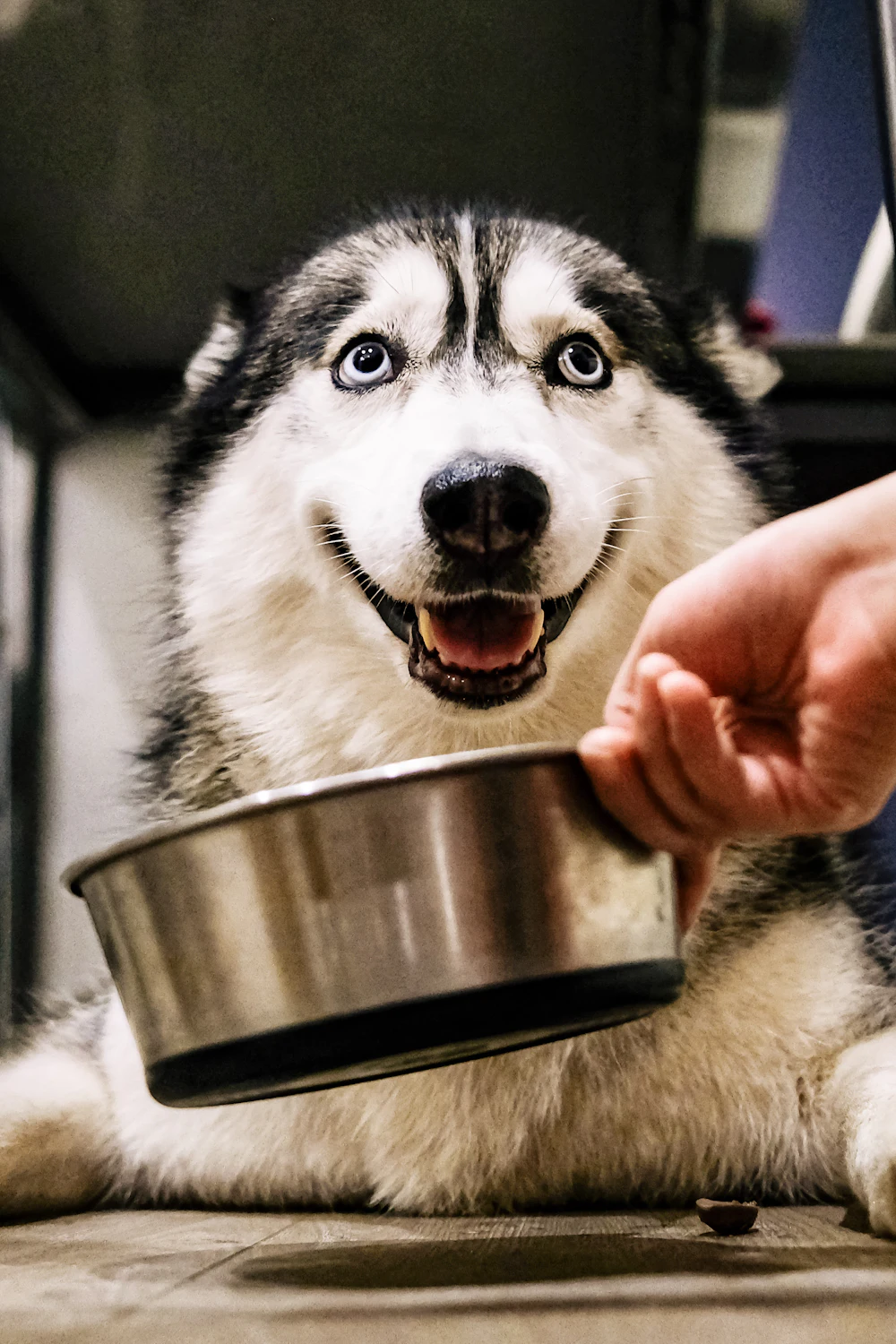
Your vet should set the target, but it helps to understand the arithmetic. Merck gives this starting formula for resting needs: 70 × (body weight in kg)^0.75. It then multiplies by about 1.6 for a typical neutered adult dog.
For a 20 kg (44 lb) neutered adult, that works out to roughly 1,060 kcal a day for maintenance at that weight. Merck warns individual dogs can vary by up to 30% in either direction, and a dog that needs to gain will need a target your vet sets above this.
Calorie density changes the amount in the bowl. Using that same 1,060 kcal figure:
- A 300 kcal per cup food would need about 3.5 cups
- A 480 kcal per cup food would need about 2.2 cups
7A Sensible Weight Gain Plan
Once your vet has cleared your dog, keep the plan simple:
- Split the day's food into more meals. Several smaller meals are often easier to manage than one or two big ones.
- Transition slowly. A common approach is to mix new food into old over about a week. Slow down if stools soften. Our note on diarrhea in a dog that seems fine explains when loose stool matters.
- Weigh on a set schedule. Log the weight and a body condition check, and share them with your vet.
- Aim for steady gain. Rapid gain is not the goal, and it can be unhealthy.
- Add muscle-building activity only as advised. Gentle exercise suits a recovering dog better than hard work.
- Reassess at the target. Keep feeding a very rich food at the same amount and your dog may overshoot, so ask your vet about a maintenance plan.
Go back to the vet if your dog is not gaining as expected, loses more weight or starts vomiting or having diarrhea.
Sources
- AKC. Is My Dog Underweight? (American Kennel Club, veterinary guidance from Dr. Jerry Klein).
- VCA Animal Hospitals. Body Condition Scoring in Dogs.
- WSAVA. Nutritional Assessment Guidelines and Body Condition Score chart.
- Merck Veterinary Manual. Nutritional Requirements and Related Diseases of Small Animals.
- Linder DE, Freeman LM. Evaluation of calorie density and feeding directions for commercially available diets designed for weight loss in dogs and cats. J Am Vet Med Assoc. 2010;236(1):74-77. pubmed.ncbi.nlm.nih.gov
- Hill's Pet Nutrition. Prescription Diet a/d product information.
- Royal Canin. Veterinary Diet Feline and Canine Recovery product information.
- Purina. Pro Plan Sport Performance 30/20 product label.
Frequently Asked Questions
?What is the highest calorie dog food?
There is no single answer, because recipes change and products are measured in different units. Performance kibbles tend to lead among dry foods, so compare the kcal per cup printed on current labels and ask your vet which suits your dog.
?What can I feed my dog to gain weight quickly?
Fast gain is not the aim, and it can be unhealthy. Ask your vet to rule out illness, then use a calorie-dense complete food, split into smaller meals. Very thin dogs must be refed under veterinary supervision.
?Is puppy food good for weight gain in adult dogs?
It can help some adults because it tends to be richer, but it is not right for every dog. Ask your vet first, particularly if your dog has kidney disease, pancreatitis or another diagnosed condition.
?Why is my dog skinny even though he eats well?
A good appetite with weight loss can point to parasites, diabetes or another medical problem, or simply too few calories for your dog's activity. It deserves a vet visit, and bringing a stool sample may help.
?How can I tell if my dog is underweight?
Feel the ribs. If they feel as sharp as your knuckles in a clenched fist, or you can see the ribs, spine and hip bones, your dog may be underweight. Ask your vet for a body condition score.
?Can I add oil or butter to my dog's food?
Avoid butter-rich foods, because sudden fatty additions can trigger pancreatitis in some dogs. Ask your vet before adding any oil, and how much, since it adds calories without balanced nutrition.
Help us do better!
Was this article helpful and relevant?
Thanks for your feedback!
About Dr. Priya Natarajan
Dr. Priya Natarajan is a board-certified veterinary nutritionist who formulates diets for both commercial brands and individual patients. She covers nutrition, feeding and food-label topics on VetsExplained.
View all posts by Dr. Priya Natarajan →More from Dog Nutrition & Diet



You Might Like
 Dog BreedsLabradoodle Dog Breed Guide: Temperament, Size, Grooming, Health and Care
 Dog BehaviorWhy Does My Dog Eat Grass? A Vet Separates Myth From Evidence
 Dog BreedsBernedoodle Dog Breed Guide: Temperament, Size, Coat, Health and Cost
 Dog BreedsCavapoo Dog Breed Guide: Size, Temperament, Health, Grooming and Cost