Reactive Dog: What It Means and How to Help Without Making It Worse
 Written by Lena Fischer, CPDT-KA
 Fact checked by Dr. Tomas Ellery, DVM
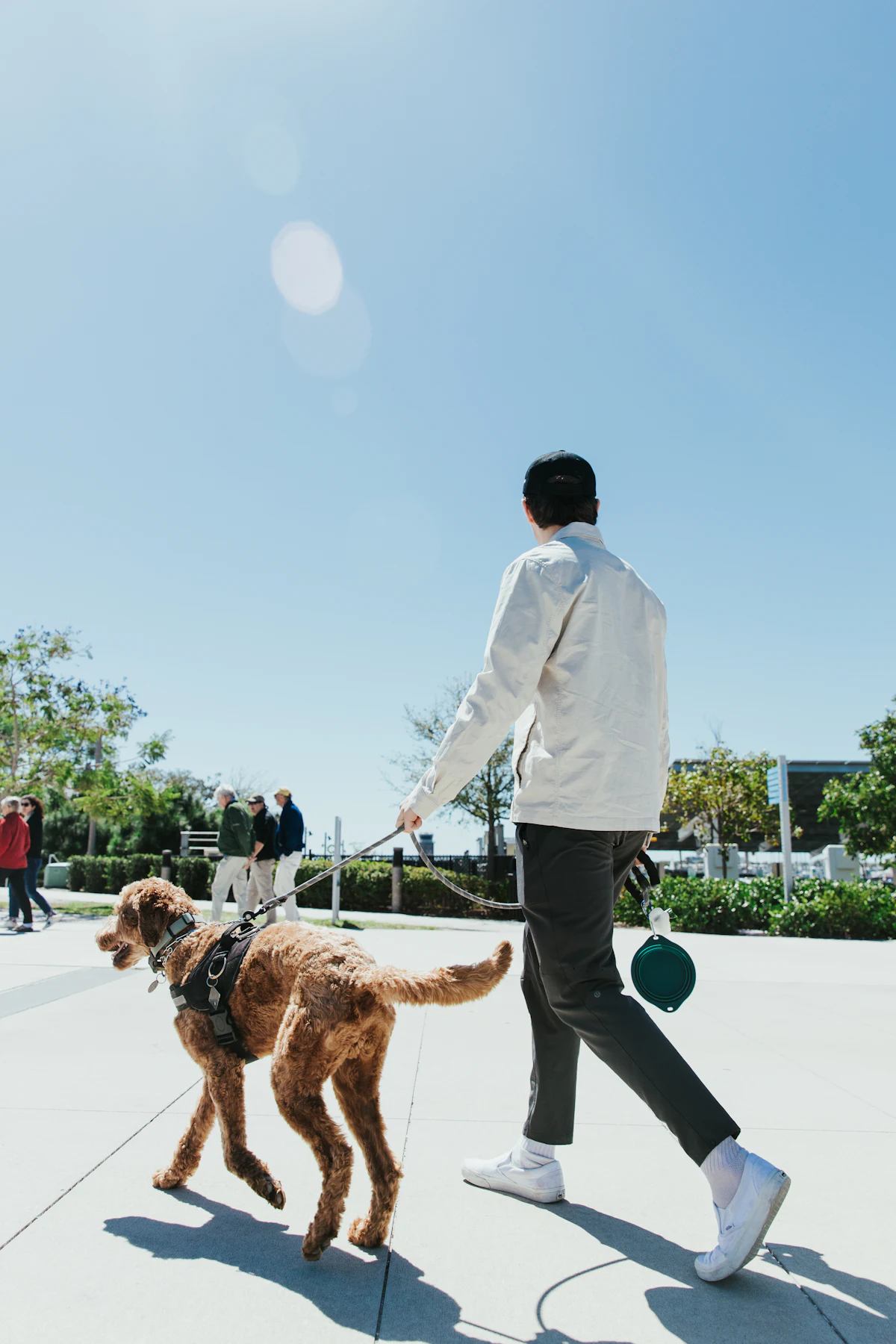
A reactive dog overreacts to everyday triggers, such as other dogs, people or traffic, by barking, lunging or growling. Fear or frustration is often behind it, and it does not automatically mean aggression. Management, distance, reward-based training and a vet check can all help, and many dogs improve gradually.
The information is current and up-to-date in accordance with the latest veterinary research. Learn more »
You see another dog two blocks ahead and your shoulders tense before your own dog has even noticed. If walks have turned into a scanning exercise, you may be living with a reactive dog.
Reactivity is embarrassing, tiring and often misunderstood. Well-meaning strangers offer advice, and some of it, such as scolding or forcing a meeting, can deepen the problem.
The good news is that this behavior can often be improved with a clear plan. This guide explains what reactivity is, how to work out what sets your dog off, how to train around it, and when you need a veterinary behaviorist.
Key Takeaways
- Reactive does not automatically mean aggressive. Some dogs are frightened, and others are frustrated or overexcited.
- Start with a vet check. Pain and illness can make dogs more irritable and quicker to react.
- Distance is your main tool. Work where your dog can notice a trigger and stay calm.
- Reward calm choices. Pair the trigger with good things, and move closer only when your dog is ready.
- Avoid punishment. It can create fear and make the underlying emotion worse.
- Get help early if there is bite risk. Lunging at people or dogs, or any bite, calls for a professional.
1What Is a Reactive Dog?
"Reactive" is a practical label rather than a formal diagnosis. It describes a dog whose response to an everyday sight or sound is much bigger than the situation calls for. It is most often noticed on leash, where the dog cannot move away from what worries it or reach what excites it.
Typical triggers include:
- Other dogs, sometimes only certain sizes or coat types
- Strangers, children, or people wearing hats
- Bicycles, skateboards, cars or trucks
- Doorbells and people passing the window
Being specific really pays off here. "He hates dogs" is hard to train. "He barks at large dark dogs moving toward him within about 30 feet" gives you a plan.
2Signs of Reactivity
The barking and lunging are the end of a sequence. Earlier signals give you time to act:
- Staring or freezing
- A closed mouth and tense face
- Weight shifted forward, or a stiff body
- Pulling toward or away from the trigger
- Refusing food they would normally take
- Barking, growling, whining or lunging
The earlier you catch these signs, the easier it is to get your dog out of the situation.
3Reactive vs Aggressive: What Is the Difference?
The two overlap, so treat every reactive dog with care. The difference usually lies in motivation and risk.
Fear. The Merck Veterinary Manual describes fear as the most common motivation for aggression in dogs, with the behavior serving to make the scary thing go away. A fearful reactive dog may be trying to create distance. If it works, the lesson is reinforced.
Frustration. Some dogs simply want to greet another dog and cannot. They may be perfectly sociable off leash, but become very vocal when held back. Connecticut Humane Society's training guidance treats both types in the same general way.
A frustrated dog can still redirect, and a fearful dog can still bite, so do not rely on your best guess about motivation. If your dog has bitten or has tried to, get help from a professional before working on this yourself.
4Why Do Dogs Become Reactive?
There is rarely just one reason. Contributors may include:
- Temperament and genetics. Some dogs are simply more sensitive than others.
- Limited or poor early experiences. A dog may never have learned that certain things are safe.
- A frightening event. One bad encounter can shape future responses.
- Pain or illness. Merck notes that pain is an important risk factor for behavior problems, and some organ or hormone diseases can increase irritability.
- Practice. Each repeated outburst gives the dog another rehearsal of the behavior.
- Past use of force. Training built on fear or pain can add to the problem.
Book a vet visit if the behavior is new, has suddenly worsened or comes alongside other changes, such as those in our guide to a sad or withdrawn dog.
5Step 1: Manage the Environment First
Training cannot work while your dog is melting down on every walk. VCA Animal Hospitals advises against testing a dog's tolerance, since one incident can set progress back. Practical steps include:
- Change walk times and routes. Choose quiet hours and open spaces with good visibility.
- Give yourself exits. Avoid narrow paths, blind corners and places with loose dogs.
- Skip the dog park and crowded events. These can mean several triggers at once.
- Block views at home. Window film or closed curtains can reduce all-day rehearsals.
- Use secure equipment. A well-fitted harness or collar and a standard leash give you more control.
- Put your dog's safety first. Do not let strangers or their dogs approach, even if they ask.
Muzzles and Head Halters
A properly introduced basket muzzle is a sensible safety tool if a dog might bite, and Merck mentions its value when triggers cannot be completely avoided. VCA stresses supervision and gradual acclimation. People still should not approach a muzzled dog.
Head halters can help turn a dog's head away, but they do not prevent bites. They can also cause injury if a dog lunges or the leash is jerked, so have a trainer help you introduce one.
6Step 2: Find Your Dog's Threshold
Threshold is the point at which your dog stops coping. Below it, your dog can notice the trigger, take food and respond to you. Past it, learning shuts down.
That distance differs for every dog, and it can be 5 feet or 50 feet. It can also change from day to day. To find it:
1. Choose a location where you can control how far you are from the trigger. 2. Begin farther away than you think necessary. 3. Note where your dog begins to stare, stiffen or stop taking food. 4. Train a little farther back than that.
A training diary helps. Note the trigger, the distance and how your dog responded. Progress is often easier to see on paper.
7Step 3: Change How Your Dog Feels
The goal is to help your dog feel safe, instead of merely suppressing the behavior. Merck and VCA both describe two techniques that work together:
- Desensitization exposes the dog to a very mild version of the trigger, and increases it only while the dog stays calm.
- Counterconditioning pairs the trigger with something pleasant, so that it starts to predict good things.
A Simple Practice Routine
1. Pick a very high-value food, and keep it just for this work. 2. Stay below threshold, and wait until your dog notices the trigger. 3. Reward immediately, before any reaction starts. 4. Repeat for a few short repetitions, then leave while your dog is still relaxed. 5. Move closer only after your dog has been consistently easy at the current distance.
Once your dog is doing well, teach them to look at you after seeing the trigger, then reward that check-in generously.
Keep sessions short. Progress can take weeks or months, and pushing too fast can erase what you gained. Merck also advises against flooding, which means immersing a dog in what it fears until it gives up.
If You Get Caught Off Guard
It will happen. Stay as calm as you can, turn and walk away, and increase the distance. Do not yell or jerk the leash. Then give your dog time to settle before you ask for anything else. One bad moment does not ruin your training.
8Why Punishment Backfires
Yanking, shouting, pinning or using shock can seem to work because a dog may go quiet. The feeling behind the behavior, however, is still there. Merck warns that scolding-type punishment can cause fear and anxiety toward the owner, and that physical dominance techniques can increase fear and aggression.
Research on training points the same way. A 2020 study of 92 companion dogs linked aversive-based methods with more stress behaviors during training and higher post-training cortisol than reward-based methods. It was not a controlled trial and did not look specifically at reactive dogs, but it supports choosing rewards when you can.
9Should You Socialize a Reactive Dog?
Not by pushing them into greetings. Forced meetings can overwhelm a dog that is already struggling. Socialization for a reactive dog is more about calm, positive exposure at a comfortable distance. Your dog does not need to greet every dog to live a full life.
Calm walks with a steady, well-matched dog may be helpful later on, but ask a professional to guide those introductions. Dogs who also guard food or protect toys and people need a plan that covers those behaviors too.
10When to Get Professional Help
Reach out to your vet or a qualified behavior professional if:
- Your dog has bitten, or has tried to bite
- You cannot physically control your dog on leash
- Reactions are getting more intense or more frequent
- Your dog cannot settle, even far from triggers
- Children or vulnerable people live in the home
- You feel unsafe or are avoiding walks
Merck advises that moderate or severe aggression be referred to a board-certified veterinary behaviorist. These vets can assess the risk, build a plan and prescribe medication when appropriate. Medication can lower distress and support learning, but it works alongside behavior modification rather than replacing it. Your vet decides whether it suits your dog.
Sources
- Merck Veterinary Manual: Behavior Problems of Dogs
- VCA Animal Hospitals: Dog Behavior Problems, Aggression, Safety and Management
- Connecticut Humane Society: Leash Reactivity
- Vieira de Castro AC, et al. Does training method matter? Evidence for the negative impact of aversive-based methods on companion dog welfare. PLoS ONE, 2020
Frequently Asked Questions
?Can a reactive dog be cured?
Some improve greatly, but there is no guarantee, and some triggers may always need managing. A realistic aim is a dog who recovers quickly and copes with more situations.
?Is a reactive dog dangerous?
It can be. Many reactive dogs never bite, but a highly aroused dog may bite if pushed, including redirecting onto its owner. Assess each situation carefully, and get expert help if safety is in question.
?Why is my dog only reactive on leash?
A leash removes the option to move away, which can matter to a fearful dog. It also stops an eager dog from greeting, which can create frustration. Your own tension may play a part too, although that is hard to measure.
?How long does it take to train a reactive dog?
Expect weeks to months, and often longer. Severity, how long the behavior has been happening, and how well you can limit outbursts all affect the timeline.
?Should I comfort my reactive dog?
Calmly helping your dog get away from the trigger is more useful than scolding. Getting distance and offering food if they can eat it are both reasonable choices.
?Can I take my reactive dog to the dog park?
Generally not, if other dogs are the trigger. Dog parks offer little control over distance, and you cannot predict how other dogs will behave.
Help us do better!
Was this article helpful and relevant?
Thanks for your feedback!
About Lena Fischer
Lena Fischer is a certified professional dog trainer and behavior consultant who has worked with family dogs, shelter dogs and working dogs for over a decade. She uses reward-based methods only and writes the training and behavior guides on VetsExplained.
View all posts by Lena Fischer →More from Dog Behavior



You Might Like
 Dog BreedsLabradoodle Dog Breed Guide: Temperament, Size, Grooming, Health and Care
 Dog BehaviorWhy Does My Dog Eat Grass? A Vet Separates Myth From Evidence
 Dog BreedsBernedoodle Dog Breed Guide: Temperament, Size, Coat, Health and Cost
 Dog BreedsCavapoo Dog Breed Guide: Size, Temperament, Health, Grooming and Cost