Dog Cone Guide: Fit, How Long to Wear It and the Best Alternatives
 Written by Dr. Tomas Ellery, DVM
 Fact checked by Dr. Hannah Reyes, BVSc MRCVS
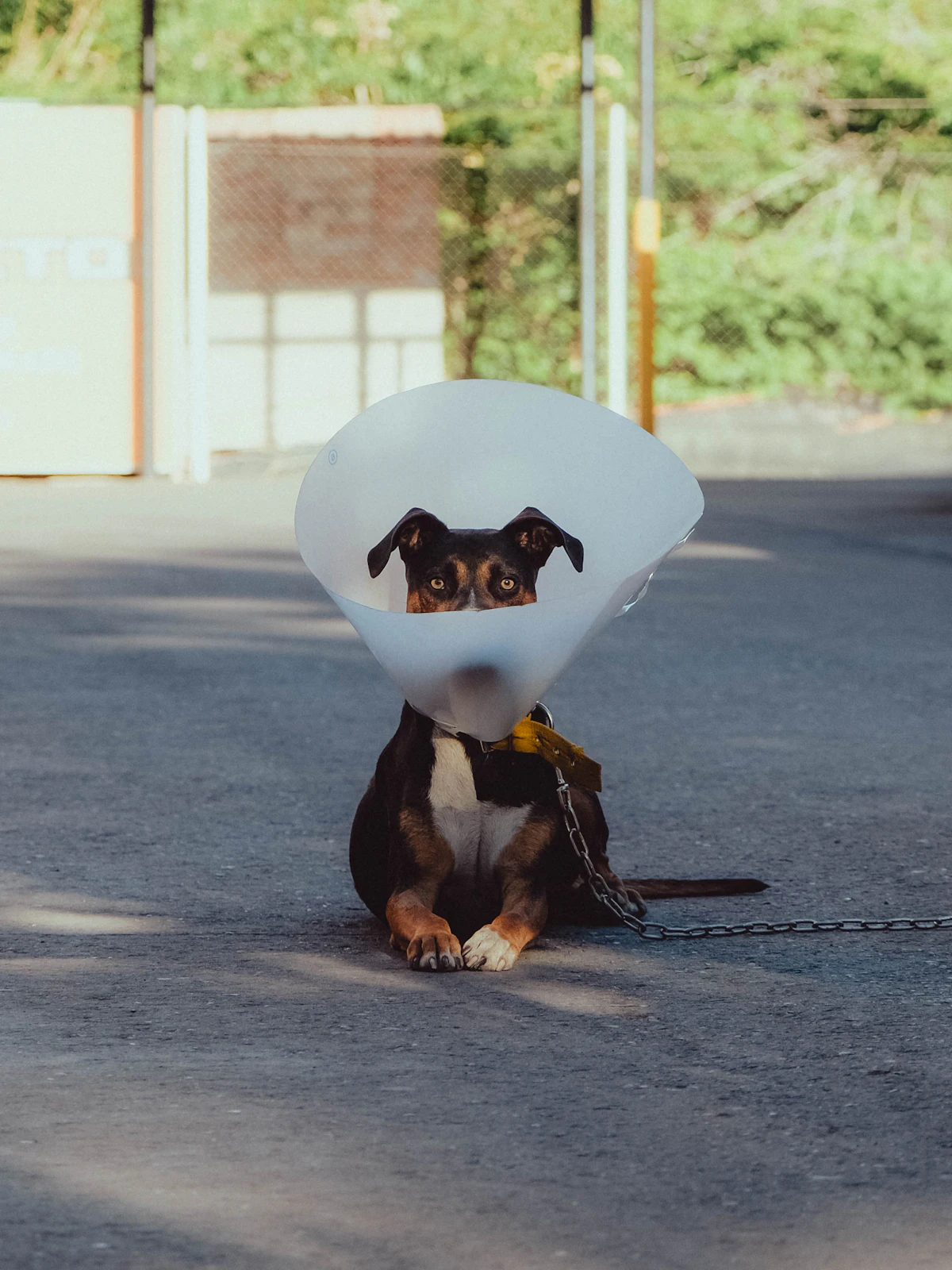
A dog cone, or Elizabethan collar, stops a dog from licking or chewing a wound. Keep it on until your vet says healing is complete, often 10 to 14 days after routine surgery. It should allow two fingers at the neck. Soft cones, donut collars and recovery suits are alternatives for some wounds.
The information is current and up-to-date in accordance with the latest veterinary research. Learn more »
Few recovery items cause as much guilt as the dog cone. Your dog comes home sore and confused, bumps into the door frame, and stares at you through a plastic funnel. It is no surprise people start searching for another option on the first night.
The cone does have a purpose, though. One determined lick session can reopen an incision, and a repair after that usually costs far more stress than the cone itself. So the useful question is not whether cones are annoying, but which device protects this particular wound while keeping your dog as comfortable as possible.
This guide covers the fit, wear time, daily life with a cone, and how each alternative compares. Your vet has the final say, since they know where the wound is and how it was closed.
Key Takeaways
- The job is wound protection. Licking and chewing can delay healing, introduce bacteria and pull out stitches.
- Expect about 10 to 14 days after routine surgery. Other wounds can take longer, and your vet sets the end date.
- Two fingers at the neck is the fit check. The dog also must not be able to reach the wound.
- Alternatives depend on the wound's location. A donut collar may fail for a paw, and a suit will not protect a face.
- Watch drinking closely. Owner-reported research suggests water access is a frequent problem with cones.
1What Is a Dog Cone?
A dog cone collar is formally called an Elizabethan collar, or e-collar, after the high ruffs worn in Elizabethan England. It is often nicknamed the cone of shame. A cone creates a barrier so a dog's mouth cannot reach the body, and it also stops paws from rubbing at the eyes or ears.
You will not see them only after surgery. Vets use a pet cone for belly rashes and other skin problems, hot spots, eye injuries, ear treatments, or anything else a dog might damage while it heals. Dogs with chronic skin issues sometimes need one for longer.
2Do Dogs Really Need a Cone?
After surgery or injury, usually yes, at least until your vet offers another option. Some dogs ignore a stitched wound, but you cannot count on that, particularly overnight when no one is watching. Even brief licking can be a problem. A veterinarian interviewed by the American Kennel Club warned that sutures can wick bacteria into the skin after just a few seconds of licking.
That said, cones have real downsides. In a 2020 owner survey published in Animals, 77.4% of 434 respondents felt their pet's quality of life was worse while wearing a collar. About a quarter reported a collar-related injury, with itching or irritation the most common complaint. Owners also reported problems with eating, drinking and play.
The survey has limits. Respondents chose to take part, and the results combine dogs and cats and do not separate collar types. Still, its practical message is useful: a cone is not risk-free, so choose and fit one carefully, and watch how your dog copes.
3How Long Does a Dog Need to Wear a Cone?
The honest answer is until the wound has healed, not until your dog looks fine.
- Spay or neuter: Often 10 to 14 days. See our explainer on what neutered means for more on that surgery.
- Stitches or staples: Commonly until they are removed or the incision has been rechecked, and sometimes a day or two beyond.
- Hot spots and skin wounds: Anywhere from a few days to several weeks.
- Eye problems: As directed, because even a brief rub can do damage.
Taking it off early because a wound looks dry is a common mistake. An incision may look closed on the surface and still be fragile below. Ask your vet to check it if you are unsure.
4How to Fit a Dog Cone
A poor fit is a common reason cones fail or hurt. If your clinic sells one, ask the staff to fit it before you go home.
- Neck check: You should be able to slide two fingers comfortably between the collar and the neck. VCA Animal Hospitals gives this guide to keep breathing and swallowing clear.
- Reach check: Let your dog try to reach the wound. If the mouth gets there, the cone is too short or the wrong type.
- Slip check: Gently see if the cone slides over the head. If it does, tighten it or attach it to your dog's regular collar through the loops, if the design allows.
- Skin check: Inspect the neck each day for rubbing, wetness or redness. Keep both sides of the cone clean by wiping them with a damp cloth.
If you cannot refit it properly, or your dog keeps getting out of it, call your vet the same day.
5Living With a Cone: Practical Tips
VCA says most dogs adapt within hours, although some take longer and some never settle. These steps make those first days easier.
Eating and drinking
- Use a shallow, wide dish that fits inside the cone's rim.
- Raise the bowl slightly if your dog has trouble reaching it.
- Offer water often, and check the level is going down. In the 2020 survey, more than half of owners reported difficulty with drinking.
- If your vet allows removal at mealtimes, stay with your dog and put the cone back on as soon as they finish.
Sleeping
- Provide a bed with raised edges or a pillow to rest the cone on.
- Check that a crate is large enough for your dog to turn around with the cone on. If not, use a larger crate or a pen.
Moving around
- Clear small tables, stools and fragile items for the first few days.
- Block stairs and pool edges where falls are possible.
- Take care through doorways, and keep the leash short on walks.
- Warn children that a swinging cone can hurt shins.
Comfort and boredom
- Offer quiet attention, as a cone can make dogs seem subdued or sad.
- Try sniffing games or calm food puzzles that fit within your vet's activity limits.
- Scratch the areas your dog cannot reach, including under the collar, unless the skin is sore.
Training ahead of a planned surgery
If you know surgery is coming, introduce the cone early. Scatter treats near it, reward your dog for putting their nose inside, then build up to wearing it for short periods. The AKC notes this can take several weeks, so go at your dog's pace.
6Dog Cone Alternatives
There is no single best cone alternative. It depends on your dog and where the wound is. Ask your vet before swapping, ideally before the day of surgery.
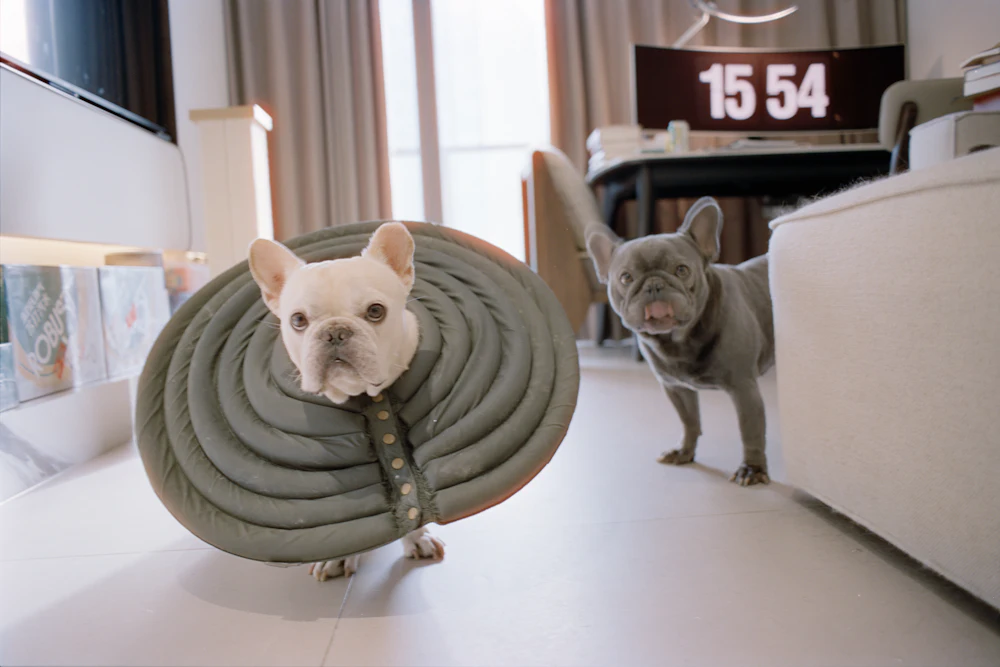
Soft fabric cones
- Good for: Dogs that crash around in a hard cone or sleep badly, with similar coverage in many cases.
- Drawbacks: Some block peripheral vision and flop forward, and a strong or flexible dog may bend one and reach the wound.
Inflatable or donut collars
- Good for: Many torso wounds, as well as dogs who need to see clearly. They are like a travel pillow around the neck.
- Drawbacks: Long-necked or flexible dogs may reach past them, and they rarely protect paws, lower legs, tail or face. They can also be punctured.
Recovery suits
- Good for: Belly and chest incisions such as spays, plus dogs with skin conditions on the trunk. They allow normal vision and eating.
- Drawbacks: Only cover what they cover. They can get soiled by urine in the wrong spot, and need to stay loose enough for air to reach the wound. Have a second one ready to wash, and ask your vet whether it suits a fresh incision.
Neck braces
- Good for: Some dogs, as they stop the neck from turning without blocking the view.
- Drawbacks: Fit is key, and they may not stop a dog from reaching a front leg or paw.
Socks, boots or bandages
- Good for: Limited situations that your vet has approved.
- Drawbacks: Tight wraps can cut off circulation and moisture can harm a wound, so check with your vet, particularly on legs and paws.
Homemade options
Some owners try a T-shirt over a belly wound or a rolled towel taped into a collar. These may buy time for a calm dog with a minor wound if your vet agrees. They can slip or fail, however, and there is a risk of chewing and swallowing the fabric, so supervise closely.
Which alternative for which wound?
- Belly, chest or flank: Recovery suit, donut collar or soft cone
- Rear end or tail: Cone, usually, or a long suit if your vet agrees
- Front leg or paw: Hard or firm soft cone, usually
- Eyes, face or ears: Hard cone, usually, since most alternatives do not stop rubbing
- Hot spot on the neck: Ask your vet, as many collars will sit on the area
7When to Call the Vet
Contact your clinic if you see any of these:
- Licking or chewing at the wound, even once, if there is damage
- Redness, swelling, discharge, gaps, bad smell or missing stitches
- Refusal to eat or drink, or panic that does not settle within a day or so
- Sores or wet skin beneath the collar
- A dog who has fallen or become trapped because of the cone
Go to an emergency vet for trouble breathing, a wide-open wound or tissue coming through an incision. Some dogs with extreme distress benefit from a few days of medication, and your vet can advise whether this is a good idea.
Sources
- Shenoda Y, Ward MP, McKeegan D, Fawcett A. The Cone of Shame: Welfare Implications of Elizabethan Collar Use on Dogs and Cats as Reported by their Owners. Animals, 2020.
- VCA Animal Hospitals: Elizabethan Collars in Dogs
- VCA Animal Hospitals: Care of Surgical Incisions in Dogs
- American Kennel Club: Dog Spay and Neuter Recovery; How To Teach Your Dog to Wear a Cone Comfortably
Frequently Asked Questions
?Can a dog sleep with a cone on?
Yes, and most should. Nighttime is when unsupervised licking often happens. A pillow or raised bed edge makes resting easier, and a properly fitted cone should not limit breathing.
?Can I take my dog's cone off at night?
Generally no, unless your vet says otherwise. If you must remove it, stay with your dog and replace it right away. A few minutes alone can be enough to damage a wound.
?Can dogs eat and drink with a cone on?
Most can with a correctly sized cone and a shallow bowl. Raising the bowl can help as well. Check that your dog is really drinking, not just trying, and call your vet if not.
?Is a cone cruel?
It can be frustrating, but used short term it prevents more painful problems. If your dog is struggling, ask about a softer or different design rather than removing protection on your own.
?What can I use instead of a cone for my dog?
Soft cones, inflatable collars, neck braces and recovery suits are the main options. Which is suitable depends on the wound location and how flexible your dog is. Test it under supervision first.
?Do inflatable collars work as well as cones?
They can for some torso wounds, particularly in stiff or short-necked dogs. They often do not stop a dog reaching paws, tails or lower legs, so a cone remains the safer choice there.
?How do I keep my dog from licking without a cone?
Use whatever alternative your vet approves, and pair it with close supervision and distraction. Do not put bitter sprays or creams on an incision unless your vet recommends them.
Help us do better!
Was this article helpful and relevant?
Thanks for your feedback!
About Dr. Tomas Ellery
Dr. Tomas Ellery is an emergency and general-practice veterinarian who has spent fifteen years treating dogs in busy city clinics. He writes the health and symptom guides on VetsExplained and is a firm believer that owners who know what normal looks like catch disease earlier.
View all posts by Dr. Tomas Ellery →More from Dog Health



You Might Like
 Dog BreedsLabradoodle Dog Breed Guide: Temperament, Size, Grooming, Health and Care
 Dog BehaviorWhy Does My Dog Eat Grass? A Vet Separates Myth From Evidence
 Dog BreedsBernedoodle Dog Breed Guide: Temperament, Size, Coat, Health and Cost
 Dog BreedsCavapoo Dog Breed Guide: Size, Temperament, Health, Grooming and Cost