Dog Ultrasound: Why Vets Order It, How to Prepare and What It Costs
 Written by Dr. Tomas Ellery, DVM
 Fact checked by Dr. Hannah Reyes, BVSc MRCVS
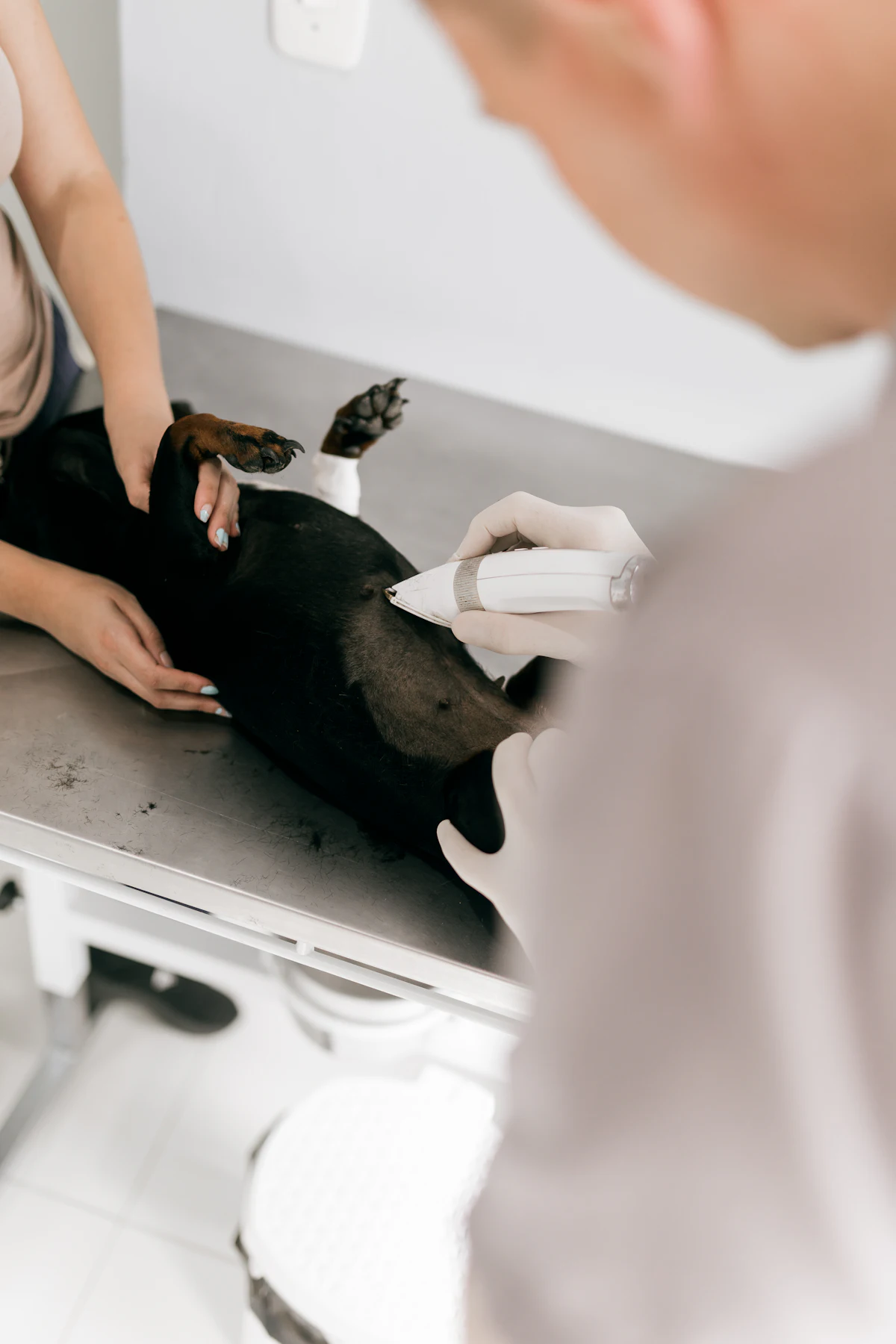
A dog ultrasound is a painless, noninvasive scan that uses sound waves to show soft tissues such as the liver, spleen, kidneys, uterus and heart. Most dogs stay awake, the fur over the area is clipped, and fasting is often requested. One published US estimate puts the cost at about $350 to $1,000.
The information is current and up-to-date in accordance with the latest veterinary research. Learn more »
When your vet suggests a scan, the word itself can feel alarming. A dog ultrasound is often simply the next logical step after an exam, blood test or X-ray that raises a question nobody can answer from the outside.
The test lets a vet watch soft tissue on a screen as it happens. It involves no incision, and many dogs get through it with nothing stronger than a bit of gentle restraint and reassurance.
Below, you will find what the scan can and cannot reveal, how to prepare, what can change the price, and which questions to ask before you agree to it.
Key Takeaways
- It is painless and noninvasive. The probe rests on the skin with gel between the two.
- It shows soft tissue best. Bone blocks the sound waves, and an echocardiogram does not assess the lungs.
- Most dogs do not need sedation. Anxious dogs, or those having samples taken, may.
- Expect a shaved patch. Sound waves do not travel well through fur.
- Food is often withheld beforehand. Fasting helps image quality, but follow your own clinic's instructions.
- Cost varies widely. One published range is about $350 to $1,000, and extras can be billed separately.
1What Is a Dog Ultrasound?
Veterinary ultrasound sends sound waves into the body through a handheld probe. The waves bounce back differently from different tissues, and the machine turns those echoes into a moving image.
Because the picture is live, the vet can look at an organ's internal structure and also see movement, such as a beating heart. A Doppler instrument can also pick up sounds such as a fetal heartbeat.
VCA Animal Hospitals lists the abdomen and heart as the most commonly scanned areas in dogs. Reproductive organs and eyes can be examined too.
2Why Would a Dog Need an Ultrasound?
Vets usually recommend ultrasound to answer a specific question. Common reasons include:
- Digestive signs. Long-running vomiting or diarrhea that does not settle may prompt a look at the bowel wall and nearby organs, as in colitis workups where a mass or thickened intestine is a concern.
- Suspected pancreas trouble. Imaging is part of investigating pancreatitis.
- Abnormal blood or urine results. The scan helps show whether the liver, kidneys or bladder look changed.
- A lump or an enlarged organ. It can help describe nodules, masses, cysts and abscesses.
- Free fluid. Ultrasound can detect fluid such as blood or urine where it should not be.
- A heart murmur or breed risk. An echocardiogram measures the heart and checks blood flow.
- Pregnancy. It can confirm a pregnancy and assess whether the puppies are viable.
- Emergencies. Emergency vets often use it to help diagnose urgent problems.
If your dog is collapsed, has a swollen painful belly, or is struggling to breathe, seek emergency care right away rather than waiting for a scheduled scan.
3What Can an Ultrasound Show, and What Can It Miss?
It works best on fluid-filled and soft organs. Examples include the liver, spleen, gallbladder, kidneys, bladder, intestines and uterus. It can also find tumors that may be obscured by shadows on an X-ray.
It has real limits:
- Bone stops the signal. Skeletal problems generally call for other imaging.
- Lungs are not assessed by an echocardiogram. A heart scan is not a lung check.
- Pictures do not always give a final diagnosis. A mass can be seen, but finding out what it is often requires cell samples. If the scan does not settle the matter, your vet will suggest further tests.
- Some findings are tricky. A 2017 study of 33 dogs and 17 cats with acute abdominal disease found ultrasound useful before surgery, while noting that foreign bodies, gut perforations and some tumors were among the findings most often misread.
So a normal or uncertain scan is still useful information, but it does not always end the investigation.
4Dog Ultrasound vs X-Ray
These two tests are partners more often than rivals:
- X-rays show the size, shape and position of organs, and they are the natural choice for bones.
- Ultrasound shows the internal structure of soft organs, which can look like similar gray shadows on an X-ray.
Vets often recommend both for a fuller picture. If yours suggests a second test after the first, it may well be because each answers a different question.
5How to Prepare Your Dog
Your clinic's instructions come first, as they differ. Generally:
- Food: VCA hospitals commonly ask that pets fast before an ultrasound because this gives clearer images. Ask exactly when to remove food, and whether water is allowed.
- Medications: Ask whether to give the usual doses that morning. Do not stop a medicine on your own.
- Health conditions: Mention diabetes or anything else that makes fasting complicated, and do this well ahead of the appointment.
- Records: Bring any recent test results or images from another clinic.
- Temperament: Tell the team if your dog is fearful or has ever snapped during handling, as it helps them plan.
6What Happens During the Scan?
A typical visit runs like this:
1. Positioning. Your dog usually lies on a padded surface while staff help hold them gently. 2. Clipping. The fur over the area is shaved. Clipped skin can look slightly irritated afterward. 3. Gel. A water-based gel helps the probe glide and improves contact. 4. Scanning. The vet moves the probe across the area and saves images and measurements. 5. Sampling, if needed. The vet may use the live image to guide a fine needle into an abnormal area.
One VCA hospital quotes 30 to 60 minutes for a scan, and an echocardiogram takes a little over half an hour at another. Most dogs go home the same day and need no special aftercare unless they were sedated or sampled.
7Does a Dog Need Sedation for an Ultrasound?
Usually not. VCA notes that most pets manage without sedation or anesthesia, though temperament is a deciding factor. A light sedative may help a dog who is anxious, painful or wriggly. It is also more likely if a sample is being collected.
Sedation is not a failure on your dog's part. A calm, still patient gives better images. If your dog does have it, ask what to watch for at home that evening.
8Ultrasound During Pregnancy
According to the Merck Veterinary Manual, ultrasound is the most useful method for determining pregnancy in dogs, and the best window is about 25 to 35 days into gestation. A scan before 21 days can miss a true pregnancy.
It can also check viability, help estimate gestational age, and separate pregnancy from other causes of a swollen uterus. For counting a litter, however, Merck says an X-ray after day 55 is the best method.
9Dog Ultrasound Cost
Prices depend on the clinic and the question being asked. One pet insurer's published estimate is about $350 to $1,000 in the US. We have not surveyed clinics ourselves, so treat that as a rough guide. Your bill may change depending on:
- Location. Prices tend to be lower in small towns than in large cities.
- Who performs it. Specialists generally charge more, and emergency hospitals cost more than regular clinics.
- Time needed. Longer exams, such as hunting for a foreign object, cost more.
- Interpretation or consult fees. These may be billed separately.
- Sedation. This is an added cost.
- Sampling and lab work. Ask about these separately, as they are extra tests.
Insurance may help if the problem is covered under your policy, although pre-existing conditions and waiting periods can limit this. Check your plan, as routine pregnancy scans may not qualify.
Questions to Ask Before Booking
- What question will this scan answer?
- How would the result change the treatment plan?
- Who will perform and interpret it?
- What is the low and high estimate, with sedation and samples included?
- When and how will I receive the results?
Sources
- VCA Animal Hospitals: ultrasound service pages and diagnostic imaging pages (West Los Angeles, Preston Park and Valley Oak hospitals)
- Merck Veterinary Manual: Pregnancy Determination in Bitches and Queens
- Correlation between Preoperative Ultrasonographic Findings and Clinical, Intraoperative, Cytopathological, and Histopathological Diagnosis of Acute Abdomen Syndrome in 50 Dogs and Cats. Veterinary Sciences, 2017
- Lemonade Pet: published estimate of dog ultrasound costs
Frequently Asked Questions
?Does an ultrasound hurt a dog?
No, the scan itself is painless and noninvasive. Some dogs dislike lying still or being clipped, and a dog with a sore belly may be uncomfortable when pressed. Tell the team if your dog seems distressed.
?How long does a dog ultrasound take?
Often about 30 to 60 minutes according to one VCA hospital, although a focused or a complicated scan can differ. Ask your clinic how long to plan for.
?Does my dog need to fast before an ultrasound?
Often yes, since fasting gives clearer images. Clinics vary, so follow the instructions you were given, and ask about water and regular medicines.
?Will my dog be shaved?
Usually, yes. Sound waves do not pass well through fur, so the area being scanned is clipped. The fur grows back with time.
?Can an ultrasound detect cancer in dogs?
It can find masses and show changes in organs, but it cannot normally confirm what a mass is by itself. A fine needle sample or biopsy may be needed for that answer.
?Can I stay with my dog during the scan?
That depends on the clinic. Some allow it, while others take dogs to a separate imaging room. Asking at booking lets you plan.
?Is an ultrasound better than an X-ray?
Neither is better overall. They show different things, and vets often use both together.
Help us do better!
Was this article helpful and relevant?
Thanks for your feedback!
About Dr. Tomas Ellery
Dr. Tomas Ellery is an emergency and general-practice veterinarian who has spent fifteen years treating dogs in busy city clinics. He writes the health and symptom guides on VetsExplained and is a firm believer that owners who know what normal looks like catch disease earlier.
View all posts by Dr. Tomas Ellery →More from Dog Health



You Might Like
 Dog BreedsLabradoodle Dog Breed Guide: Temperament, Size, Grooming, Health and Care
 Dog BehaviorWhy Does My Dog Eat Grass? A Vet Separates Myth From Evidence
 Dog BreedsBernedoodle Dog Breed Guide: Temperament, Size, Coat, Health and Cost
 Dog BreedsCavapoo Dog Breed Guide: Size, Temperament, Health, Grooming and Cost