Do Doodle Dogs Shed? Coat Types, Generations and What to Expect
 Written by Sofia Marin
 Fact checked by Dr. Tomas Ellery, DVM
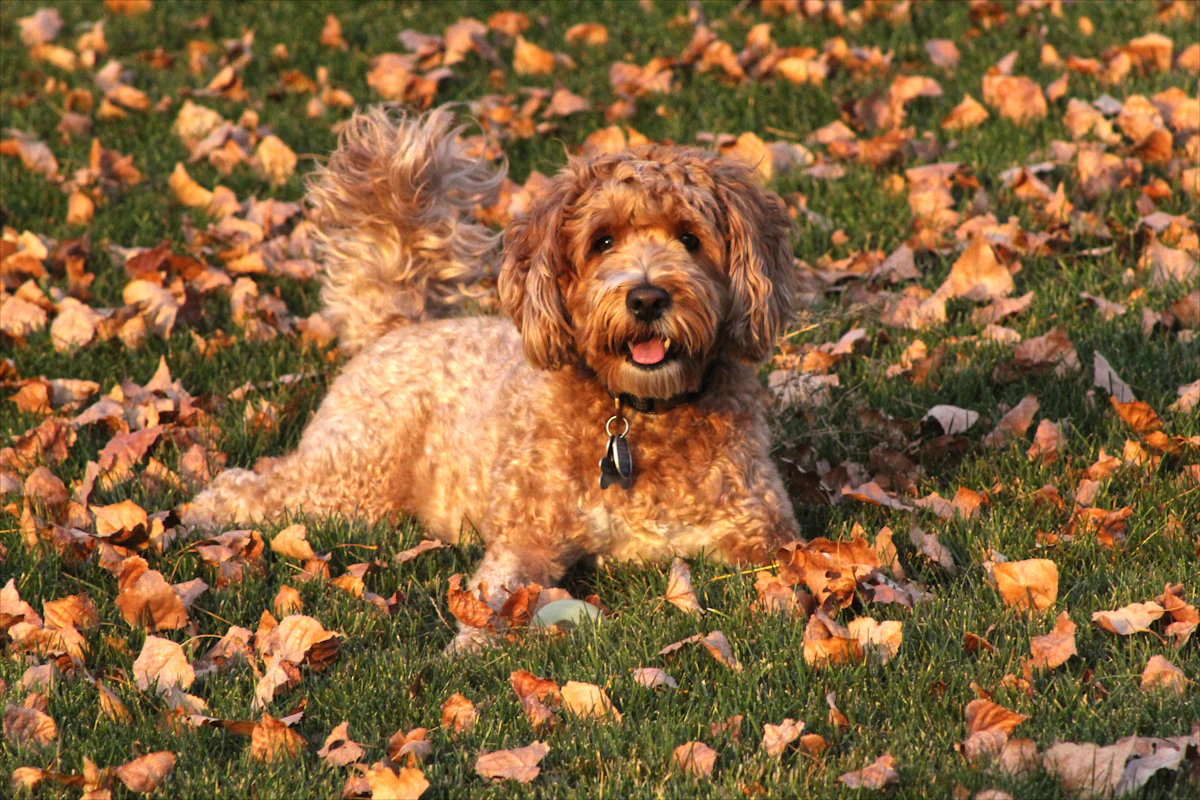
Yes, all Doodles shed, but most shed far less than a Labrador or Golden Retriever. Shedding depends mainly on two genes: a dog with the "furnishings" variant and no copies of the MC5R shedding allele is usually very low-shedding. An F1 Doodle is variable; an F1B is about 75 per cent Poodle and far more predictable.
The information is current and up-to-date in accordance with the latest veterinary research. Learn more »
Yes, Doodle dogs shed. Every dog with hair replaces that hair, so there is no such thing as a non-shedding Doodle. What people really mean is whether a Doodle leaves hair on the sofa, and the honest answer is that some do not, most do a little, and a minority shed almost as much as a Labrador.
The difference is not luck. It comes down to a handful of genes that each puppy inherits from its two parents, and those genes can now be tested for. This article explains the genetics in plain English, what each generation and cross tends to produce, why the coat changes at 6 to 12 months, how to keep loose hair down, and what a breeder can honestly promise.
If you are still deciding whether a Poodle cross suits you at all, start with our Doodle Dog guide and come back here for the coat question.
Key Takeaways
- Every Doodle sheds; most shed much less than the non-Poodle parent, but none is non-shedding.
- Two genes explain most of the variation: the RSPO2 furnishings variant (one copy lowers shedding) and the MC5R shedding allele (fewer copies is better), identified in large studies in 2009 and 2016.
- F1 litters mix light and moderate shedders; F1B and DNA-tested multigen Doodles are reliably low-shedding; F2 litters are the least predictable, with about one puppy in four unfurnished.
- The adult coat and true shedding level appear during the coat change at 6 to 12 months, which is also the highest-risk period for matting.
- Breeders can show parents' DNA results and test puppies individually, but no breeder can promise a non-shedding or hypoallergenic dog.
1Why Do Some Doodles Shed and Others Don't?
Doodles vary because a Doodle is a cross, and a cross inherits one copy of each coat gene from each parent. The Poodle side carries the variants for a curly, furnished, low-shedding coat. The Labrador, Golden Retriever, Bernese Mountain Dog or Cavalier side carries the variants for a straight, unfurnished, moderately to heavily shedding coat. Which combination a puppy gets decides how much hair ends up on your floor.
Every hair grows for a period, rests, and is then pushed out by a new one; the Merck Veterinary Manual notes that this cycle varies with breed, season and daylight. In a low-shedding dog, hairs grow for much longer before they are replaced, and in a curly coat the ones that are released stay tangled among their neighbours instead of falling off. That is why a curly Doodle looks non-shedding, and why it mats so quickly if it is not brushed: the shed hair is still there, just trapped.
2The Genetics of Doodle Shedding
Dog coat genetics are better understood than most buyers realise, and two large studies explain almost all of it.
The three coat genes: length, curl and furnishings
In 2009, Cadieu and colleagues at the US National Human Genome Research Institute published in Science a genome-wide study of more than 1,000 dogs from 80 breeds. Three genes explained the coat type of 95 per cent of the dogs sampled:
- FGF5 controls hair length. The long-hair variant is recessive; a dog needs two copies for a long coat.
- KRT71 controls curl. Poodles carry the curl variant; Labradors and Goldens do not.
- RSPO2 controls furnishings, the longer hair on the muzzle, eyebrows and legs that gives Poodles and most Doodles their beard and teddy-bear face. Of 298 furnished dogs in the study, 297 carried the RSPO2 insertion, and none of the 406 unfurnished dogs did.
Furnishings are the most useful thing to know about a Doodle puppy, because the same RSPO2 variant that produces the beard also produces a much lower-shedding coat. It is dominant: one copy is enough. A Doodle with no copies has an "unfurnished" or "improper" coat: a smooth face, a flatter coat and, in nearly every case, noticeably more shedding.
The MC5R shedding gene
In 2016, Hayward and colleagues at Cornell mapped coat traits across 1,873 dogs from 158 breeds and found shedding was associated with two genes: RSPO2 again, and a variant in MC5R, a gene active in the hair follicle. Minimal-shedding breeds such as Poodles were homozygous for furnishings. Heavy-shedding breeds such as Labradors carried the ancestral, high-shedding MC5R allele and no furnishings. Medium-shedding breeds carried the lower-shedding MC5R allele but no furnishings.
Laboratories sell the MC5R variant as the "SD locus" or shedding test. The OMIA database at the University of Sydney records that the derived allele is associated with reduced shedding and shorter hair, but that its mode of inheritance has not been published and functional studies are still needed to confirm it is causal. In practice, laboratories report it as additive: two copies of the high-shedding allele shed most, one copy sheds moderately, none sheds least, with the effect strongly modified by furnishings.
On a coat panel, two results matter most: furnishings (F/F, F/IC or IC/IC; any F means furnished, IC/IC means unfurnished and shedding) and the MC5R shedding locus (zero, one or two copies; fewer is better). Curl matters less than people think, because a curly coat hides shed hair rather than preventing it.
3Do Doodle Coat Types Predict Shedding?
Partly. Coat type is a visible clue to the genes underneath, not a measurement of shedding.
- Curly (wool) coat: tight Poodle-style curls, almost always furnished, usually the lowest-shedding and the highest-maintenance.
- Wavy (fleece) coat: loose waves, the classic Doodle look, nearly always furnished and typically low-shedding, with individual variation from the MC5R result.
- Straight furnished coat: flatter coat with a bearded face. Sheds more than wavy or curly in most dogs, but far less than the retriever parent.
- Unfurnished (improper) coat: smooth face, flat body coat, no beard. These dogs look like a long-haired Golden or a shaggy Labrador and shed like one.
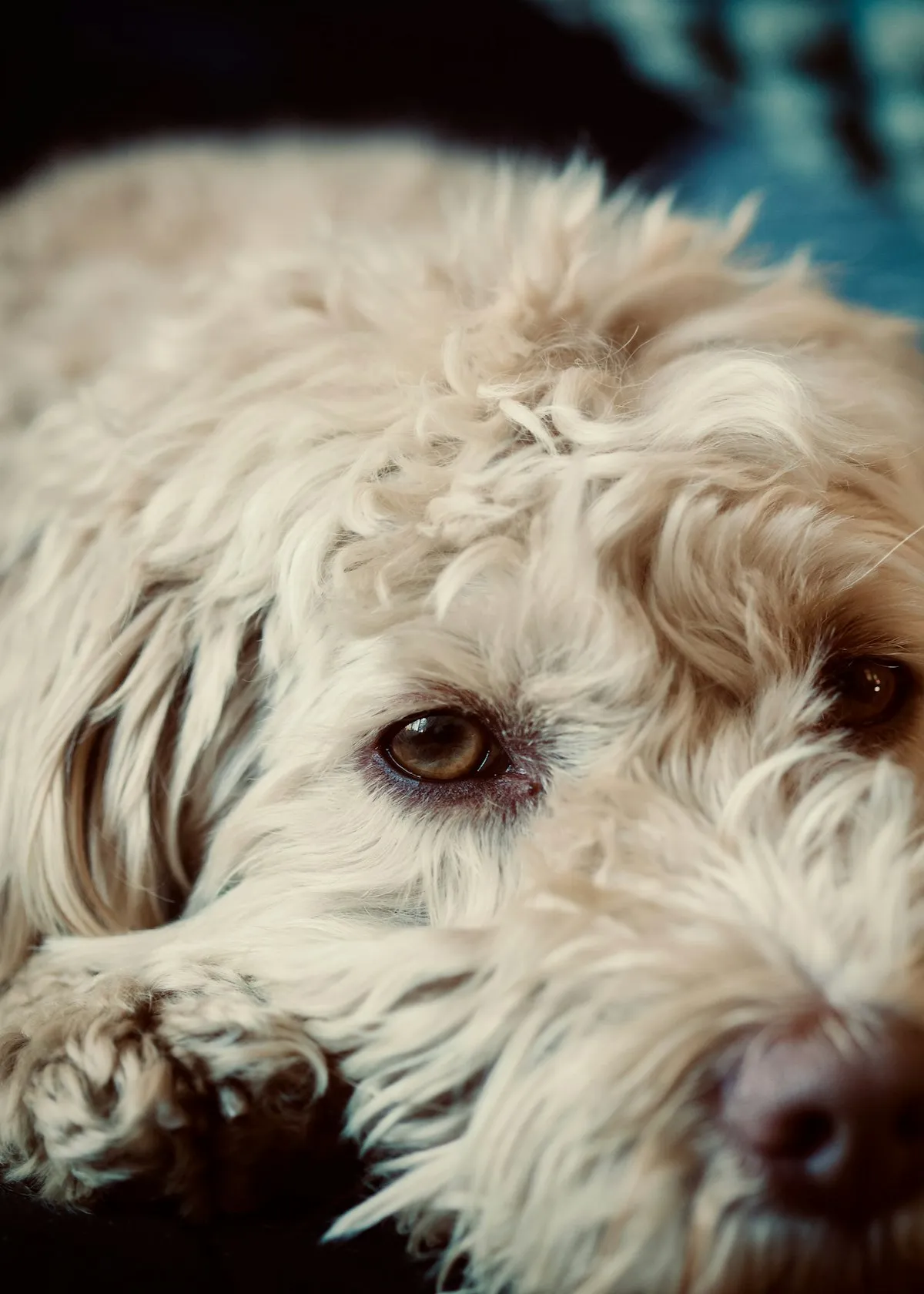
If a breeder describes a puppy as "wavy" or "fleece", ask whether the litter has been tested for furnishings and shedding. Coat type by eye at 8 weeks is a guess; the DNA result is not. Our guide to Doodle coat types covers each type in detail.
4F1 vs F1B vs Multigen: Which Doodle Sheds Least?
F1B and DNA-tested multigenerational Doodles shed the least on average; F1 Doodles are the most variable and F2 the least predictable. Our explainer on F1 vs F1B vs F2 Doodles covers pedigrees and temperament; this is coat only.
- F1 (Poodle × other breed): every puppy inherits one furnishings copy from the Poodle, so almost all F1s are bearded and shed less than the retriever parent. But the retriever nearly always passes on a high-shedding MC5R copy, so a typical F1 litter mixes light and moderate shedders, and you cannot tell which is which by looking.
- F1B (F1 × Poodle): about 75 per cent Poodle. Roughly half the litter gets a second furnishings copy and, if the Poodle is clear of the shedding allele, no high-shedding copies at all. Most F1Bs are low-shedding, and many are as close to non-shedding as a dog gets, with a curlier, higher-maintenance coat as the trade-off.
- F2 (F1 × F1): each parent carries one furnishings copy, so on average one puppy in four inherits none and is unfurnished and shedding. An F2 litter can span the whole range from near-Poodle to near-retriever.
- F2B and multigen: outcomes depend on what the breeder has selected for. A multigen from a breeder who tests for furnishings and MC5R and breeds only F/F, shedding-clear dogs is the most predictable Doodle you can buy; one from an untested programme is no more predictable than an F2.
5Shedding by Doodle Cross
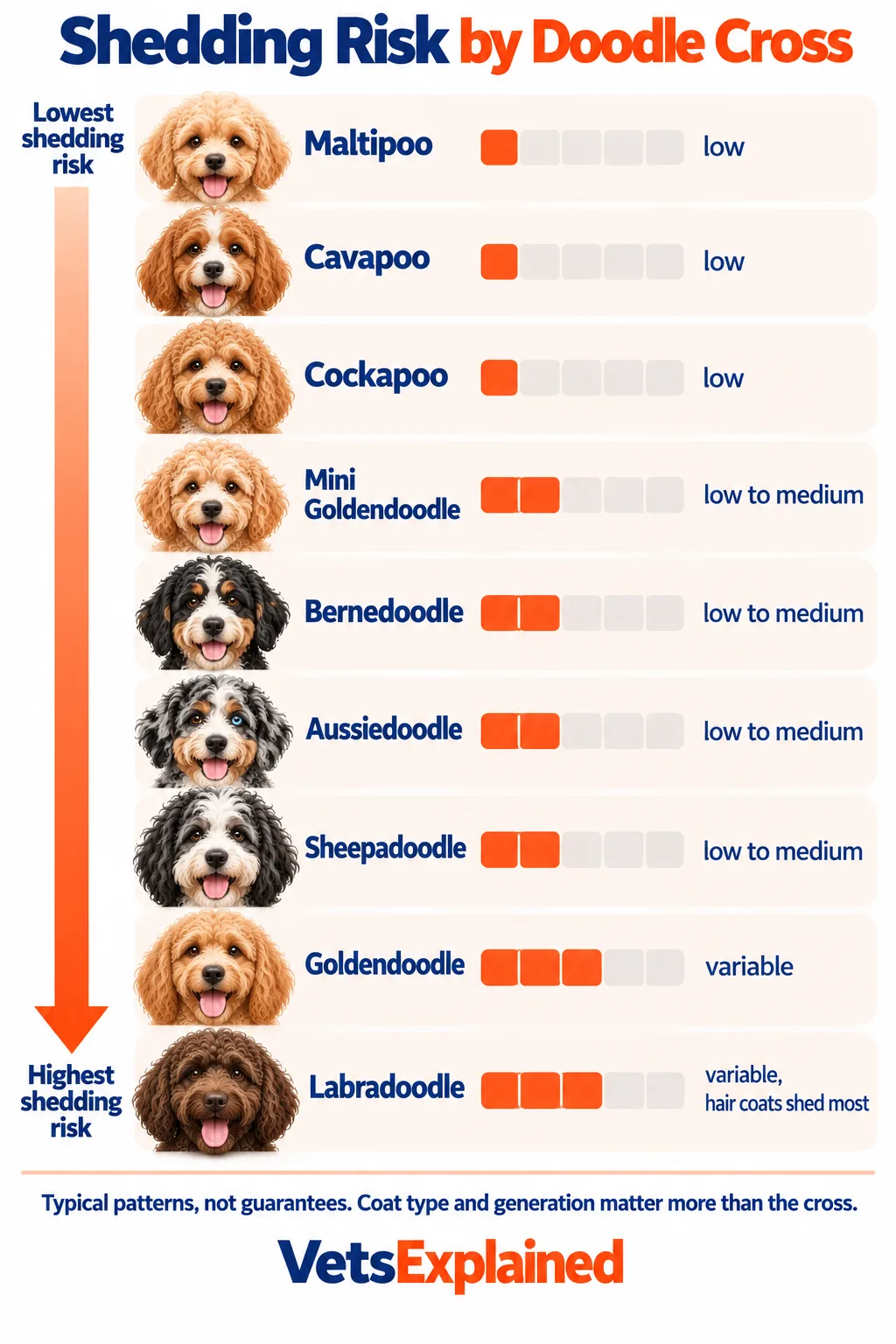
The Poodle contributes the same genes to every Doodle, so differences between crosses come from the other parent. A cross with a heavy-shedding, double-coated parent has more to overcome than one with a lighter-shedding, single-coated parent. These are typical patterns, not guarantees; the individual puppy's DNA result matters more than the cross.
- Labradoodle: the Labrador is a dense, heavy shedder. F1 Labradoodles range from low-shedding fleece coats to "hair" coats that shed almost like a Labrador; F1B and Australian Labradoodles are far more consistent.
- Goldendoodle: Goldens shed heavily and seasonally. F1 Goldendoodles are mostly wavy with light to moderate shedding; an unfurnished F1 sheds like a shaggy Golden. F1Bs are usually low-shedding.
- Bernedoodle: the Bernese has a long, heavy double coat. F1 Bernedoodles often shed more than buyers expect, especially straight-coated ones; wavy and curly F1Bs are reliably low-shedding.
- Sheepadoodle: Sheepadoodles are usually wavy to curly and low-shedding, but the unfurnished minority shed a good deal, and all of them need frequent brushing.
- Aussiedoodle: Australian Shepherds shed heavily year-round. F1 Aussiedoodles are often wavy and lighter-shedding than the Aussie; straighter-coated ones shed noticeably.
- Cockapoo: the Cocker already has a longer, softer coat, so Cockapoos tend to be low-shedding across generations, with the occasional unfurnished Spaniel-type puppy in F1 litters.
- Cavapoo: Cavapoos are usually wavy and low-shedding, though straight-coated, unfurnished Cavapoos shed about as much as a Cavalier.
- Maltipoo: the Maltese is itself very low-shedding, so a Maltipoo is the Doodle most likely to be minimal-shedding in any generation, at the cost of a fine, fast-matting coat.
6Why Does a Doodle's Coat Change at 6 to 12 Months?
Between roughly 6 and 12 months a Doodle replaces its puppy coat with its adult coat, and only then does the true coat type and shedding level become clear. Puppy coats are soft, fine and single-layered, and even heavy-shedding breeds leave little hair about before 4 to 6 months; the American Kennel Club-shed/) puts the puppy-coat loss at 4 to 6 months for most dogs, with a range from 12 weeks to about a year. Judging a Doodle's adult shedding by its 10-week-old coat is unreliable.
During the change, the dog sheds its entire puppy coat while the adult coat grows in. In a straight-coated dog, that means a visible wave of hair in the house. In a wavy or curly dog, the dead puppy hair tangles into the new coat instead of falling out, and the dog can mat to the skin within days. This is the most common reason a young Doodle arrives at a groomer so matted that the only humane option is a full clip-off. Plan for it:
- Brush daily from about 6 months, in sections from the skin outwards, slicker brush then metal comb.
- Check the friction points every day: behind the ears, under the collar, armpits, inner thighs, tail base and between the toes.
- Keep the coat shorter during the change if you cannot brush daily; a 1-inch coat is far easier than a 3-inch one.
- Never bathe a dog with tangles in it; water tightens mats.
Some coats do not fully settle until 14 to 18 months. The Doodle grooming guide covers tools and routine in detail.
7How to Reduce Doodle Shedding
You cannot change the genes, but you can reduce the hair that ends up on your floor.
- Brush to the skin, several times a week: a slicker followed by a comb removes hair that is ready to fall and stops it matting. Surface brushing does neither.
- Use a de-shedding tool only on unfurnished or straight coats: tools that strip undercoat help on a Labrador-type coat and damage a fleece or wool coat.
- Bathe every 4 to 8 weeks: a bath and thorough blow-dry release a great deal of loose hair at once. Always brush out first.
- Keep the coat clipped: shorter hair sheds shorter, less visible hair and mats less.
- Feed a complete, balanced diet: a dull, flaky coat sheds more than a healthy one. A complete food usually supplies enough omega fats; see our guide to reading a dog food label before adding supplements.
- Treat parasites and skin disease: fleas, mites, allergy and infection all cause hair loss that owners mistake for shedding.
Normal shedding is even and leaves no bald patches. Patchy or symmetrical hair loss, scratching, redness, scaling or odour is not shedding; it can be caused by parasites, allergy, hormonal disease or infection, and needs a vet rather than a better brush.
8Are Low-Shedding Doodles Hypoallergenic?
No. Low shedding and allergy-friendliness are related but not the same, and this is where Doodle marketing most often oversteps. The Asthma and Allergy Foundation of America is blunt: people with a pet allergy react to proteins in dander, saliva and urine, not to hair, and a truly non-allergic dog does not exist.
The best direct test of the claim came from a 2011 US study that measured the main dog allergen, Can f 1, in the dust of 173 single-dog homes covering 60 breeds, 11 of them marketed as hypoallergenic. Under four different classifications, homes with "hypoallergenic" breeds did not have lower allergen levels than other homes. Some allergic people genuinely tolerate a Poodle or Doodle better than a Labrador, but it is an individual response that cannot be predicted from the coat. If allergy is your reason for choosing a Doodle, read our article on whether Doodles are hypoallergenic and spend time with the specific dog, more than once, before committing.
9What Can a Breeder Promise About Shedding?
A good breeder can show you the parents' DNA coat results and tell you the range a litter is likely to produce. No breeder can promise that a specific puppy will not shed. Ask for:
- Furnishings (RSPO2) results for both parents. Two F/F parents produce only furnished puppies; if both are F/IC, roughly a quarter of the litter will be unfurnished.
- Shedding (MC5R) results for both parents. Two parents clear of the high-shedding allele cannot produce a puppy that carries it.
- Individual puppy testing, which some breeders do at 4 to 6 weeks and which removes most of the guesswork.
- Honest accounts of previous litters, including dogs that turned out unfurnished or sheddier than expected.
Treat with caution any breeder who says "all our puppies are non-shedding and hypoallergenic", who cannot show DNA results, or who describes coats only by looking at puppies. The Royal Veterinary College's 2024 Doodle health study found Poodle crosses were about as healthy as their parent breeds rather than healthier; the same sober expectation should apply to coat claims.
10Doodle Shedding: Pros and Cons
Potential advantages
- Most Doodles shed far less than the retriever, shepherd or spaniel parent
- Furnishings and shedding genes can be DNA-tested, so predictions are better than for most crosses
- F1B and tested multigen Doodles are reliably low-shedding
- Less visible hair in the home
Potential challenges
- No Doodle is non-shedding, and no coat makes a dog hypoallergenic
- F1 and F2 litters are variable, and the adult coat is not clear until 6 to 12 months
- Low-shedding coats trap hair and mat, so they need more brushing and clipping, not less
- Unfurnished Doodles appear in untested litters and shed like the non-Poodle parent
11Final Thoughts
Doodles shed, but most shed far less than the breeds they were crossed with, and two decades of coat genetics now explain why. A puppy with at least one furnishings copy and no high-shedding MC5R alleles will usually leave very little hair behind. One with no furnishings will shed like its retriever or shepherd parent, however curly its siblings are. Generation shifts the odds, with F1B and tested multigen dogs the safest bet, but the DNA result for the individual puppy is what settles it.
What low shedding does not buy you is low maintenance. The hair a curly Doodle does not drop stays in the coat, and your job is to brush it out before it mats. Go in expecting a dog that needs regular grooming and may shed a little, and the Doodle coat is an easy one to live with. For the wider picture on Poodle crosses, including size, temperament and health, read our complete Doodle Dog guide.
Sources
- Cadieu E, Neff MW, Quignon P, et al. Coat variation in the domestic dog is governed by variants in three genes. Science. 2009;326(5949):150-153. pmc.ncbi.nlm.nih.gov
- Hayward JJ, Castelhano MG, Oliveira KC, et al. Complex disease and phenotype mapping in the domestic dog. Nature Communications. 2016;7:10460. pmc.ncbi.nlm.nih.gov
- Online Mendelian Inheritance in Animals (OMIA), University of Sydney. Reduced hair shedding, MC5R-related, in the dog. omia.org
- Nicholas CE, Wegienka GR, Havstad SL, et al. Dog allergen levels in homes with hypoallergenic compared with nonhypoallergenic dogs. American Journal of Rhinology and Allergy. 2011;25(4):252-256. pmc.ncbi.nlm.nih.gov
- Asthma and Allergy Foundation of America. Pet allergy: are you allergic to dogs or cats? aafa.org
- Bryson GT, O'Neill DG, Brand CL, Belshaw Z, Packer RMA. The doodle dilemma: how the physical health of "designer-crossbreed" Cockapoo, Labradoodle and Cavapoo dogs compares to their purebred progenitor breeds. PLoS One. 2024;19(8):e0306350. pmc.ncbi.nlm.nih.gov
- Merck Veterinary Manual. Hair loss (alopecia) in dogs. merckvetmanual.com
- American Kennel Club. Why do puppies shed? akc.org
Frequently Asked Questions
?Do all Doodles shed?
Yes. Every dog with hair replaces it, so every Doodle sheds something. Most shed far less than the Labrador, Golden or Bernese parent, and some furnished, curly dogs shed so little that owners never notice. "Non-shedding" is a marketing term, not a biological category.
?Which Doodle sheds the least?
Within any cross, an F1B or DNA-tested multigen dog with two furnishings copies and no high-shedding alleles. Between crosses, Maltipoos, Cockapoos and Cavapoos carry the lowest risk because their non-Poodle parent is already a lighter-shedding, long-coated breed.
?Do F1 Doodles shed?
Most shed lightly to moderately, and the amount varies within a litter. Every F1 inherits one furnishings copy from the Poodle, which lowers shedding, but the retriever parent usually passes on a high-shedding MC5R allele. Some F1s shed seasonally in spring and autumn.
?Do F1B Doodles shed?
Much less than F1s on average. An F1B is about 75 per cent Poodle, so most puppies are furnished and many carry no high-shedding alleles. It is the generation usually recommended for households that want minimal hair, at the cost of a curlier, higher-maintenance coat.
?What is an unfurnished or improper coat Doodle?
A Doodle that inherited no copies of the RSPO2 furnishings variant. It has a smooth face without a beard, a flatter body coat, and sheds roughly like its non-Poodle parent. Unfurnished puppies appear mainly in F2 and untested litters and are healthy, normal dogs.
?Can you DNA test a Doodle puppy for shedding?
Yes. Commercial coat panels report furnishings (RSPO2), curl (KRT71), length (FGF5) and the MC5R shedding locus from a cheek swab. Many breeders test parents and some test puppies at 4 to 6 weeks. The MC5R result is a strong indicator rather than a guarantee, as its exact inheritance is still being studied.
?Are low-shedding Doodles hypoallergenic?
No. Allergy is a reaction to proteins in dander, saliva and urine, not to hair. A 2011 study of 173 homes found no lower allergen levels in homes with "hypoallergenic" breeds. Some people tolerate individual dogs better, so meet the specific dog more than once before deciding.
Help us do better!
Was this article helpful and relevant?
Thanks for your feedback!
About Sofia Marin
Sofia Marin is VetsExplained's senior editor. She has edited pet and consumer titles for fifteen years and is responsible for the site's editorial standards and breed coverage.
View all posts by Sofia Marin →